
 Nicolai Haugsted
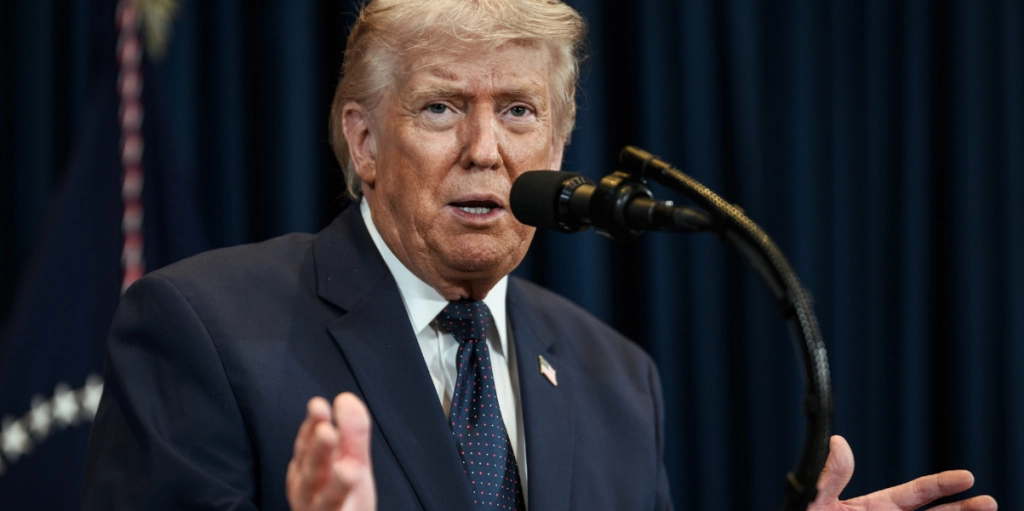
Trump’s 2024 grocery display now threatens to haunt GOP in midterm elections.


Donald Trump built a central part of his return to the White House around a straightforward economic promise: Americans would feel relief from the prices that had strained household budgets for years.
Nearly two years after he used a table of groceries at his Bedminster golf club to make that argument against Democrats, the same products are providing Republicans with a less comfortable political message.
Food prices have continued to rise during Trump’s second term, while polling suggests frustration over everyday expenses could influence November’s midterm elections. Some voters who supported the president in 2024 are now questioning whether they will turn out for his party.
Prices moved in the wrong direction
Trump’s August 2024 appearance in New Jersey featured fruit, beef, cereal, milk and other household products alongside charts illustrating inflation during Joe Biden’s presidency.


His campaign used the display to reinforce its argument that a change in leadership would bring living costs under control.
Data covering the products featured that day now complicates that message.
A Reuters analysis of 26 grocery categories tracked by the Bureau of Labor Statistics found that prices increased by 3.4 percent during the first 19 months of Trump’s second term.
Inflation across those categories has been considerably slower than during the comparable period under Biden. Falling prices for eggs, butter, bacon and several other products have also provided some relief.
Still, most categories included in Trump’s original display cost more than when he returned to office.
Uncooked beef has risen 19.2 percent, apples are up 14 percent and coffee has climbed almost 23 percent. Fresh fish and seafood have increased by 8.6 percent.
Eggs stand out in the opposite direction, falling by nearly 40 percent as the market recovered from shortages caused by avian flu.
Click to display external content from instagram,
- You can always enable and disable third-party content.

You agree to display external third-party content. Personal data may be sent to the provider of the content and other third-party services.
Trump voter says prices remain painful
Pressure on household finances is particularly visible in New Jersey’s competitive 7th Congressional District, which includes Bedminster.
Sheila Carney, a 68-year-old Trump voter interviewed by Reuters after spending $70 on a relatively modest selection of groceries, said the president had failed to deliver the price reductions she expected.
“This is real. He can say it’s not, but it is,” Carney said. “He hasn’t brought anything down.”
Carney has postponed retirement while helping repay her son’s student loans. Rising grocery and gasoline costs have contributed to her growing dissatisfaction, leaving her open to sitting out November’s election.
Such hesitation could matter in a close congressional contest between Republican incumbent Tom Kean and Democratic challenger Rebecca Bennett.
More than half of 17 Republicans and independents interviewed by Reuters in the district were either undecided or leaning toward Bennett, although concerns surrounding Kean extended beyond the economy.
Trump administration officials reject the suggestion that the president’s economic program is failing.
July inflation data showed US consumer prices barely rising from the previous month. A White House official cited falling prescription drug and car insurance costs, higher real wages and relatively low prices for several food categories as evidence that the administration’s strategy is producing results.
Broader economic forces also limit how much control any president has over inflation. Monetary policy falls primarily to the Federal Reserve, while global commodity markets, supply disruptions and other factors can push individual prices higher or lower.
Trump’s tariffs and the conflict with Iran have nevertheless added another political dimension to the debate over costs.
Public opinion presents a difficult picture for the president.
A Reuters/Ipsos survey completed earlier this month put Trump’s net approval rating on his handling of the cost of living at minus 47 percent, compared with minus six percent at the beginning of his second term.
Cost of living consequently ranks as his weakest issue in the poll, below his ratings on both the wider economy and immigration.
Voters also give Democrats a narrow advantage over Republicans on economic stewardship, according to Reuters/Ipsos polling, marking a reversal after years in which the GOP held the stronger position.
Francesco Trebbi, a public policy professor at the University of California, Berkeley, sees a potential electoral consequence. His research found Trump performed particularly well in 2024 in counties where inflation had outpaced income growth.
“I expect the same anti-incumbent shift to happen in 2026, this time possibly weakening Republicans,” Trebbi said.
Republican loyalty has not disappeared
Higher prices do not automatically translate into lost Republican votes.
Several Trump supporters interviewed in New Jersey said other political issues outweighed their concerns about groceries. Some also credited the administration with stabilizing prices after the sharper inflation experienced under Biden.
Republican voter Lauren DeGirolamo, 34, pointed specifically to cheaper eggs and said education and border security remained more important considerations for her.
Other voters expressed firm opposition to supporting Democratic candidates regardless of their economic concerns.
Still, Republicans face a turnout problem if dissatisfied Trump supporters choose not to vote rather than switch parties.
The political symbolism is particularly awkward because Trump himself made supermarket prices a highly visible test of presidential economic performance during the 2024 campaign. Two years later, the grocery aisle is providing voters with their own measure of whether that promise has been fulfilled.



