
 Kenneth Glad
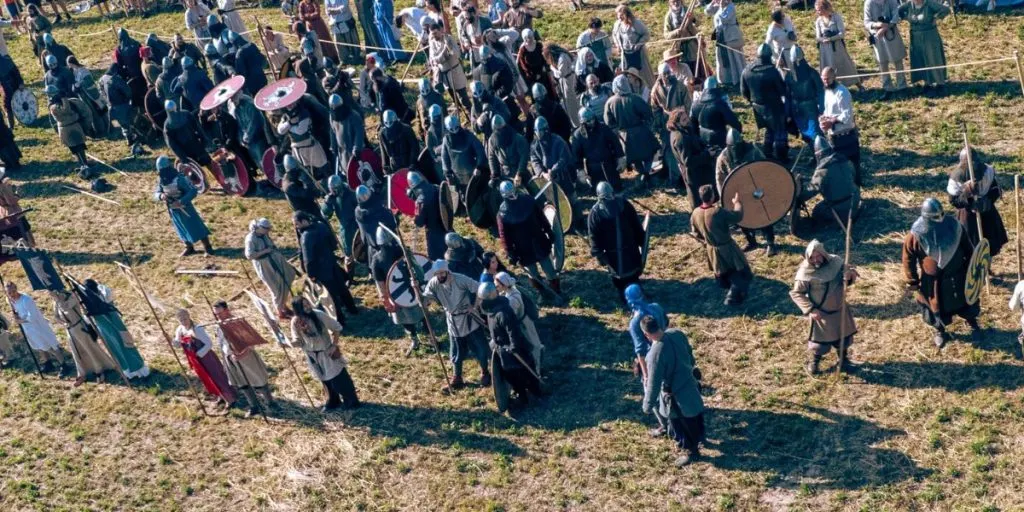
Across early medieval Scandinavia, rulers shared authority with gatherings that handled law, disputes and communal decisions. These institutions were unequal, yet they could become arenas of genuine resistance.


In Viking Age Scandinavia, kings ruled alongside powerful farmers, chieftains and assemblies whose support could matter when major decisions were made. Royal authority could be formidable, but it did not always amount to the unquestioned right to impose a policy, writes Historienet.
One of the clearest illustrations appears in Snorri Sturluson’s later Heimskringla. A figure named Torgny, presented as a Swedish law-speaker, confronts King Olof Skötkonung over his policy toward Norway. In Snorri’s account, the dispute becomes a striking collision between the ambitions of a ruler and the expectations of those gathered before him.
The episode needs to be treated cautiously. Snorri wrote generations after the supposed encounter, and some scholars question whether Torgny was a historical individual at all. Rather than reading the scene as a transcript of an eleventh-century meeting, it is more useful as evidence of how later Scandinavians understood the relationship between kings, assemblies and political authority.
Power depended on public procedure
Scandinavian assemblies, or things, existed at local, regional and larger territorial levels. In her 2009 article Administrative Organisation and State Formation: A Case Study of Assembly Sites in Södermanland, Sweden, medieval archaeologist Alexandra Sanmark examines the organization of assembly sites and their role in legal proceedings, conflict resolution and wider communal decision-making.


Their organization differed from one region to another. Smaller gatherings could deal with disputes between neighbors or local families, while more important assemblies brought together people from a much wider area. A ruler or powerful chieftain might attend, but proceedings still followed customs that were not entirely his to control.
Influence varied sharply. Sanmark’s research indicates that farmers could wield meaningful authority, although wealth and status mattered. In the chapter Class and Gender in Viking Society from his book Scandinavia in the Age of Vikings, historian Jón Viðar Sigurðsson examines the hierarchy of Viking society, including rulers and chieftains, householders and unfree thralls.
Landholding, family connections and the ability to attract supporters could give certain men far greater influence than others. The assembly was consequently a place of negotiation within a hierarchical society rather than an institution based on equal citizenship.
Iceland developed the best-known example. According to Thingvellir National Park, the Althing was established around 930 and became the central gathering of the Icelandic Commonwealth.
Its law-speaker publicly recited laws that initially depended heavily on memory rather than written codes. The laws were delivered in sections over a three-year cycle, making legal knowledge and accurate oral transmission essential to the functioning of the institution.
Thingvellir was also more than a courtroom. People travelled considerable distances to attend, creating a temporary concentration of farmers, leaders, families and traders. Legal proceedings existed alongside commerce, hospitality and private negotiations that could settle disagreements before they developed into larger conflicts.
Religion tested royal authority
Religious change offered another test of how far a king could act on his own. The Frankish missionary Ansgar travelled to Scandinavia in the ninth century as part of efforts to spread Christianity among the region’s still largely pagan communities. In Rimbert’s Vita Anskarii, his first Swedish mission around 829 brings him before King Björn. During Ansgar’s return in the early 850s, King Olof says he cannot approve the mission without consulting the people at an assembly.
That episode is especially valuable because Vita Anskarii was written much closer to Ansgar’s lifetime than the later Icelandic sagas. Although it was a religious biography with its own purpose, it nevertheless portrays royal authority as operating within established expectations about consultation.
Later saga tradition gives a similar picture of Hakon the Good in Norway. In Heimskringla, the Christian king faces pressure during traditional sacrificial celebrations and makes concessions when opposition grows threatening.
Hakon’s predicament reflects a broader problem for rulers attempting to change established religious customs. A king might favor Christianity personally, but his ability to impose new practices depended partly on maintaining relationships with powerful farmers and regional leaders.
The system survived political change
The assemblies should not be confused with modern representative democracy. Rank, wealth and coercion shaped participation, while large parts of society had little formal influence. Armed supporters and personal alliances could also affect the balance of power surrounding a dispute.
At the same time, recognized procedures mattered. Assembly grounds offered settings in which claims could be heard, agreements announced and judgments made publicly rather than resting solely on the private decision of a ruler.
Christianization, urban growth and increasingly centralized authority gradually altered these institutions, according to Sanmark. Assembly sites could shift as royal government, churches and emerging towns became more important centers of administration and public life.
The institution nevertheless proved durable. Tynwald on the Isle of Man still preserves a name derived from the Old Norse expression for an assembly field. Its history reflects the long afterlife of a political and legal tradition carried beyond Scandinavia by Norse settlers.
Iceland offers another example of continuity. Thingvellir remained closely associated with the Althing for centuries, even as the political system around it changed and Iceland eventually came under Norwegian rule.
Viking kings could command warriors, resources and loyalty, while wealthy chieftains could dominate communities through property and personal networks. The thing did not remove those inequalities. What it provided was a recognized arena where law, custom and competing interests met in public, and where even a powerful ruler could sometimes discover that authority still required negotiation.
Sources:
Historienet
Alexandra Sanmark – Administrative Organisation and State Formation: A Case Study of Assembly Sites in Södermanland, Sweden
Jón Viðar Sigurðsson – Scandinavia in the Age of Vikings
Heimskringla
Vita Anskarii
Thingvellir National Park
Tynwald Parliament



