
 Jens Asbjørn Bøgen
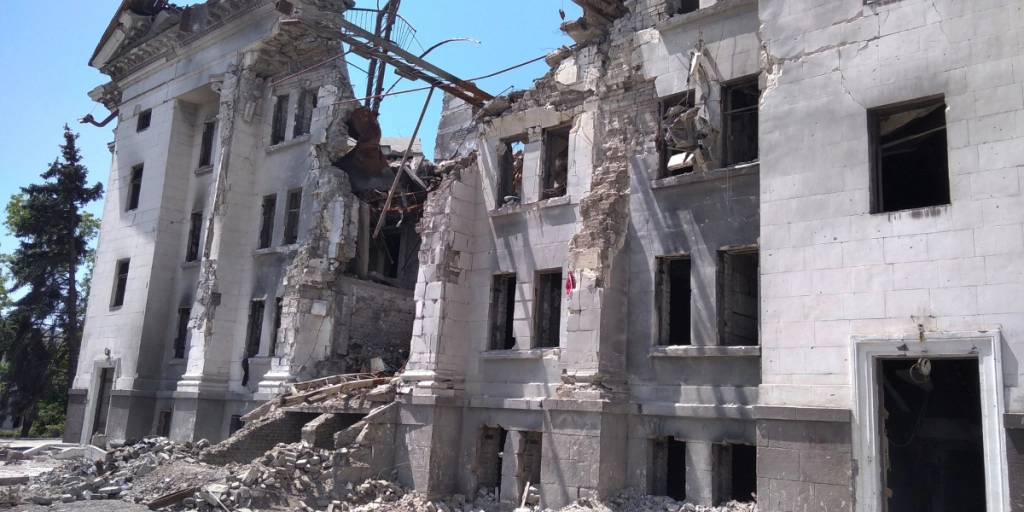
The shelter had the Russian word for “children” written in large letters outside, before the bombs hit.

During the early stages of the Russian invasion of Ukraine, the Ukrainian city of Mariupol saw some of the most destructive fighting and shelling.
The Siege of Mariupol, as the fight for the city has been named, saw several tragedies, but the one that stands out is the Mariupol theatre airstrike.
In March 2022, the theatre housed more than a thousand civilians, according to some estimates, as Russian shelling tore the city apart. To make sure that the theatre was not confused with a military target, the Russian word for “children” was written in large letters outside the theatre so it could be seen from the air.
But shortly after 10 AM on March 16, the building was struck, and on March 25, the city council said that approximately 300 people had died as a result of the airstrike.


An investigation by the Associated Press in early May 2022 found that evidence pointed to 600 dead, and a report from Amnesty International later called the strike “a clear war crime” after they found evidence of two 500-kilogram bombs hitting the theatre.
Perhaps unsurprisingly, Russia denies any wrongdoing, and now Moscow seems to try to rewrite the history of what actually happened that day.
“A mockery of the memory of the dead”
Ukrainian Human Rights Commissioner Dmytro Lubinets says Moscow has released a propaganda film titled ‘Witnesses’ that Ukrainian officials say distorts the destruction of the Mariupol Drama Theater.
The commissioner called the film a “pseudo-documentary” and warned that parts were filmed on the rebuilt stage where victims once lay buried.
“This is not merely a lie. It is a mockery of the memory of the dead and an attempt to turn the scene of the crime into a backdrop for its denial,” Lubinets said.
He added: “The enemy knew there were civilians inside. And yet they dropped the bombs anyway. Hundreds of lives were cut short in an instant.”
Uncovering the facts
Moscow has denied hitting the theatre, instead suggesting an internal explosion was the reason for the tragedy.
Lubinets rejected claims of an inside explosion, noting that Moscow had pushed that narrative before the strike.
“The narrative of an ‘internal explosion’ is not the result of any investigation. Russia began spreading this version even before the strike, laying the groundwork in advance. After the tragedy, this lie simply gained new actors to play the role of ‘witnesses,’” Lubinets said.
Lubinets quickly alerted international bodies, including the UN and the ICC, to demand sanctions against those falsifying war crimes.
Standing for truth
“The Mariupol Drama Theatre is a crime scene, not a backdrop for Russian propaganda. Russia may erect new walls over the site of the tragedy. But it will not be able to erect a wall between the truth and the world,” Lubinets said.
He emphasized that records will endure. “The evidence remains. The testimonies remain. People’s memories remain. And no Russian propaganda film will change that,” he concluded.
Russian authorities have finished rebuilding the site for upcoming shows. “The site that became one of the largest scenes of a Russian war crime is now being transformed into a venue for Russian performances and concerts,” the Mariupol City Council said in a statement on Telegram.



