
 Jens Asbjørn Bøgen
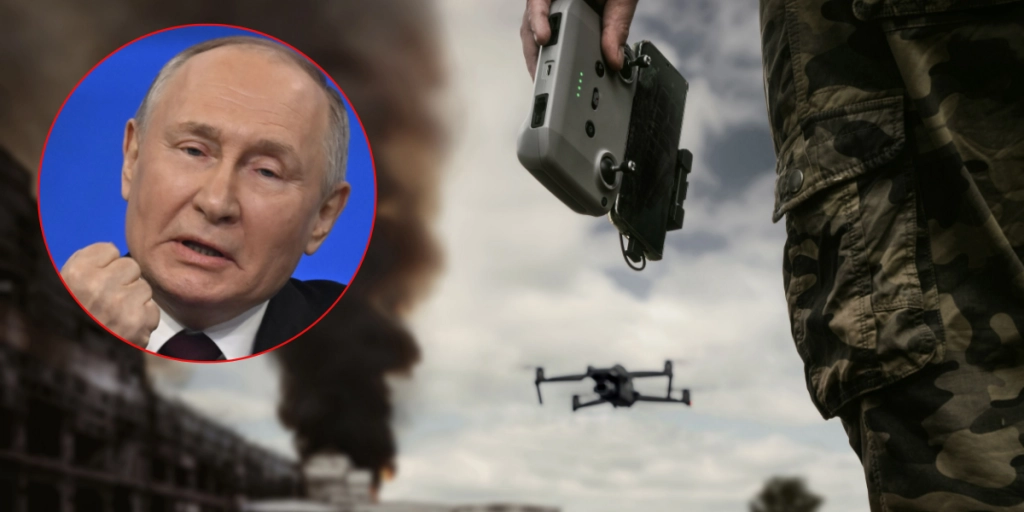
The drone forces also managed to take out four radar stations.

Ukrainian operators launched dozens of long-range craft overnight on August 24, striking targets across southern Russia and occupied territories.
The wide-ranging campaign targeted key airfields, radar networks, and critical defense sites.
According to the commander of Ukraine’s Unmanned Systems Forces, Robert “Madyar” Brovdi, crew members successfully hit 66 separate targets during the operation. The strategic strikes represent a continuous effort to clear airspace before deeper attacks.
At the Millerovo airbase in Rostov Oblast, one drone strike hit a parked Russian MiG-29 fighter jet. A separate strike at the exact same airfield smashed a wooden Ka-52 decoy helicopter meant to trick incoming weapons.


According to Euromaidan Press, the strike on the MiG-29 was the third time in two days Ukrainian drones hit Russian fighter jets. Another MiG-29 and an assessed Su-30SM were struck on August 23.
Tracking systems took severe damage across multiple frontline sectors. Crews destroyed four distinct radar stations between Rostov Oblast and occupied Crimea, effectively blinding local air defense units in the region.
Burning the fuel
Supply routes and industrial production facilities suffered equal destruction during the overnight push. Drones hit the Kamensky Combine in Kamensk-Shakhtinsky, a major plant that manufactures solid fuel for Russian military rockets.
Additional strikes hit fuel storage tanks at Yeysk and inside occupied Luhansk Oblast. These fuel depots directly supplied frontline logistics brigades supporting Russian ground forces.
Commander Robert Brovdi stated that his teams also hit two shadow fleet commercial vessels in the Black Sea. While the unit reported destroying a tanker and a bulk carrier, independent news outlets have not yet confirmed the losses.
Hitting the command
The massive assault went after vital drone infrastructure hidden inside occupied regions. Operators destroyed a specialized drone school in Zaporizhzhia, an experimental laboratory in Donetsk, and critical signal relay stations in Kherson.
Russian National Guard quarters and eleven rear deployment sites caught fire overnight following precise impacts. Ground units belonging to the 1st Separate Center and the 9th Kairos Battalion carried out most of the coordinated strikes.
This steady escalation shows how inexpensive autonomous technology continues to disrupt traditional military power far from the front lines.



