
 Kenneth Glad
Environmental reporting is often dominated by disasters and political conflict. A collection of projects highlighted by climate journalists instead examines where practical responses are already taking shape.

For its 2026 climate support campaign, The Guardian asked members of its environment team to identify ideas from their reporting that had contributed to, demonstrated or inspired positive environmental change. The resulting examples range from individual farms to national energy systems.
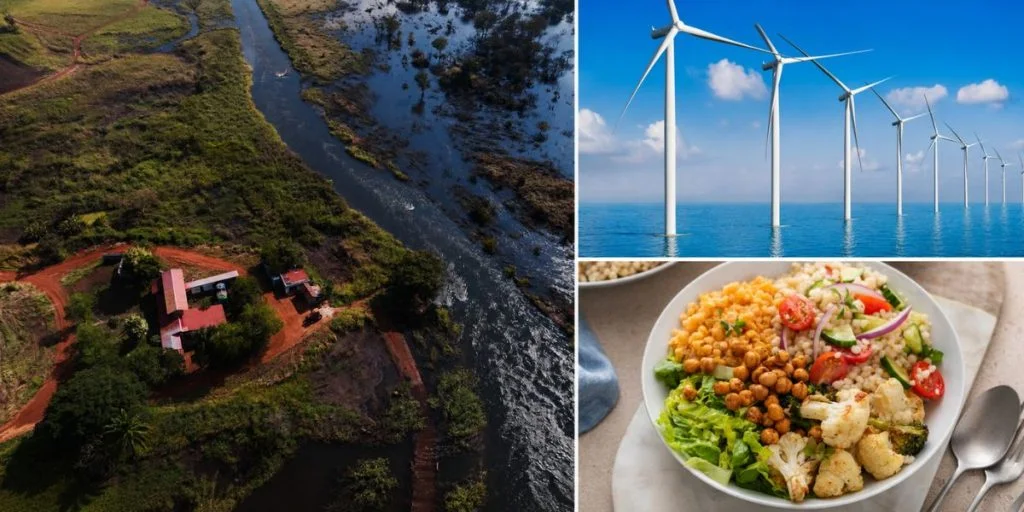
On the southern Oregon coast, landowner Karl Wenner has combined barley farming with habitat restoration. After buying the property in 2021, he restored 28 hectares of its 162 hectares to wetland. Before the change, pollutants from the farm had been reaching the surrounding watershed.
The restored habitat attracted migrating and native birds, while endangered native fish were observed near the barley fields. Vegetation also absorbed phosphorus that might otherwise have entered nearby waterways.
About 95 percent of the area’s wetland network had previously been lost to agricultural conversion. Wenner’s farm was highlighted because the restoration delivered environmental benefits while commercial cultivation continued.


Existing operations evolve
Other selections focused on relatively modest changes to systems already in use, showing how environmental gains can sometimes come from adjusting routine practices rather than replacing entire technologies or institutions.
Australian research found that increasing the wind speed at which turbines begin operating could potentially save tens of thousands of native bats each year with little effect on power generation.
In Germany, some hospitals have begun serving more plant-based meals and less meat, a shift that’s part of a broader change in everyday food choices. The changes are being made through hospital menus rather than relying on patients to alter their diets on their own.
In Nepal, The Guardian‘s reporting had an impact beyond the original story. After microplastics were discovered near Mount Everest in 2020, the coverage helped inspire a young researcher to start a project that now recycles plastic waste into insulation for homes.
Larger systems respond
The journalists also pointed to examples operating at a much greater scale. Norway now has heat pumps in about two-thirds of homes, showing how widely the technology has been adopted even in a country with long, cold winters.
In China, sponge-city programs are being developed to hold, absorb and reuse more rainwater instead of sending it quickly into drains and waterways. The programs are targeting 70 percent rainwater reuse.
Paris is taking a different approach to urban heat, building a large cooling network that uses water from the Seine to help regulate temperatures in buildings.
Broader political and economic ideas also featured in the discussion. Economist Mariana Mazzucato, known for her work on public investment and the role of the state in shaping markets, has argued for putting the common good at the centre of policymaking.
The Guardian launched its Alternatives series in 2023 to make room for environmental stories that might otherwise be missed. It focuses on projects, policies and ideas already being tried, rather than only on the crises that dominate climate coverage.
Sources: The Guardian



