
 Kenneth Glad
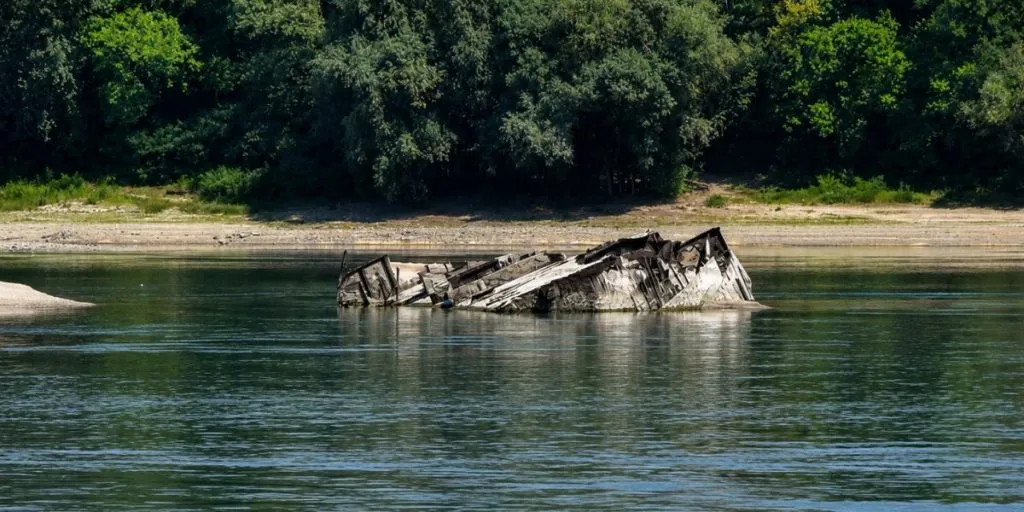
Unusually dry conditions are reshaping familiar landscapes across several countries. From riverbeds to historic estates, traces of widely separated eras have entered public view.

The severe drought affecting parts of Europe has lowered major waterways and scorched vegetation, creating unusual conditions for archaeologists. HistorieNet has documented discoveries spanning prehistoric life, Roman infrastructure and twentieth-century warfare.
Along the Danube River, some finds present immediate risks. Associated Press reports that German warships near Prahovo, Serbia, still carry weapons and explosives. Up to 200 vessels were scuttled in 1944 as German forces withdrew ahead of the Soviet advance.
Slovak authorities faced a similar legacy near Virt, where low water uncovered a 700-kilogram British naval mine. STVR reports that the device probably came from Operation Gardening, the Royal Air Force’s 1944 effort to disrupt German supplies along the Danube. Specialists later destroyed it in a controlled explosion.
Roman remains enter reach
Archaeologists in Bulgaria used drones to map foundations of Constantine’s Bridge near Gigen while sections could be examined directly. According to Reuters, the crossing linked Ulpia Oescus with Sucidava, stretched more than two kilometres and was inaugurated under Constantine I in AD 328.


Roman material has also been recovered around Dunaújváros in Hungary, including inscribed limestone and part of an altar dedicated to Jupiter from the area of Intercisa, an important military settlement on Rome’s Danube frontier, according to HistorieNet.
Prehistoric evidence has appeared farther downstream. Bulgarian National Radio reports that a resident near Ryahovo spotted mammoth bones in the riverbed. Museum specialists identified a lower jaw, two tusks and possibly a rib, while further remains may still be buried nearby.
Parched fields preserve outlines
In Wales, drought affects crops growing above buried walls, ditches and other structures. Heritage Daily reports that aerial surveys recorded a 5,000-year-old long barrow, First World War practice trenches, an Iron Age enclosure and a previously unknown Iron Age or Romano-British farmstead.
Portchester Castle has shown traces of former buildings, while dry lawns at Chatsworth and Blenheim Palace have outlined vanished formal gardens.
The finds offer a rare glimpse of how much history still lies beneath Europe’s fields, rivers and historic landscapes.
Sources: HistorieNet, Associated Press, STVR, Reuters, Bulgarian National Radio, Heritage Daily



