
 Kenneth Glad
Shifting conditions in the Pacific can influence weather far beyond the ocean basin. The consequences may emerge through harvests, rainfall and changing temperatures.


Farmers and commodity markets are watching a powerful El Niño already underway in the tropical Pacific. The National Oceanic and Atmospheric Administration, or NOAA, the US government agency that monitors weather, oceans and climate, said on August 13 that the event was strengthening, with more than a 90 percent chance of becoming very strong during autumn and winter 2026 to 2027.
Agricultural effects can travel well beyond the countries experiencing unusual weather. Welthungerhilfe says more than 60 million people were affected during the 2023 to 2024 El Niño, including through higher food costs.
Eigil Kaas, a climate scientist at the Niels Bohr Institute, told science site Videnskab.dk that some South American crops could become more expensive. While stressing that he is not an economist, he also suggested soy used for animal feed might face upward price pressure.
Rainfall risks vary widely
El Niño is the warm phase of the El Niño-Southern Oscillation, a recurring interaction between the tropical Pacific and the atmosphere. NOAA says the cycle usually appears every two to seven years, but its strength and consequences differ from one event to another.


Changes in Pacific temperatures can alter atmospheric circulation thousands of kilometres away. Typical El Niño patterns increase the likelihood of certain weather conditions rather than determining exactly what will happen in every region.
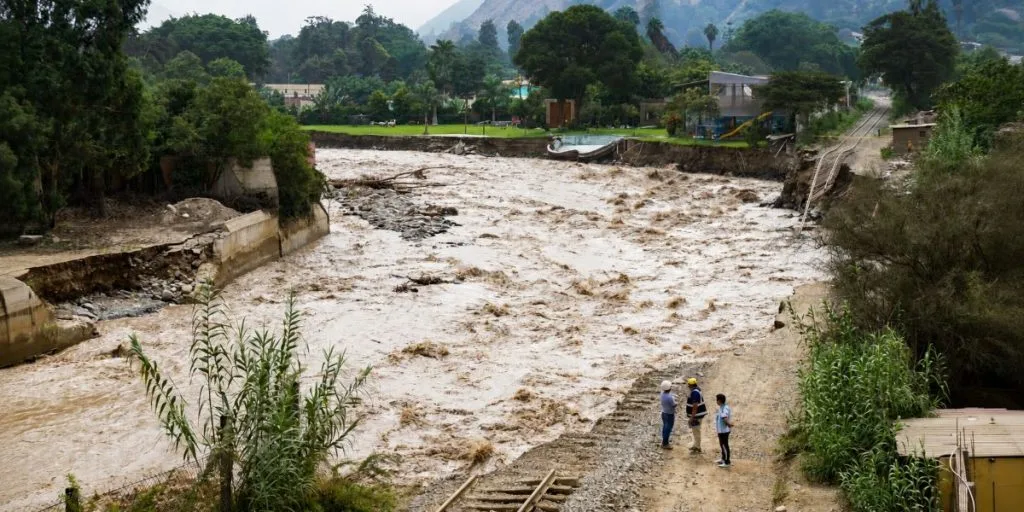
Western South America can become wetter, while Australia, Indonesia and parts of Southeast Asia face greater drought risk. ShelterBox reported that flooding in Peru in March 2017 killed 94 people and left thousands of families without shelter. Indonesia’s BMKG has also maintained drought warnings in vulnerable areas.
Global heat could increase
El Niño can temporarily raise global average temperatures by redistributing heat stored in the tropical Pacific. Climate scientists Zeke Hausfather, a researcher who studies global temperature trends, and Andrew Dessler, a professor of atmospheric sciences at Texas A&M University, examined the possible effect in The Climate Brink.
They made a rough calculation suggesting the event could add about 0.3 degrees Celsius to global average temperatures during the following year. The researchers cautioned that the estimate is approximate and that a more detailed calculation would need to account for the timing of El Niño’s influence.
The additional warming could help push an individual year’s global average further above 1.5 degrees Celsius compared with pre-industrial conditions. The World Meteorological Organization stresses that the Paris Agreement’s 1.5-degree goal concerns long-term warming, rather than the temperature recorded in any single year.
Europe is not expected to experience the same direct rainfall extremes associated with El Niño as regions closer to the tropical Pacific. Kaas told Videnskab.dk that the continent may also avoid surpassing this year’s heat levels, even as global temperatures continue to rise and stronger El Niño-related effects become more apparent in other parts of the world.
Sources: Videnskab.dk, NOAA, ShelterBox, Welthungerhilfe, The Climate Brink, the Niels Bohr Institute



