
 Jens Asbjørn Bøgen
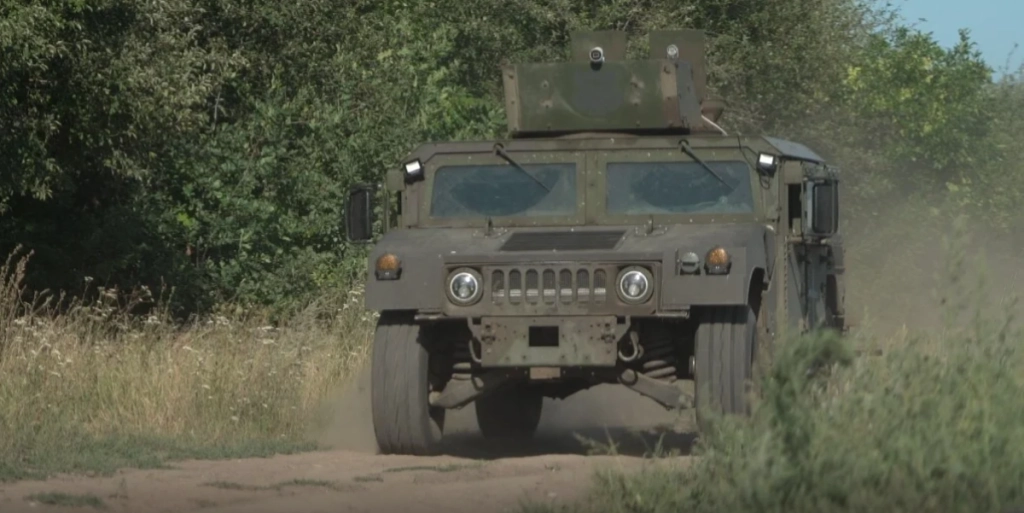
The repurposed vehicles are meant to be used for logistics, evacuations and reconnaissance — just to name some of the possibilities.


High-risk supply runs across contested battlefield roads remain deadly work. Transporting ammunition or evacuating wounded soldiers forces crews directly into the line of fire, where artillery and attack drones wait.
But Ukraine is finding clever ways to pull human drivers out of frontline vehicles altogether.
And their newest invention turns a legendary US vehicle into an Unmanned Ground Vehicle.
Upgrading the fleet
Defence Blog reported that Ukrainian forces have begun deploying converted US-made HMMWVs, commonly known as Humvees, equipped with a new remote control system. The technology lets soldiers command heavy military trucks from a safe distance during high-stakes missions.


Developed by local firm Drone Fight Group, the conversion kit named Kaban bolts onto standard vehicles without major structural alterations. Units can switch between remote steering and manual driving whenever needed.
Three modified Humvees have already reached frontline troops. The platforms were handed over to the 3rd Army Corps, the 429th Separate Unmanned Systems Regiment “Achilles,” and the 49th Brigade.
Operators manage steering, searchlights, infrared illumination, and two-way audio via satellite connections. That extended reach helps pilot vehicles far beyond traditional short-range radio links.
Article continues below.
Click to display external content from t.co,
- You can always enable and disable third-party content.

You agree to display external third-party content. Personal data may be sent to the provider of the content and other third-party services.
Built for survival
Navigating contested routes requires precision tools. Operators rely on a digital map interface to plot waypoints and predict steering paths while monitoring live computer diagnostics.
Electronic jamming presents a constant threat near front lines. To counter signal disruption, Kaban allows manual position adjustments and brings the vehicle to an automatic stop if the connection drops completely.
“Our goal is not simply to make a vehicle drive remotely,” said David, the system’s lead developer. “We are building a system that gives an operator enough information and control to confidently perform real missions from a safer location.”
“That includes vehicle systems, navigation, communications, fail-safe behavior, and the ability to adapt the platform to different operational requirements.”
Expanding uncrewed options
Beyond routine transport, the system can carry net throwers or drone launch platforms. Ukrainian units previously modified Soviet-era BRDM-2 armored vehicles using Estonian remote technology to handle similar uncrewed assignments.
Instead of building expensive new platforms from scratch, army technicians prefer retrofitting existing military inventory. By converting battle-tested trucks into remotely operated assets, commanders hope to protect personnel while maintaining critical frontline supply lines.



