
 Kenneth Glad
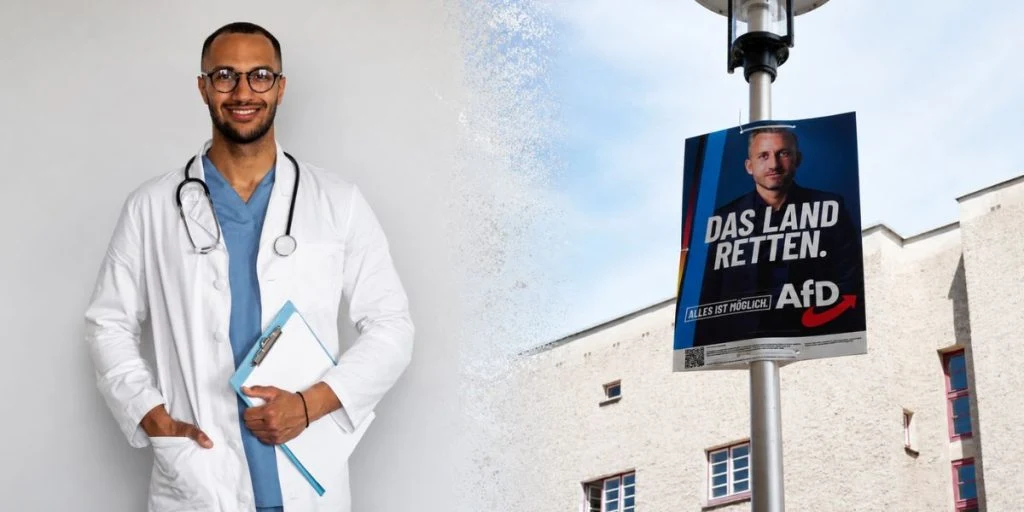
Residents are watching a closely fought regional contest with unusual concern. Its outcome may affect decisions about whether some families continue building their lives there.


Foreign workers play an important role in hospitals, the care sector and hospitality in Saxony-Anhalt in Germany, creating a tension between local labor needs and growing support for tougher migration policies.
The Guardian, citing the Saxony-Anhalt Medical Association, reports that 27.1% of doctors working in the state’s hospitals do not hold German passports. Foreign nationals make up about 9% of Saxony-Anhalt’s population, compared with a higher share across Germany as a whole.
Hamid, an Iranian-born paramedic interviewed by the newspaper, said migrant workers were essential to healthcare in the region. “Migrants make up a huge part of healthcare. If you were to take them out, the whole system would collapse.”
Some migrants may leave
Saxony-Anhalt is preparing for a state election that could have implications far beyond the region. Polls cited by The Guardian suggest the far-right Alternative für Deutschland, or AfD, could emerge as the largest party, potentially putting it in position to lead a German state government for the first time.


That prospect is influencing personal decisions among some of the state’s migrant communities. Migrant organizations told The Guardian that residents have increasingly asked whether they should move elsewhere if the political climate worsens after the vote.
Saxony-Anhalt has Germany’s highest average age, at 48.2, and foreign workers are important to sectors such as healthcare and elderly care.
Ketevan Asatiani-Hermann, a member of Magdeburg’s integration and migration advisory council, told The Guardian that the state cannot afford to lose them.
After the December 2024 Christmas market attack in Magdeburg, reports of racist harassment and violence increased. Migrants and people of color told The Guardian they had been insulted, threatened and, in some cases, physically attacked.
AfD proposes tougher rules
The election is being closely watched across Germany because an AfD-led government in Saxony-Anhalt would represent a major breakthrough for the party.
According to The Guardian, state authorities have classified the AfD branch in Saxony-Anhalt as “firmly rightwing extremist.”
At the centre of the campaign is Ulrich Siegmund, the AfD’s lead candidate for state premier. If he succeeds in taking the post, he could become the first far-right politician to govern a German state since the end of World War 2.
Der Spiegel has scrutinised his rise closely, portraying him in a January 2026 profile as the most dangerous man in the AfD. The German newspaper has said members of his staff include activists linked to the Identitarian Movement.
Polling cited by The Guardian suggested the AfD could win the most votes. That alone, however, would not guarantee control of the government, as Germany’s parliamentary system often requires parties to find coalition partners before they can govern.
The state party’s programme proposes tougher deportation and migration policies, separate education for refugee children and measures associated with “remigration.”
For some asylum seekers, the debate is not abstract. Fatemeh, an Iranian woman awaiting a final decision on her asylum claim after fleeing to Germany with her son, said that she fears what a change in government could mean for them:
“I worry about it every day. I can’t stop thinking about my son and what might happen to us.”
Sources: The Guardian, Der Spiegel



