
 Daniel Wolfram
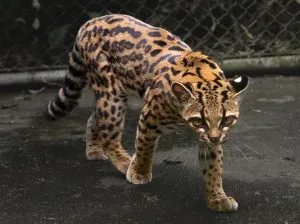
The 10-year old cat is still living and is the first of his species according to scientists.
Others are reading now

It started in Bolivia on a roadside.
A driver spotted a stray kitten, took it home, and fostered it, believing it was a domestic housecat.
But after a year of unruly and wild behavior, the owner handed the animal over to a local sanctuary. That is where the discovery started.
A weird wild cat
The rumors of the arrival of the cat soon got to biologist Paola Nogales-Ascarrunz, who immediately got curious.


She traveled to the sanctuary in the Andes to examine what staff called a weird cat. What she saw was a cat that was way too small to be a regular cat and had spots like a leopard.
“I took a hundred pictures of it,” recalled Nogales-Ascarrunz to National Geographic. “I was so fascinated.”
What she saw was no ordinary cat. As it turned out, this feline is the first brand-new species discovered in the cat family in over 100 years.
Differences in markings
At first, Nogales-Ascarrunz assumed the creature was a known tiger cat, Leopardus tigrinus. Scientists long believed those small spotted cats lived across South America.
However, everything changed three years later while she was writing an educational booklet on local wildlife in Bolivia. She noticed the markings on the cat were much larger than a tiger cat’s. “This is so wrong,” she thought.
To solve the mystery, she teamed up with two geneticists to study the animal’s DNA.
The testing delivered answers not seen in 100 years. Genetic analysis showed the cat held a distinct, previously unknown position on the feline family tree.
Secrets in the wild
Scientists named the newfound species “Leopardus tilcayo.” The name was an homage to a traditional term used by local residents, though no one knows where it stems from.
“We asked the local people, ‘Why do you call it tilcayo?’” says Nogales-Ascarrunz. “And they said, ‘I don’t know! My grandpa called it tilcayo, so I call it tilcayo.’”
For Nogales-Ascarrunz, the new feline discovery serves as a reminder of how much remains hidden. “Our world is extremely complex,” she says.
“Even in the cats, there are things out there that are undescribed, things that people haven’t found yet,” says Nogales-Ascarrunz. “So let’s go out and find them and protect them.”



