
 Lauge Risom Koch
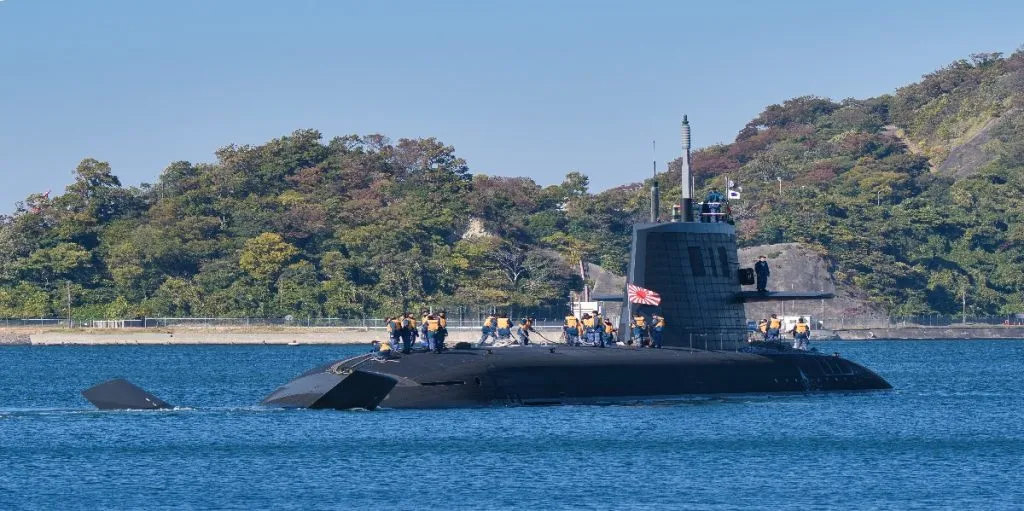
Japan is actively keeping the door open to acquiring nuclear-powered submarines as regional maritime threats continue to evolve across the Western Pacific.


Japan is officially keeping the door open to acquiring nuclear-powered submarines as its regional maritime security requirements rapidly evolve. According to TWZ, Defense Minister Shinjiro Koizumi recently confirmed that Tokyo is not ruling out nuclear propulsion for its future fleets. The military publication noted that this consideration represents “a potentially major shift for a country whose submarine force has historically relied exclusively on conventional propulsion.”
The Japanese navy currently operates one of the world’s most capable conventional submarine fleets. As reported by TWZ, the nation maintains a force structure of 22 conventionally powered vessels equipped with advanced lithium-ion batteries. Five highly sophisticated Taigei-class submarines are currently in active service, with additional boats progressively replacing older models in the pipeline.
Acquiring nuclear-powered vessels would provide the Japanese maritime defense forces with substantially greater underwater endurance and sustained speeds. TWZ explains that these advanced ships could conduct longer-range operations across the broader Western Pacific with minimal external support. This expanded operational capacity is becoming increasingly relevant as Tokyo expands its strategic focus beyond its immediate coastal approaches.
Countering regional threats and expanding alliances
The Japanese defense establishment is actively rethinking its naval strategies to monitor and counter China’s rapidly expanding maritime operations. According to TWZ, a nuclear-powered attack submarine could remain submerged for extended periods without the rigid endurance limitations of conventional engines. This unique stealth capability makes nuclear vessels particularly useful for long-range surveillance, tracking, and sea-denial missions far from the Japanese archipelago.


Japan’s internal debate is unfolding concurrently with similar strategic developments in neighboring South Korea. As highlighted by TWZ, Seoul recently confirmed its own ambitious plans to develop a new class of nuclear-powered submarines. This regional shift clearly demonstrates to Tokyo that nuclear propulsion is no longer merely a theoretical capability for American allies operating in Northeast Asia.
Pursuing this advanced technology could eventually create a much deeper foundation for strategic cooperation with Australia and other AUKUS partners. TWZ reports that a Japanese nuclear submarine program would also serve as a highly survivable platform for the country’s emerging “counterstrike” posture using long-range cruise missiles. These high-speed vessels could additionally provide valuable escorts for Japan’s converted aircraft carriers during longer expeditionary deployments across the contested region.
Navigating immense technical and political challenges
Despite the clear strategic advantages, pursuing a nuclear-powered submarine program would present immense logistical and industrial challenges for Tokyo. According to TWZ, Japan would need to establish an entirely different regulatory, training, and manufacturing infrastructure from the ground up. These advanced vessels are considerably more complex and expensive to construct than the country’s existing diesel-electric models.
The Japanese government would also have to resolve deeply complicated questions regarding specialized reactor technology and nuclear material handling. TWZ points out that establishing dedicated maintenance facilities and safely training qualified crews would require a massive national investment. Officials must carefully evaluate whether these immense operational burdens are justified by the strategic advantages of deploying nuclear-powered attack submarines.
Beyond the technical hurdles, any movement toward nuclear propulsion would inevitably trigger intense political scrutiny within the country. As noted by TWZ, Japan’s postwar security policy has been strictly shaped by its historical experience with nuclear weapons and its longstanding non-nuclear principles. While Koizumi’s statement does not represent a final procurement decision, it proves that the political barrier to discussing such programs is finally falling.



