
 Lauge Risom Koch
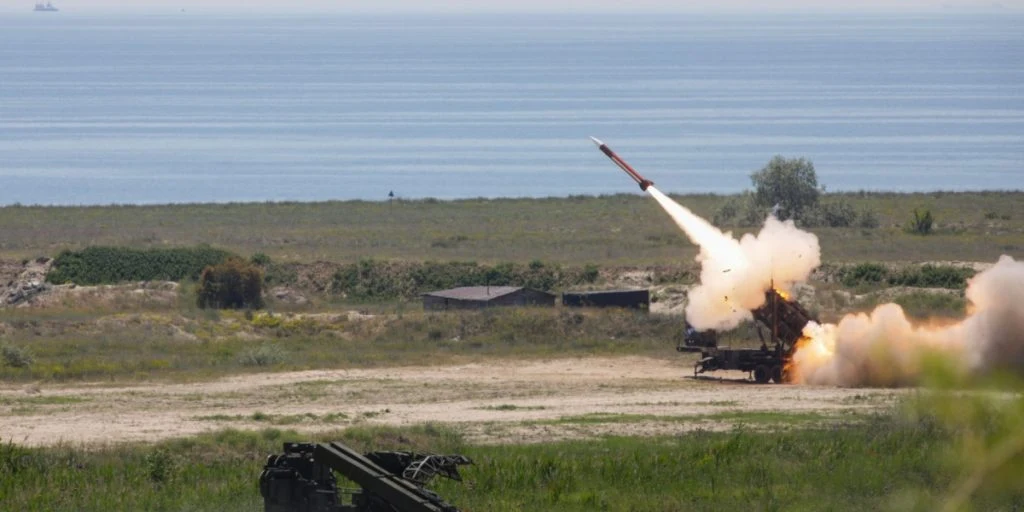
Ukraine is actively negotiating with Raytheon to begin the domestic production of Patriot air defense missiles by late 2027.


Ukraine could begin licensed production of Patriot air defense missiles as early as late 2027 or early 2028. According to United24 Media, President Volodymyr Zelenskyy stated that his administration is actively negotiating with the American defense company Raytheon. The Ukrainian leader hopes to officially establish a domestic production line within approximately one to one and a half years.
Click to display external content from twitter,
– You can always enable and disable third-party content.

You agree to display external third-party content. Personal data may be sent to the provider of the content and other third-party services.
The direct involvement of Raytheon provides a strong indication regarding which specific Patriot interceptor will be manufactured domestically. As reported by United24 Media, the American contractor specifically manufactures the PAC-2 GEM-T variant for the air defense system. In contrast, the newer PAC-3 family of missiles is currently produced by rival defense contractor Lockheed Martin.
Earlier reports indicated that Ukraine was suffering from a severe shortage of critical interceptors for its advanced defense systems. According to United24 Media, some launchers were left completely idle due to a lack of available Patriot missiles. Zelenskyy proposed this licensed domestic production project as a strategic way to secure a much more stable supply.


Technical specifications and effectiveness rates
United States President Donald Trump previously announced that Ukraine would receive a manufacturing license for the defense systems. As noted by United24 Media, the American president described the approved interceptor as a “less modern version” without identifying the exact model. Defense Express experts assessed that this specific description, combined with the Raytheon negotiations, clearly points to the PAC-2 GEM-T.
The PAC-2 GEM-T is specifically designed to intercept hostile aircraft, cruise missiles, and tactical ballistic missiles in the air. According to United24 Media, this specific interceptor model carries a traditional explosive warhead that detonates near its intended target. This mechanism differs significantly from the newer PAC-3 MSE, which utilizes hit-to-kill technology to destroy targets through direct physical impact.
Because of these older technological mechanisms, the domestically produced interceptor will have a slightly lower success rate against certain threats. As highlighted by United24 Media, experts estimate the PAC-2 GEM-T has an effectiveness rate of around 60% against ballistic targets. For comparison, the more advanced PAC-3 MSE boasts an interception effectiveness rate of approximately 80% to 90% against similar threats.
Production timelines and supply chain advantages
Despite the lower interception rate, the older missile model offers distinct logistical advantages when attempting to rapidly expand production. According to United24 Media, manufacturing the advanced PAC-3 depends heavily on active radar seekers produced by Boeing. Because the PAC-2 GEM-T does not rely on those specific components, Ukrainian production can avoid a major potential supply bottleneck.
The ultimate timeline for Ukrainian production remains heavily dependent on when the government obtains the necessary manufacturing license. As reported by United24 Media, operational production lines could be ready by late 2027 or early 2028 if the license is secured soon. However, that ambitious timeline does not necessarily mean that completed Ukrainian-made missiles would become available for immediate battlefield deployment.
Military analysts note that a full PAC-2 GEM-T production cycle typically requires at least one full year to complete. According to United24 Media, the first domestically produced missiles might only reach Ukrainian forces in late 2028 or potentially 2029. This extended timeline could be shortened if Ukraine opts to domestically produce selected components while conducting final assembly with imported parts.



