
 Lauge Risom Koch

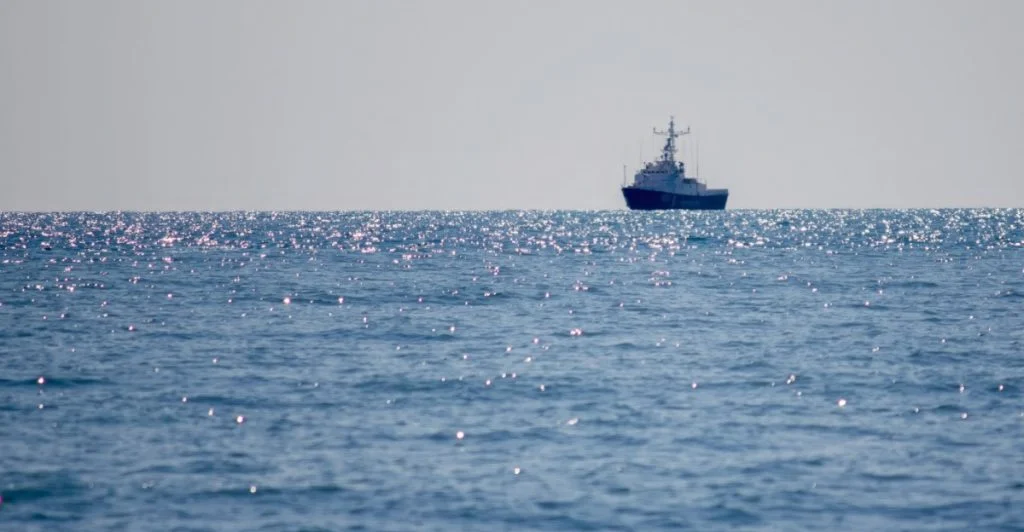
A Russian Baltic Fleet corvette escorted two convoys of suspected military cargo through the Danish straits toward the Atlantic under the watch of Danish patrol vessels.


The Russian Baltic Fleet corvette Stoikiy escorted multiple cargo ships through the Danish straits toward the North Sea, according to OSINT analysts Russian Forces Spotter and Massimo Frantarelli. As reported by United24 Media, several freighters were previously observed loading military equipment at the Baltiysk naval base in Kaliningrad before departing under naval protection.
The Project 20380 corvette passed through the Danish straits on November 1 alongside freighters ANASTASIIA and ASCALON, accompanied by the Project 160 tanker Yelnya. After clearing the straits, Stoikiy turned back and moved east through the Fehmarn Belt on November 3. The two cargo vessels reached the western approaches to the English Channel by November 6, continuing toward the Atlantic Ocean.
On November 7, Stoikiy entered the Great Belt to escort a second group, including the cargo ship LADY D. OSINT researchers identified LADY R and MAIA-1 as part of this run from Baltiysk. Sentinel-1 satellite imagery from November 8 showed three freighters traveling with a vessel running without an active AIS transponder, identified by analysts as the Russian corvette.
Click to display external content from twitter,
– You can always enable and disable third-party content.

You agree to display external third-party content. Personal data may be sent to the provider of the content and other third-party services.


Allied surveillance and African destinations
The Royal Danish Navy tracked both passages through the straits. The patrol vessel HDMS Rota operated near the Great Belt to monitor the Russian naval ship and civilian freighters. Allied navies routinely track Russian military and state-affiliated vessels transiting these narrow choke points between the Baltic and North Seas.
Click to display external content from twitter,
– You can always enable and disable third-party content.
You agree to display external third-party content. Personal data may be sent to the provider of the content and other third-party services.
Cargo manifests and final discharge ports have not been publicly confirmed. OSINT analysts assess the shipments are likely heading to Libya or other parts of Africa to resupply Russian military formations. Moscow maintains private and regular military deployments across Africa that rely on maritime supply corridors from the Baltic.
Using civilian freighters under naval escort allows Moscow to move military cargo while testing Western maritime surveillance networks. Assigning a frontline corvette to shepherd these vessels past NATO littoral territory highlights the priority Russia places on maintaining its overseas logistics lines despite its war commitments in Ukraine.
Regional naval posturing and economic strain
The escort missions coincide with increased Russian naval activity in northern European waters. Moscow recently deployed the frigate Admiral Kasatonov, armed with hypersonic Zircon missiles, near the German Baltic island of Fehmarn. The deployment followed renewed Russian rhetoric directed against Western commercial shipping in regional waters.
Operating combatants in the Baltic serves as a demonstration of strength toward regional NATO members. By running surface patrols alongside logistical escorts, Moscow maintains a visible military presence near commercial sealanes even as the bulk of its conventional ground forces remain concentrated in Ukraine.
Meanwhile, Russia’s maritime sector faces growing financial pressure from war spending and sanctions. To help offset federal budget deficits, Moscow recently moved to sell a state-owned stake in shipping firm Sovcomflot. The enterprise operates Russia’s largest commercial fleet, including tankers tied to the country’s oil trade.



