
 Jens Asbjørn Bøgen
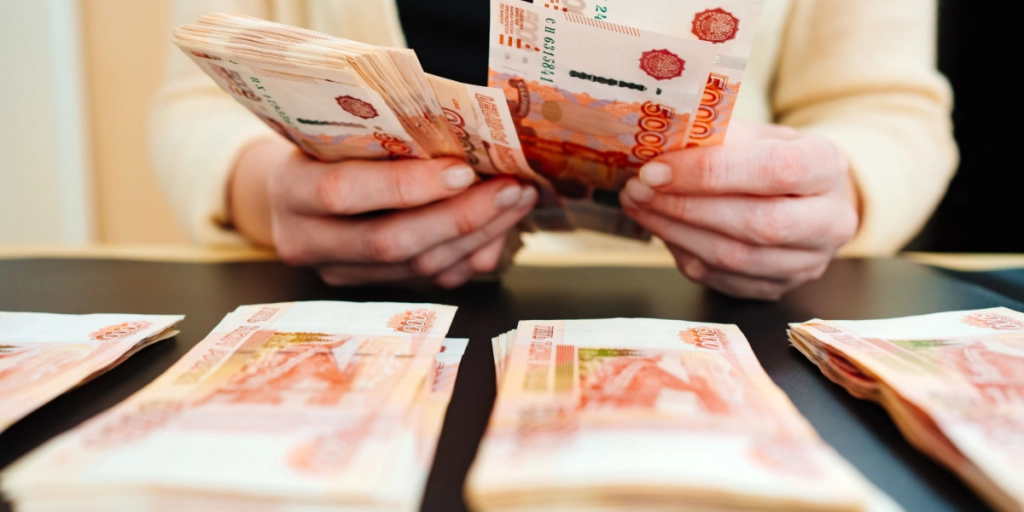
Russia’s wartime economy runs on wages, contracts, and increasingly, banknotes moving outside the banking system.

Since January, roughly 2.5 trillion rubles in physical cash have piled up outside Russia’s banks, and the central bank now wants lenders to press their clients on where those bills come from.
The move was outlined this week by a senior Bank of Russia official at a banking industry forum in Moscow, according to Russian business daily RBK, as relayed by the exiled independent outlet The Insider.
Bogdan Shablya, who heads the Bank of Russia’s Financial Monitoring and Foreign Exchange Control Service, told the International Banking Forum of the Association of Russian Banks that more than 380 billion rubles had been added to cash in circulation in September through the 22nd alone.
The regulator will send banks fresh guidance on how to vet the origin of large sums of cash, and it plans to propose amendments to Russia’s anti-money laundering statute, known as 115-FZ.


Shablya said banks should conduct substantive rather than formal checks on the origin of funds and stop the laundering of money, pointing to wholesale and retail markets and to what he called illegal cryptocurrency exchanges in Moscow as the main channels feeding unmonitored cash into the system.
A summer of cash withdrawals
The build-up follows a shift that was already visible in the summer. An analysis published in late August by The Moscow Times tracked 2.1 trillion rubles added to household and business cash holdings so far in 2026, the largest such increase since the full-scale war began, with Sberbank forecasting a 3.8 trillion ruble jump in cash in circulation for the full year.
Analysts cited by the outlet linked the trend to a jump in Russia’s value-added tax to 22 percent from 20 percent this January, which is pushing more small business into gray-market transactions to keep money off bank ledgers.
Mobile-signal jamming introduced to counter Ukrainian drones has repeatedly knocked out card terminals in Russian cities, and departing residents have moved cash abroad because Russian bank cards no longer work overseas.
Rates on hold, inflation sticky
The central bank is trying to steer the economy without cutting borrowing costs.
On September 11 it held the key rate at 14 percent, its first pause after a series of cuts, citing annual inflation of 6.3 percent as of September 7 and current price pressures that had “increased significantly in recent months.”
Governor Elvira Nabiullina told reporters that “second-round effects” from Russia’s fuel shortage were spreading through transportation costs into a wider basket of goods, according to The Moscow Times.
The bank’s next rate meeting is set for October 23.



