
 Nicolai Haugsted
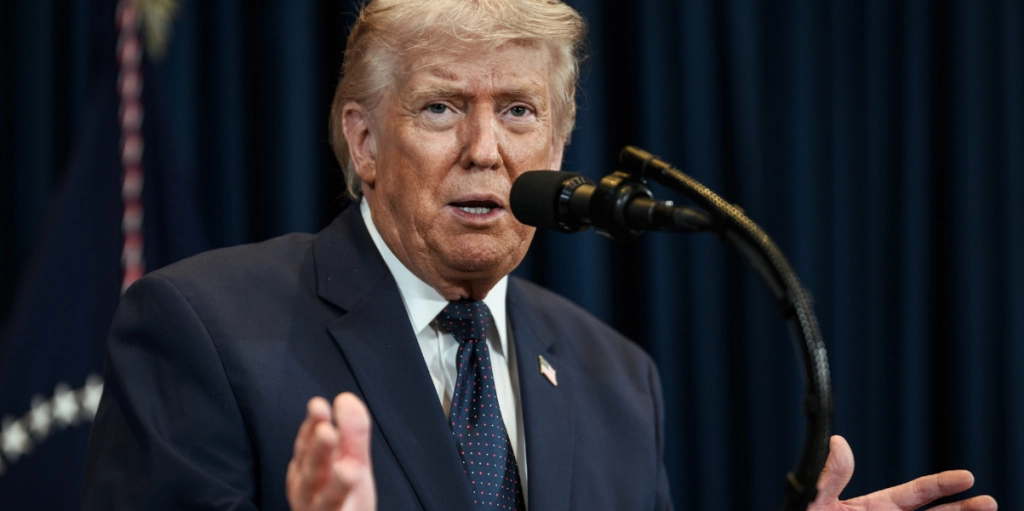
Americans put affordability at the top of their priorities as Trump becomes a major factor in the midterms.


Donald Trump has spent much of his second presidency putting immigration, foreign policy and America’s place in the world high on the political agenda.
Voters approaching November’s midterm elections appear to have something considerably closer to home on their minds.
Paying the bills.
Fresh polling shared by The Irish Star finds that the cost of living comfortably outranks every other issue among likely voters, while another national survey shows Democrats holding a double-digit advantage over Republicans on the congressional ballot.


Neither poll can tell Americans how November 3 will turn out. Together, however, they offer a snapshot of an electorate heavily focused on household finances just weeks before voting begins.
Cost of living leaves everything else behind
Democracy Institute surveyed 1,500 likely voters nationwide between September 21 and 23 and asked them to identify their most important voting issue.
Cost of living came first by a considerable margin at 44 percent.
The economy followed at 17 percent, while the Iran war received 10 percent. Artificial intelligence and healthcare each registered 9 percent, immigration received 6 percent and crime finished at 5 percent.
Such numbers put pocketbook concerns firmly at the front of the campaign conversation.
Economic worries also arrive at an awkward moment for Republicans as rising fuel costs have added another expense to household budgets during the continuing conflict with Iran. Recent polling from other organizations has likewise found substantial voter dissatisfaction with economic conditions and Trump’s handling of them.
Another poll brings more difficult numbers
Separate polling from NPR, PBS News and Marist offers another look at the national political environment.
Among 1,280 registered voters surveyed September 14 and 15, 53 percent said they were more likely to support the Democratic congressional candidate in their district, compared with 41 percent choosing the Republican.
Independent voters showed an even wider split, with 57 percent choosing the Democratic candidate and 32 percent choosing the Republican.
Marist reports a margin of error of plus or minus 3.8 percentage points for registered voters.
The poll also asked Americans which party they trusted more on several major issues. Democrats held an eight-point advantage on the economy, 42 to 34 percent, and a 13-point advantage on gas prices, 40 to 27 percent.
Immigration produced a much closer result, with Democrats at 41 percent and Republicans at 38 percent.
Trump is very much on the ballot without being on it
Trump’s name will not appear alongside congressional candidates in November, but voters are hardly treating him as a spectator.
Marist found that 45 percent described their congressional choice primarily as a vote against Trump, while 24 percent viewed theirs primarily as a vote for him.
Another 30 percent said the president was not much of a factor.
Independent voters were particularly notable, with 54 percent describing their congressional vote primarily as opposition to Trump.
Trump’s own standing in the same survey provides additional context.
Only 39 percent of registered voters approved of his job performance, while 59 percent disapproved. His personal favorability stood at 37 percent favorable and 58 percent unfavorable.
Personal finances are flashing another warning light
Household finances tell a similar story.
Marist found that 34 percent of registered voters said their family’s financial situation had become worse over the previous year, compared with 20 percent who said it had improved.
Independent voters were considerably more pessimistic. Among that group, 41 percent reported being financially worse off, while only 16 percent said their situation had improved.
Those figures help explain why affordability is proving difficult to push out of the political conversation.
Republican candidates can campaign on immigration, foreign policy and Trump’s broader agenda, but voters repeatedly telling pollsters that their wallets are hurting presents a more stubborn challenge.
Republicans defend territory Trump carried
Concern extends beyond the most obvious battlegrounds.
Republicans have been forced to devote attention and campaign resources to districts Trump carried comfortably in 2024, according to the source material, while races in states including Iowa have become increasingly competitive.
Fresh Marist polling in Iowa illustrates that pressure. Forty-six percent of registered voters there say their family finances have worsened over the past year, compared with just 15 percent who report an improvement.
Trump’s job approval among Iowa registered voters stands at 41 percent, with 58 percent disapproving.
National polls cannot automatically be translated into individual House and Senate outcomes. Different candidates, turnout patterns and local political conditions can produce very different results from one district or state to another.
Still, national Republicans are heading toward the final weeks of the campaign with voters talking loudly about affordability.



