
 Nicolai Haugsted

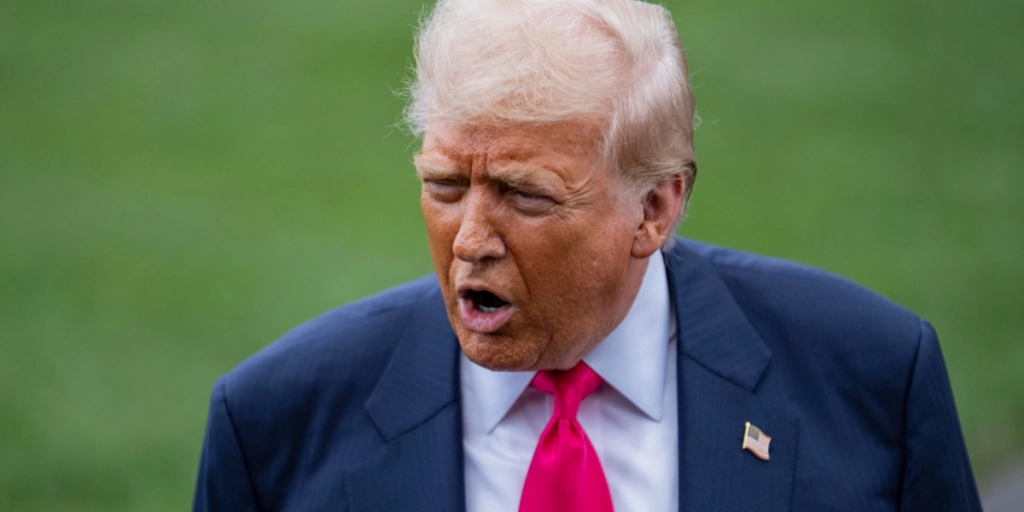
Trump offers a rare sign of restraint as Saudi Arabia, Qatar and other allies urge him to avoid further bloodshed

Since the United States and Israel launched their military campaign on February 28, the conflict has disrupted international trade and strained Washington’s relationships with several important partners. The political consequences have also reached American voters, with frustration over the war emerging as a major factor in the Republican Party’s crushing defeat in last week’s midterm elections.
Now, pressure is mounting on Donald Trump from countries that have spent months dealing with the conflict’s consequences. And following a series of diplomatic discussions at the White House, the president has announced that he intends to hold off on launching additional military strikes against Iran.
However, there is a rather significant catch.The American naval blockade remains in place, and the two countries are still nowhere near agreeing on the conditions for ending the war.
Speaking to Reuters and later appearing in the White House press briefing room on Monday, Trump said he was prepared to refrain from further military action against Iran for the time being.


Trump announces a pause after pressure from regional allies
Speaking to Reuters and later appearing in the White House press briefing room on Monday, Trump said he was prepared to refrain from further military action against Iran for the time being.
The decision followed discussions with Qatari Prime Minister Sheikh Mohammed bin Abdulrahman Al-Thani, whose government has played a central role in diplomatic efforts to end the conflict.
Trump explained that several Middle Eastern countries had urged Washington to avoid another escalation.
Among those he identified were Qatar, Saudi Arabia, the United Arab Emirates, Bahrain and Kuwait.
According to the president, the governments of these countries would prefer the United States to pursue a diplomatic solution rather than resume major attacks.
Trump nevertheless made clear that the American military remains prepared for further action.
“The United States of America is fully locked and loaded with the best equipment ever made, and we don’t think there’s going to be any reason to use it,” he told reporters.
He said the decision reflected requests made “at the behest of countries that are their neighbors.”
The comments represent a more restrained public position from a president who has repeatedly defended the military campaign against Iran.
However, the announcement does not amount to a ceasefire, nor does it mean Washington has agreed to withdraw its forces or end its naval operations.
For now, the president appears willing to pause additional strikes without surrendering the military pressure already being applied.
Qatar takes the lead in a difficult diplomatic mission
The latest developments followed a meeting between Trump and Al-Thani at the White House.
The Qatari prime minister, who also serves as his country’s foreign minister, had visited Tehran the previous week before traveling to Washington.
Qatar has served as an important intermediary throughout the conflict, helping transmit messages between the United States and Iran.
Al-Thani described his discussions with Trump and Vice President JD Vance positively.
“Grateful for the positive discussions on reaching a deal and bringing peace to the region,” he wrote on X.
His comments offered a more optimistic assessment than those coming from several other officials involved in the diplomatic process.
Despite the renewed talks, significant disagreements remain over the terms of a potential agreement.
Iran has proposed a framework that would require the United States to lift its naval blockade of Iranian ports, ease certain sanctions and stop bombing Iranian territory.
In exchange, Tehran would end its own restrictions on shipping through the Strait of Hormuz.
Negotiations concerning Iran’s nuclear program and additional sanctions would follow.
Washington has repeatedly rejected the proposal.
Secretary of State Marco Rubio dismissed Tehran’s conditions on Sunday as “outrageous and ridiculous and really not realistic.”
Iran’s Foreign Ministry spokesperson Esmaeil Baghaei defended the proposal on Monday, describing it as the most reasonable option currently available.
The competing positions illustrate how far apart the two governments remain, despite their apparent interest in avoiding another major escalation.
Iran rejects claims of progress
Not everyone in Tehran shares Qatar’s optimism about the latest diplomatic efforts.
Mohsen Rezaei, a senior Iranian security official, issued a sharply worded response to reports suggesting that negotiations were advancing.
Writing on X, Rezaei urged the United States to “stop manufacturing fake news about imaginary talks.”
He added that it was “time to surrender to the seven conditions Iran has repeatedly set out.”
His remarks highlighted the mistrust that continues to complicate relations between Washington and Tehran.
The Iranian government wants the American blockade lifted and sanctions eased, while the Trump administration remains unwilling to accept the proposed terms.
Rubio has also cautioned against expecting a diplomatic breakthrough in the immediate future.
That skepticism is shared by officials elsewhere in the region.
Anwar Gargash, a senior adviser in the United Arab Emirates, warned on Monday that a comprehensive political agreement between the United States and Iran would be difficult to achieve.
“We should… prepare for a long period of uncertainty in which neither a decisive resolution nor stable regional order can be taken for granted,” he said.
The warning reflects concerns that the conflict could continue in a prolonged state of military tension without either side securing a decisive advantage.
The war continues despite Trump’s announcement
While the president has suggested that further American strikes are unlikely for now, reports of military activity continue to emerge.
Iranian state media reported that American forces attacked Qeshm island overnight on Sunday.
According to a provincial official quoted by the semi-official Fars news agency, the reported strikes did not damage essential infrastructure or disrupt vital services.
The United States has not publicly commented on the allegations.
A senior Iranian source told Reuters that American attacks had targeted radar systems used for air defense and maritime navigation, alongside military facilities associated with missile launches and naval mines.
The claims have not been independently confirmed in the information provided.
Meanwhile, commercial shipping remains vulnerable to attacks in the Gulf and the Strait of Hormuz.
International maritime data indicates that attacks on tankers increased sharply during October and have continued at exceptionally high levels.
Iran said on Sunday that a tanker had struck a mine east of the Strait of Hormuz.
An Iranian state television reporter subsequently claimed that 11 tankers had been “disabled” over the previous 10 days.
Those figures have not been independently verified.
The continued incidents demonstrate that the conflict remains dangerous even without a new large-scale American offensive.
The Strait of Hormuz remains a major obstacle
One of the biggest disagreements concerns the strategically important Strait of Hormuz.
The narrow waterway connects the Persian Gulf with international shipping routes and serves as a crucial passage for global oil and gas exports.
Disruptions to shipping through the strait can have significant consequences for international energy markets.
Iran has used its ability to threaten maritime traffic as a source of leverage throughout the conflict.
The United States, meanwhile, has maintained a naval blockade intended to pressure Tehran.
Trump confirmed on Monday that the American blockade would remain in place.
That decision complicates the prospects of a broader agreement because lifting the blockade is among Iran’s central demands.
For regional governments, the continuing uncertainty presents a serious economic and security problem.
Countries such as Qatar, Saudi Arabia and the United Arab Emirates depend heavily on stable shipping routes and have strong reasons to prevent further attacks.
Their diplomatic efforts therefore reflect both a desire to reduce military tensions and a practical need to restore confidence in regional trade.
Turkey adds its voice to calls for diplomacy
Pressure on Washington is also coming from beyond the Gulf states.
Turkish President Recep Tayyip Erdogan said Monday that he had personally urged Trump to avoid another escalation.
Turkey has repeatedly advocated a diplomatic resolution to the conflict, warning that further military action could deepen instability across the region.
“We emphasise at every opportunity that it is possible to resolve these issues through dialogue and diplomacy. Unfortunately, we see a negative shift once again. We are doing our utmost to prevent this,” Erdogan told reporters.
His comments reflected growing concern among regional governments that the conflict could continue indefinitely without a negotiated settlement.
The diplomatic push comes as Qatar attempts to bridge the differences between Washington and Tehran.
Vice President JD Vance, who previously led negotiations that produced a short-lived truce in June, is also involved in the latest discussions.
However, the failure of earlier diplomatic efforts remains a reminder of how difficult it has been to establish a lasting agreement.



