
 Lauge Risom Koch

Russian Foreign Minister Sergey Lavrov claimed European war preparations could provoke a conflict, dismissing warnings of a Russian attack as nonsense.
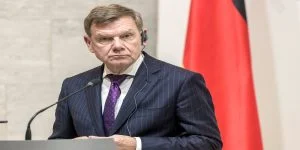

Russian Foreign Minister Sergey Lavrov claimed that European preparations for war could provoke an actual conflict. According to the Kyiv Post, the top diplomat dismissed warnings of a Russian attack on Europe as nonsense. He made these remarks during his final press conference at the United Nations General Assembly in New York.
Lavrov argued that European nations are actively preparing for conflict by investing heavily in arms production. He stated, “This position could turn out to be a self-fulfilling prophecy”. The foreign minister warned that Moscow would not hesitate to respond with military force if Europe initiated an attack.
The top diplomat referenced previous claims by Russian President Vladimir Putin regarding the nature of a potential continental conflict. He emphasized that any direct war with European nations would end quickly. These comments follow Putin’s recent remarks concerning the treatment of Russian speakers living in the Baltic states.
Familiar denials and historical context
The Kremlin has a history of issuing similar denials before launching major military offensives. As noted by the Kyiv Post, Russian diplomats repeatedly denied plans to attack Ukraine prior to the 2014 invasion. The Russian government issued identical assurances in the days immediately preceding the full-scale invasion in February 2022.


During an address to the UN Security Council, Lavrov continued to refer to the invasion as a special operation. He claimed that Ukraine would have maintained its 1991 borders if European nations had not interfered. Meanwhile, Putin told journalists that Russia was not preparing for any military action against its European neighbors.
Despite these peaceful assurances, Russian leadership continues to employ aggressive rhetoric regarding the Baltic states. The Russian president accused these nations of violating the rights of Russian speakers without providing specific examples. Analysts note that Moscow frequently uses the pretext of protecting Russian-speaking populations to justify hostile actions against neighboring countries.
European defense and stalled diplomacy
The European military buildup comes in direct response to an intensifying campaign of Russian hybrid attacks across the continent. Over the past few months, drone incursions, sabotage operations, and cyberattacks against European infrastructure have nearly doubled. Several EU member states now officially classify these coordinated disruptions as direct attacks against their national security.
In response to these escalating threats, allied nations continue to strengthen their defensive postures along the eastern flank. Lithuania recently fortified defenses around its critical infrastructure, while the United States confirmed a new troop rotation. Furthermore, Ukrainian President Volodymyr Zelensky warned that Russia might target another European nation to fracture Western unity.
Amid these heightened tensions, international efforts to achieve a diplomatic resolution to the war remain stalled. A coalition of 51 countries recently signed a joint statement urging Moscow to agree to a full ceasefire. However, the Kremlin consistently rejects Ukrainian proposals for direct negotiations while publicly blaming Kyiv for the diplomatic deadlock.



