
 Nicolai Haugsted
Trump puts elections on the agenda as Venezuela’s new government promises a transition to democracy.

Venezuela has spent most of 2026 without a clear answer to one rather important question: when will its citizens actually get to vote?
Donald Trump now says the subject has reached his conversations with the country’s interim leader.
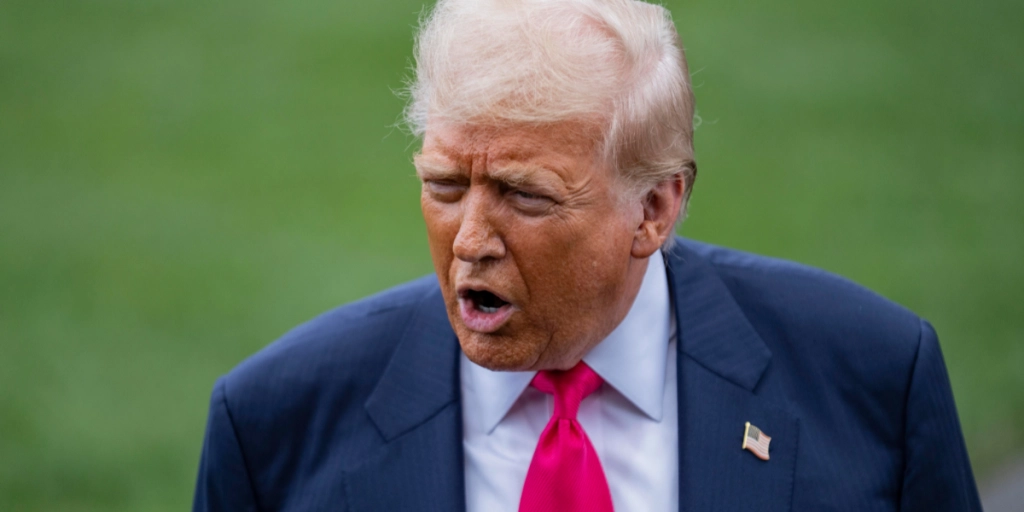
Speaking to reporters at the White House on Saturday, the US president confirmed that elections were discussed during his contact with Delcy Rodríguez, who took power after Nicolás Maduro was captured by American forces in January.
“I did,” Trump said to Reuters when asked whether he had spoken with Rodríguez.


“I spoke about elections.”
The confirmation adds another piece to Washington’s rapidly changing relationship with Caracas. Rodríguez has publicly promised a transition toward “full democracy,” while the Trump administration is pushing for political and economic changes before Venezuela heads to the polls.
One rather significant detail remains missing.
Nobody has announced when that election will happen.
Trump and Rodríguez finally meet
Rodríguez and Trump briefly met on Tuesday during the United Nations General Assembly in New York.
The encounter marked her first visit to the United States since Maduro’s capture and represented a striking shift in relations between two governments that spent years treating each other as adversaries.
Rodríguez subsequently praised the reopening of dialogue with Washington and described the meeting as “historic.”
Trump’s comments on Saturday provide direct confirmation that Venezuela’s political future formed part of their discussions.
Secretary of State Marco Rubio had already revealed that elections and political reforms were among the subjects raised.
“You have to have elections at the end of the day,” Trump told Rodríguez during the meeting, according to a source briefed on the conversation cited by Axios.
Venezuela promises a vote but not a date
Rodríguez took another step during her appearance before the UN General Assembly.
“There will be elections in Venezuela,” she said, while describing talks with opposition groups aimed at creating conditions for a political process.
No date accompanied that promise.
Rodríguez had previously given few public indications about when an election might take place during her first nine months in power.
Washington has also resisted demanding an immediate vote, arguing that Venezuela needs economic and institutional repairs before a stable democratic transition can succeed.
Rubio said the goal goes beyond simply putting ballot boxes in polling stations.
“We don’t just want there to be free and fair elections, but for there to be a lasting republic,” he said this week, warning that a newly elected government inheriting severe economic and social instability could struggle to survive.
Money is part of the conversation too
Democracy was not the only subject on the table.
Venezuela’s enormous debt problem also featured prominently in the Trump-Rodríguez discussions.
“There’s a lot that needs to be fixed in order for Venezuela to be successful,” Rubio told reporters.
“Debt restructuring is key to that.”
Venezuela and state oil company PDVSA have roughly $60 billion in defaulted bonds alone, while estimates including accumulated interest, arbitration awards and other claims put total liabilities above $150 billion.
Washington argues that repairing the economy, rebuilding political institutions and eventually holding credible elections need to be parts of the same transition.
Opposition figures and critics of the process have questioned whether the US is placing economic agreements ahead of a faster return to elections, while administration officials say rushing a vote could leave a future democratic government facing an economic disaster.



