Kenneth Glad

Industrial progress often leaves a physical mark on the towns that drive it. But sometimes those man-made monuments hide a fatal flaw just beneath the surface. When nature finally breaks the balance, the youngest residents pay the highest price.


In the autumn of 1966, nearly a month of heavy rain and thick fog swallowed Aberfan. The small Welsh mining town, located just north of Cardiff, sat under the shadow of massive waste tips. These huge piles of coal debris had been growing for years, stacked dangerously high on the hillsides right above natural underground water streams.
On a Friday morning, October 21, students arrived at Pantglas Junior School just before the autumn break. The weather outside was miserable, but the children were in high spirits for their final lessons. Eight-year-old Gaynor Minett sat between her brother and sister in math class.
“We were all working, and then it began. It was a rumbling sound, and everyone got quiet. We sat frozen in our seats,” Minett later noted in her diary, according to HistorieNet.
The mountain falls
A fellow student, nine-year-old Bernard Thomas, thought a jet plane was flying overhead.


“Suddenly this sound rumbled, rumbled, rumbled, and we did not know what it was,” Thomas recalled.
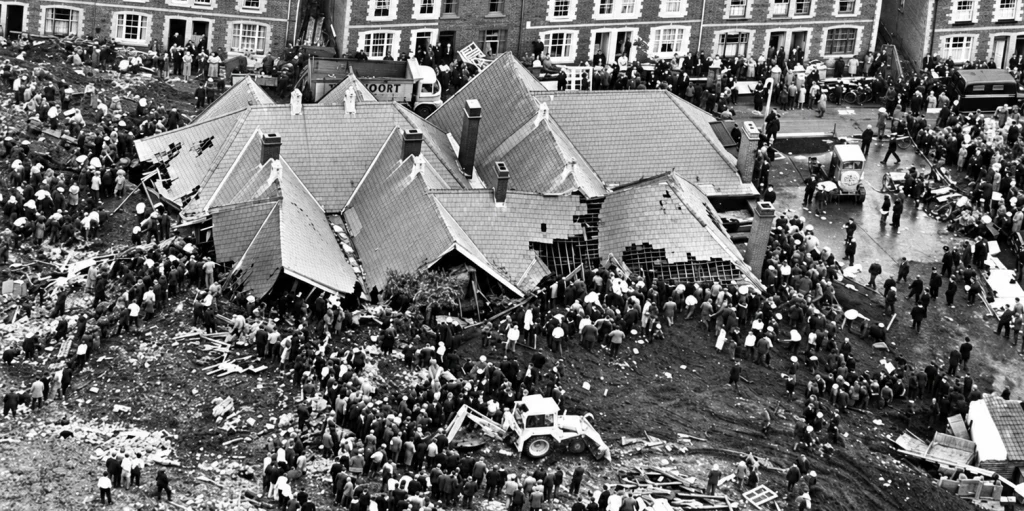
Moments later, a giant wave of mud, rock, and coal smashed through the school windows. The avalanche crushed the building instantly.
A massive pile of mining waste, known locally as Tip 7, had collapsed after weeks of relentless rain. Officials had built the towering 34-meter-high mound directly over natural underground water springs, which turned the debris into a deadly liquid.
The heavy sludge flowed down the valley at a terrifying speed of 65 kilometers per hour. More than 360,000 tons of waste swallowed everything in its path before striking the classroom walls.
Mothers dig fast
Inside the ruined classroom, a fallen radiator trapped Minett but saved her from suffocating. She survived with a badly crushed leg.
“It looked as if it swung freely, as if it did not belong to me,” she wrote in her diary.
The thick sludge reached halfway up the wall and completely blocked the classroom door. Three men eventually smashed a window from the outside to reach the trapped children.
Minett cried as she recognized her grandfather among the rescuers. He pulled her from the rubble and passed her to her father, who loaded her into an ambulance before returning to the dig site.
Outside, local mothers rushed to the school and dug through the heavy mud with their bare hands. Some women dug until the skin peeled from their fingers, working alongside arriving miners with shovels.
Rescue teams from neighboring towns raced toward the scene. Roy Hamer, a mine rescue worker, felt a sense of dread when his team was sent to an educational building instead of a coal pit.
A town forever changed
“This must be something terrible. What on earth is a mine rescue service doing at a school?” Hamer asked his boss, according to HistorieNet.
By late evening, workers had pulled dozens of victims from the wreckage. Grieving teachers faced the grim task of identifying their own students in a local chapel.
The tragedy claimed 116 children and 28 adults. In a single morning, half of the local youth vanished completely.
Days later, the shattered community held a massive joint funeral. The disaster left a deep psychological scar, and residents stopped celebrating birthdays or weddings for years.
Firefighter Len Haggert felt the heartbreak of passing a lifeless child through a broken window to a doctor and said to a local news outlet at the time:
“While I carried the child, he whispered: ‘Talk to her, Len! Talk to her, we cannot let the parents know.'”
A government tribunal later blamed the national coal authority for ignoring clear safety risks. Yet no single official ever faced individual punishment or lost their job.
Instead, the coal board offered families a mere 500 pounds in compensation per dead child. Officials even forced grieving parents to prove they had been closely attached to their children before handing over the money.