
 Kenneth Glad
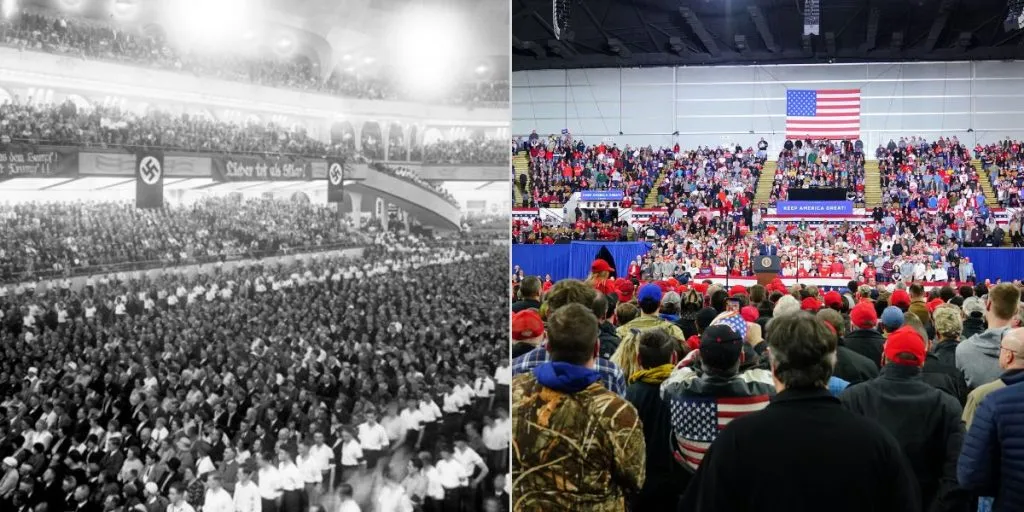
When a nation faces total economic ruin, exhausted voters often look for a savior who promises simple answers to complex problems. History shows that widespread political desperation can clear a sudden path for radical voices. Sometimes the damage happens right out in the open.


German politicians completely failed to solve massive unemployment after the First World War and later the global stock market crash. The young government was already buckling under heavy war reparations and extreme inflation when Wall Street crashed in 1929.
Adolf Hitler initially tried to seize national control by force in a 1923 Munich rebellion known as the Beer Hall Putsch. Armed police crushed the violent uprising almost immediately, writes HistorieNet.
A sympathetic judge handed him a surprisingly light five-year prison sentence for treason. He ultimately served only nine months. He used this quiet time to write his notorious political manifesto, “Mein Kampf.”
Changing the message
The Nazi party struggled to gain traction for years, winning a dismal 2.8 percent of the vote in the 1928 parliamentary elections. Following that embarrassing defeat, the party leader changed his entire public strategy.


He instructed his most extreme followers to completely soften their antisemitic slogans and public rhetoric. He hoped this calculated shift would keep them from scaring away conservative, middle-class voters who desired stability.
Instead of vocal extremism, his SA stormtroopers took the fight directly to the streets. These paramilitary forces launched violent physical attacks against rival political factions, specifically targeting Social Democrats and Communists in brutal clashes, while waiting for the national political tide to finally turn.
The final steps
The 1929 Wall Street crash sent shockwaves across the ocean, leaving millions of German workers suddenly unemployed. This severe economic pain brought desperate citizens straight toward the radical platform. By mid-1932, the group had officially secured the largest share of parliamentary seats.
Hitler still lost the 1932 presidential election to the sitting leader, Paul von Hindenburg. However, capturing nearly 37 percent of the national vote proved his aggressive movement had grown too large to ignore.
Conservative politicians, including former chancellor Franz von Papen, foolishly believed they could control the volatile rising star. In a massive miscalculation, they appointed him chancellor in early 1933. They assumed they could easily tame him within a fragile coalition government.
A massive fire at the parliament building in Berlin gave the new leader a perfect excuse to strike. Claiming communists were planning a violent revolution, he instantly blamed political rivals. He rapidly arrested their leaders and shut down all opposition newspapers.
Absolute authority
Within weeks of the election, the frightened government passed sweeping emergency laws. According to HistorieNet, the infamous Enabling Act handed the chancellor absolute dictatorial power for the next four years.
The regime moved swiftly to strip away civilian rights. They fired Jewish workers, lawyers, and doctors from public service jobs. Soon after, they outlawed every independent labor union in the country and forced workers into a single state-run organization.
Historienet reports that German schools quickly made extreme racial theories a mandatory part of the daily curriculum. Officials also banned Jewish citizens from participating in any cultural activities.
Following a bloody and ruthless purge of his own SA paramilitary leaders during the Night of the Long Knives, Hitler eventually secured the absolute loyalty of the national military. When the aging president died in August 1934, he claimed total power by merging the highest national offices.
Echoes in America
This pattern of exploiting economic anxiety is not unique to 1930s Europe.
Modern political analysts often draw direct parallels between historical crises and the rise of Donald Trump in the United States, says HistoryHit. When working-class communities faced job losses and rising costs, Trump promised simple, aggressive solutions that bypassed traditional political norms.
Just as earlier populist figures attacked democratic institutions, Trump built his movement by eroding public trust in mainstream media and election systems. Desperate voters once again proved willing to overlook democratic safeguards in exchange for a strongman who promised to dismantle the system on their behalf.



