Nicolai Haugsted

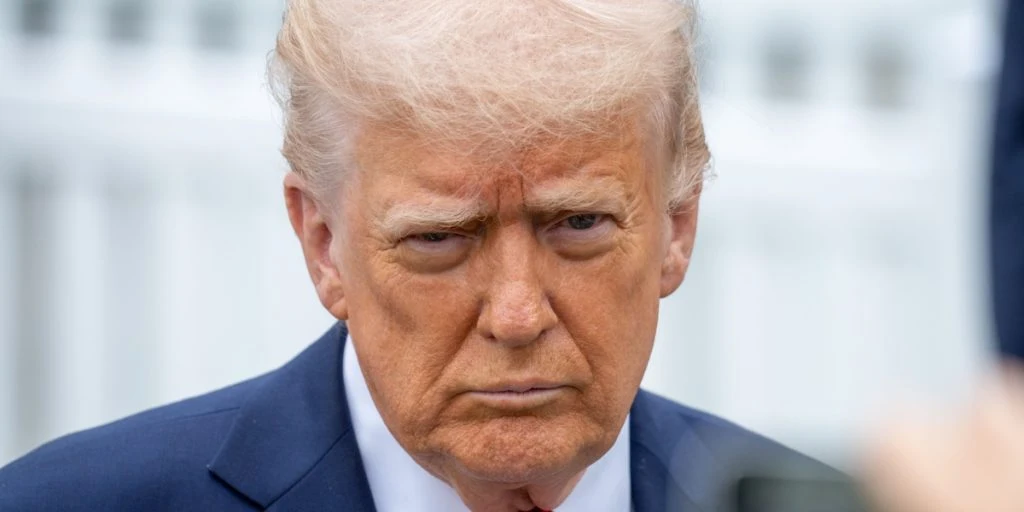
The president is pushing an industry that several Republican candidates are actively campaigning against.


Republicans heading into November’s midterm elections are discovering that America’s artificial intelligence boom comes with a political complication. The technology industry wants more infrastructure to support its rapid expansion, but communities across the country are increasingly questioning whether they want enormous data centers built in their neighborhoods.
Concerns about electricity costs and the local impact of these facilities have turned what was once largely an economic development issue into a contentious campaign topic.
Some Republican candidates have responded by distancing themselves from the industry, hoping to win over voters who oppose new developments. President Donald Trump, however, appears determined to take a different approach.
In a Truth Social post published at 1:37 a.m. Eastern Time on Wednesday, the president renewed his support for building more data centers, urging technology companies and local authorities to reach financial agreements that could make the projects more attractive.


His intervention comes at a particularly delicate moment for Republican candidates who have built parts of their campaigns around opposition to the same facilities.
Trump wants companies to make deals
The president’s latest proposal focuses on providing financial benefits to communities that agree to host large data centers.
According to Trump, new facilities should generate their own electricity rather than relying entirely on existing power infrastructure.
He also suggested that surplus electricity could be supplied or sold to surrounding communities or the wider power grid.
Trump claimed such arrangements could potentially reduce electricity prices, although the actual financial impact would depend on how individual projects were structured.
His central message was that technology companies should offer residents a direct financial incentive to support new developments.
“If companies want to make their Data Centers popular, pay the community, and/or individuals within the community, a ‘dividend,'” Trump wrote.
The president argued that financial agreements had already helped overcome opposition in some communities.
“I have watched the process closely, and Data Centers that were highly unpopular in a certain area, have become extremely popular when a financial deal is struck,” he continued.
He ended the post with an emphatic instruction.
“MAKE DEALS, and get them built!!! GREAT FOR THE U.S.A. President DJT”
Republican candidates are campaigning against the same industry
Trump’s enthusiasm creates a potentially uncomfortable contrast with the positions adopted by several Republican candidates.
According to Axios, opposition to data center construction has become a significant issue in multiple races ahead of November’s elections.
In Wyoming, Republican Chuck Gray won his party’s primary for an open House seat after campaigning on a promise to stop data center developments.
His campaign advertisements directly appealed to voters concerned about the industry’s expansion.
Wisconsin has seen similar tensions.
Republican Representative Tom Tiffany has used the issue against his Democratic opponent, David Crowley, labeling him “data center David Crowley” in campaign advertising.
The strategy reflects an effort to associate political opponents with projects that have encountered resistance from local communities.
Trump’s latest message, by contrast, encourages precisely the kind of construction that some candidates are promising to resist.
Democrats have spotted an opportunity
The issue is not confined to Republican primary campaigns.
Democrats have also begun using concerns about data centers to challenge Republican opponents.
In Ohio, former Senator Sherrod Brown has criticized Republican Senator Jon Husted over his association with the industry’s expansion.
Brown has described Husted as “the face of data centers,” seeking to connect him with the political controversy surrounding the facilities.
According to Axios, the National Republican Senatorial Committee has privately warned artificial intelligence companies about the potential consequences of the Ohio race.
The reported warning suggested that a defeat for Husted could weaken political support for data center development more broadly.
Such concerns illustrate how an issue associated with technological investment has become intertwined with electoral strategy.
For Republican candidates, the difficulty is balancing support for economic growth and technological development against objections from voters who fear the local consequences.
The president has defended data centers before
Trump’s overnight message was not his first attempt to improve the industry’s public image.
The president has repeatedly described data centers as important to America’s economic and technological ambitions.
He previously referred to the industry as a “Golden Goose,” arguing that communities could miss valuable opportunities by rejecting new projects.
In August, he acknowledged that data centers “could use a little public relations help.”
The remark suggested that Trump recognized the gap between the industry’s economic ambitions and its reception among some local residents.
Following a White House meeting with technology executives on September 29, the president also raised the possibility of providing financial dividends to people living near data centers.
His latest Truth Social post therefore builds on an idea he has promoted for several weeks rather than introducing an entirely new position.
Could financial incentives change public opinion?
Trump’s proposal rests on the assumption that residents may become more supportive of data centers if they receive direct financial benefits.
Such arrangements could potentially take several forms, including payments to local governments, financial contributions to communities or benefits for individual residents.
However, the president did not provide detailed information about how a dividend system would operate.
His suggestion that large facilities generate their own electricity also raises practical questions about energy infrastructure, costs and implementation.
The potential for lower electricity bills would depend on the agreements reached between developers, utilities and local authorities.
Financial incentives might address some concerns, but they would not automatically resolve every objection associated with large-scale construction.
For communities worried about the local effects of data centers, the details of individual proposals would remain important.