Kenneth Glad

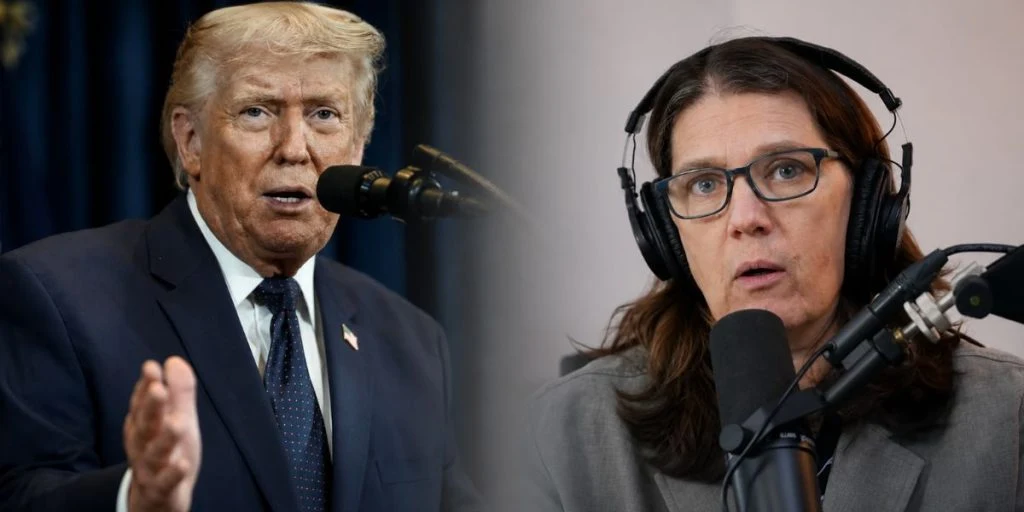
Military communications interruptions have prompted competing explanations from officials. Energy agreements and sanctions waivers have added another source of controversy.

Mary Trump believes her uncle’s sympathy for Russian President Vladimir Putin goes back decades. Her remarks come as Washington faces questions about satellite restrictions that disrupted Ukrainian military operations.
Conflicting reports have also left Ukrainian officials uncertain about who ordered the restrictions and whether they have been fully removed.
Mary Trump describes longstanding sympathy for Putin
During an interview on The Rest Is Politics: Leading, Mary Trump was asked whether her uncle had recently moved closer to Russia or had always favored Putin.
“He’s been on Putin’s side since the ’80s, I believe.”


The clinical psychologist told podcast hosts Rory Stewart and Alastair Campbell that she believes Donald Trump admires leaders who exercise power without the institutional restraints imposed by democratic governments.
She suggested that his attitude toward Putin reflects a fascination with authority and a desire to avoid political limitations. These are, however, her personal interpretations rather than evidence of undisclosed cooperation between Trump and Moscow.
Mary also questioned her uncle’s commitment to Western alliances. She argued that he often approaches international relationships through competition and personal advantage rather than cooperation.
Ukraine reports disruptions to military satellite communications
The controversy involves Starshield, a military satellite communications service developed by Elon Musk’s SpaceX. According to Reuters, two U.S. officials and a Western official familiar with the matter said instructions to restrict the system originated inside the White House.
The officials spoke anonymously and did not identify who authorized the decision or implemented the order.
Ukrainian military personnel reported losing contact with drones and other fast-moving equipment. The interruptions affected attack missions and efforts to intercept incoming Russian drones.
Connections reportedly became unreliable when equipment traveled faster than approximately 100 mph (160 km/h). The restriction did not physically prevent drones from flying faster, but interfered with the communications needed to operate them.
President Volodymyr Zelensky said Ukrainian tests found that comparable restrictions did not apply inside European Union territory. He questioned explanations portraying the disruption as an ordinary technical problem.
Washington offers conflicting accounts of responsibility
The question of who ordered the slowdown has produced several explanations. The Wall Street Journal initially reported that Musk had authorized the restrictions following discussions with Trump.
CBS News subsequently reported that Musk had decided to limit Ukraine’s access after conversations with administration officials. However, the broadcaster could not establish precisely how that decision was implemented.
Trump denied ordering the restrictions. Secretary of State Marco Rubio and Defense Secretary Pete Hegseth also rejected suggestions that the administration had deliberately reduced Ukraine’s access.
The accounts differ considerably. While Reuters traced instructions to the White House, other reporting placed responsibility with Musk.
Neither explanation has established an undisputed chain of authorization.
Questions remain over restored service
On October 22, The Wall Street Journal reported that Trump had called Musk and asked him to remove the limitations.
Some U.S. and Ukrainian officials subsequently reported improved performance. However, Ukrainian officials also indicated that the service had not returned to its previous capabilities.
Trump maintained that Starshield had been restored. Yet a European official told Associated Press that the speed restriction remained in place.
The conflicting accounts leave it unresolved whether improvements extended across all affected Ukrainian equipment and locations.
Zelensky continued seeking an explanation from Washington. The dispute has also attracted congressional attention, with Democratic Senator Richard Blumenthal announcing an inquiry into the interruptions.
Russian energy deal adds to criticism
The satellite controversy followed another decision that drew criticism from Kyiv. According to Reuters, Trump reached an agreement with Putin that allowed Russian diesel exports to resume reaching international markets.
The White House presented the arrangement as a way to lower fuel prices. Officials also hoped economic incentives would encourage Moscow to participate in negotiations aimed at ending the war.
On October 16, Trump waived broad provisions of the newly adopted Lindsey O. Graham Sanctioning Russia and Iran Act.
The waivers affected additional sanctions and trade restrictions rather than eliminating every existing U.S. measure against Russia.
In a written certification submitted to Congress, Trump argued that applying the new restrictions could obstruct negotiations toward a lasting peace agreement.
The administration retained the option of imposing restrictions later if circumstances changed. Critics nevertheless questioned why Washington was reducing economic pressure before Russia had agreed to comparable concessions.
Former naval officer challenges the strategy
Writing in the Los Angeles Times, retired U.S. naval officer Jon Duffy questioned the administration’s approach to the conflict.
Duffy argued that refusing additional military assistance was fundamentally different from restricting technology that Ukrainian forces already depend upon to defend their country.
He also questioned the strategic benefit of easing sanctions while Russian forces continued attacking Ukrainian territory.
Ukraine has inflicted substantial military losses on Russia without American troops fighting directly in the war. Duffy maintained that continued assistance to Kyiv therefore served American security interests.
He also framed the conflict around Ukraine’s right to determine its political future without Russian control.
Family history provides another perspective
Mary Trump offered a personal account of her uncle’s upbringing during the podcast episode. She described her grandfather Fred Trump as a wealthy New York property developer who placed enormous importance on success and family reputation.
Her father Fred Trump Junior had initially been expected to inherit responsibility for the property business. According to Mary, his personality and interests eventually disappointed her grandfather.
She believes Donald learned important lessons from watching his older brother lose his father’s approval. She described a family environment where kindness and sensitivity could be treated as weaknesses.
Mary also discussed the dispute over her grandfather’s estate, which she estimated at approximately $1 billion. She said she and her brother were excluded from a substantial inheritance under his will.
New York court records show that they subsequently reached a settlement with other family members in April 2001. Mary received compensation in exchange for relinquishing interests in family assets.
Despite her criticism, Mary acknowledged her uncle’s ability to connect with people and make individuals feel personally recognized.
She emphasized that formal psychological diagnoses require clinical evaluation. Her family experiences and professional training do not constitute such an examination of the president.
European allies question Washington’s reliability
The discussion on the podcast eventually turned to Europe’s relationship with the United States.
Stewart suggested that Trump’s demands for Europe to take greater responsibility for Ukraine might reflect an expectation that European governments would fail.
Mary Trump agreed with his broader criticism and linked her uncle’s approach to what she described as his interest in power and humiliation. She also argued that political figures supporting his policies could remain influential after he leaves office.
The administration maintains that economic incentives and negotiations offer a route toward ending the war. Critics argue that concessions made without corresponding Russian commitments could weaken Kyiv’s position.
Meanwhile, responsibility for the satellite restrictions remains contested. Despite reports of improved performance, Ukrainian officials have not received a definitive public explanation establishing who authorized the limitations or whether full service has been restored.