
 Kenneth Glad

When the house finally falls silent, many people sit down to work on a personal project. Almost immediately, a harsh internal critic arrives to point out every flaw. Creators have long relied on a specific evening ritual to silence this self-doubt, and science suggests they might be onto something real.


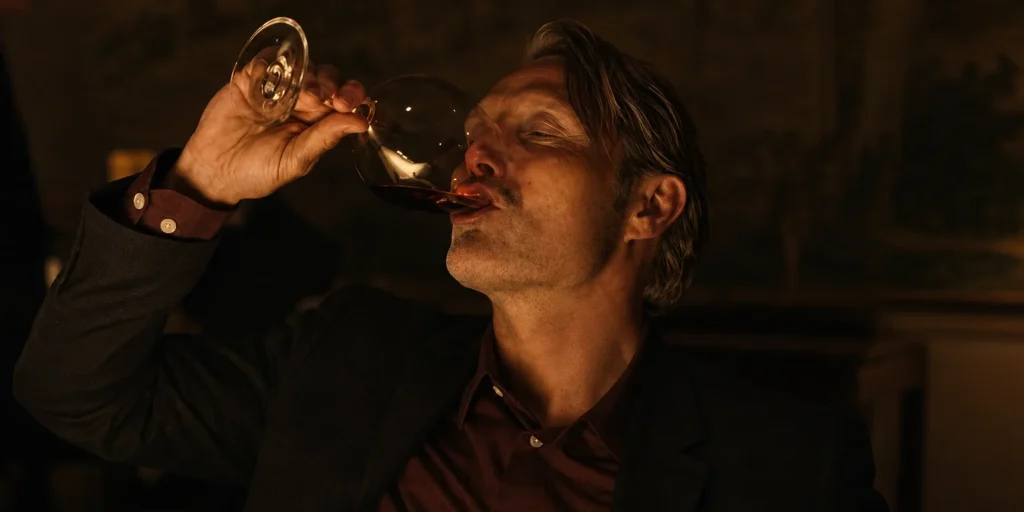
Pop culture loves the idea of liquid inspiration. The 2020 hit film “Another Round” explored this concept, following four teachers who experiment with drinking to loosen up and improve their classes.
While the movie took things to the extreme, the core premise mirrors a common reality. Global English Editing reports that many aspiring novelists pour a single drink before typing, using it as a mental buffer against immediate self-criticism.
Researchers wanted to know if this mild buzz genuinely improves problem-solving. Psychologist Jennifer Wiley directed a 2012 study at the University of Illinois at Chicago to find out.
Testing the theory
Her team recruited forty male participants and divided them into two camps. One set consumed vodka beverages to reach a blood alcohol concentration of 0.075, and the rest stayed entirely sober.


Both sets of volunteers then tackled word association games. The data revealed a clear winner.
The slightly intoxicated participants successfully completed 58 percent of their brain teasers. The sober volunteers managed a success rate of just 42 percent.
The drinking group also found their answers much faster. Wiley explained the scope of her work to the British Psychological Society‘s research digest. “We tested what happens when people are tipsy,” she said.
Loosening the grip
Drinks did not magically inject genius into the volunteers. Instead, the substance simply relaxed their rigid mental filters. It chipped away at the stubborn internal editor that constantly shoots down strange concepts before they can even form.
A clear mind tends to fixate on the predictable solution. People operating with total clarity often struggle to abandon an incorrect thought, but a mild buzz helps the brain wander toward unexpected connections.
That gentle distraction broadens the focus, allowing distant memories and weird ideas to collide in ways that strict logic would normally block.
You cannot rely entirely on a bottle to finish your novel, though. This experiment featured a very small, male-only sample working on rigid lab puzzles.
Real creative projects take hours of grinding discipline, precise grammar, and sober editing that a few cocktails will quickly ruin. Heavy drinking reliably wrecks working memory, so the sweet spot between looser lateral thinking and sloppy errors remains razor thin.
Limits to the magic
Educational expert Anthony Fredericks reviewed the findings and highlighted these strict boundaries. “Alcohol does not seem to boost overall creativity specifically,” he wrote, noting that alcohol quickly impairs working memory and analytical skills.
Revising a messy draft into a polished masterpiece still demands sharp, sober focus. A drink might spark an odd metaphor, but it also ruins the judgment needed to catch sloppy plot holes.
If you want to bypass your internal editor without pouring a glass, Global English Editing notes that taking a walk offers the exact same mental release. A quick stroll shifts your focus and invites fresh ideas without the inevitable hangover.



