
 Christine Drews Sieger

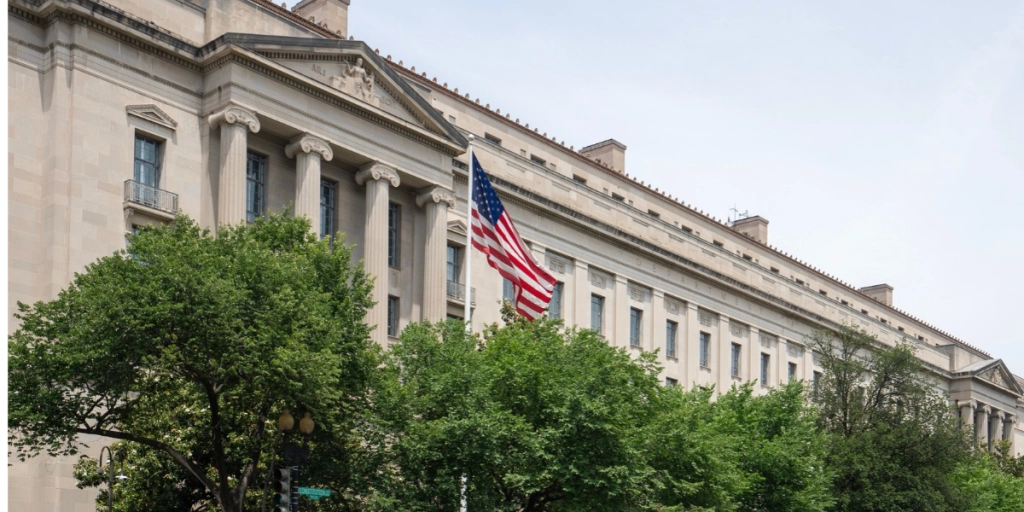
A federal judge has dismissed a Justice Department lawsuit seeking to delay certification of Alaska’s pivotal Senate election.


Just days before Alaska voters decide one of the nation’s most pivotal Senate contests, the U.S. Department of Justice is mounting a last-ditch legal challenge against the state’s election procedures.
At the center of the dispute sits a rare and disruptive ballot dynamic: incumbent Republican Senator Dan S. Sullivan faces Democratic challenger Mary Peltola, but also shares the ballot with an independent third-party candidate named Daniel J. Sullivan Jr.
On Sunday, U.S. District Judge Sharon Gleason threw out a Justice Department lawsuit that sought to halt or delay certification of the results should Peltola prevail, Fox News reports.
In her ruling, Gleason emphasized that federal investigators had failed to demonstrate how they could scrutinize voter intent without undermining Alaska’s authority over its own elections or stripping away the constitutional guarantee of ballot secrecy.


A Disputed Spoiler Campaign
The Justice Department quickly escalated the fight to the 9th U.S. Circuit Court of Appeals, contending that the court sidestepped the core allegation: that Sullivan Jr. was strategically recruited to siphon votes from the incumbent.
According to reporting from The New York Times, cited by Fox News, operatives with ties to the Peltola campaign actively assisted in putting Sullivan Jr. on the ballot.
Both figures deny working in tandem. Sullivan Jr. maintains that his candidacy was launched independently, while Peltola has firmly rejected claims of involvement in what opponents label the “Sullivan scheme.”
Meanwhile, political friction is mounting in Juneau. Republican Governor Mike Dunleavy has suggested he may withhold certification if Peltola wins under disputed circumstances.
By contrast, Senator Sullivan indicated he would accept the certified outcome, even while condemning his namesake rival’s campaign as an attempt to mislead citizens.
Could Ranked-Choice Voting Blunt the Ballot Impact?
The battle carries outsized consequences for Washington, where control of the Senate could hinge on Alaska’s outcome.
Yet the state’s ranked-choice voting model may inherently limit the fallout.
As FactCheck.org notes, voters can rank multiple candidates in order of preference. If a constituent mistakenly places Daniel J. Sullivan Jr. first, but lists the incumbent as their second choice, that ballot transfers directly to Senator Sullivan once the lower-performing namesake drops out.
While the risk of voter confusion remains real—particularly if voters fail to rank a second choice—the system provides a safeguard that keeps misdirected votes from automatically benefiting Peltola.
It is a technical reality the federal appeals court must now weigh as Alaskans head to the polls.



