
 Nicolai Haugsted

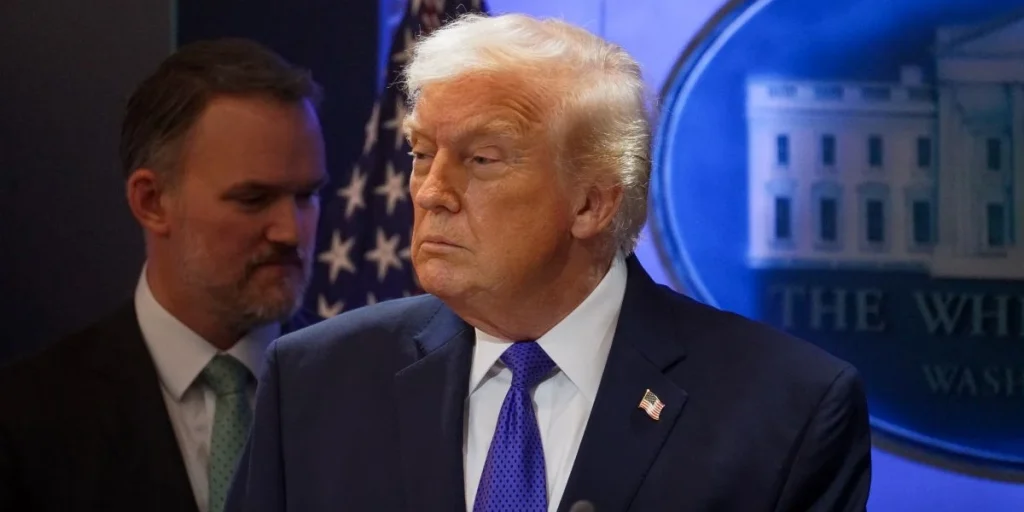
Trump’s trade restrictions and military campaign leave America’s Asian allies desperate for change.

The economic consequences of Washington’s decisions are increasingly being felt thousands of miles from the United States, where governments are struggling to contain rising costs and protect their industries from international uncertainty.
Across Asia, the combination of expensive energy, disrupted supply chains and American trade restrictions has created a difficult environment for businesses and consumers.
Countries that have traditionally maintained close relationships with Washington have found themselves particularly exposed, with some facing the prospect of slower economic growth and mounting inflation.
But the results of America’s midterm elections have offered a potential source of relief according to Reuters.


With Democrats making major gains in Congress, Asian governments are hoping that Donald Trump’s ability to pursue controversial foreign and economic policies could face greater resistance.
According to an analysis by Reuters, the political shift in Washington could have important consequences for countries struggling with the effects of the US-Israeli war against Iran and Trump’s tariffs.
However, the prospect of a Democratic-controlled Congress does not necessarily mean the president’s policies will change overnight.
Trump’s Iran war has sent energy prices soaring
The conflict with Iran has become one of the most serious economic concerns for Asian countries.
Since the United States and Israel launched military operations against Iran on February 28, energy markets have experienced substantial disruption.
Asia has been particularly vulnerable because of its heavy dependence on oil and gas supplies from the Middle East.
Before the conflict, approximately 80 percent of the region’s crude oil and refined fuel exports were destined for Asian markets.
The consequences have been dramatic.
Singapore gasoil, a key benchmark for diesel prices, reached a record $199.89 per barrel on March 30.
Although the price subsequently declined to $164.18 on Tuesday, it remained approximately 80 percent above the $91.42 recorded immediately before the war began.
Other energy markets have experienced similar increases.
Spot prices for liquefied natural gas delivered to North Asia have tripled since the beginning of the conflict, reaching $32.50 per million British thermal units.
Meanwhile, Australian thermal coal prices at Newcastle Port have climbed around 30 percent to $151.15 per metric ton.
For countries dependent on imported energy, those increases have created enormous financial pressure.
Asian economies face the threat of recession
Higher energy prices affect considerably more than household electricity bills.
Diesel is essential for transporting goods, operating machinery and supporting industrial production.
Liquefied natural gas and coal also play major roles in electricity generation across the region.
Consequently, prolonged price increases can spread throughout entire economies, making everything from manufactured products to everyday groceries more expensive.
The Reuters analysis warns that controlling energy-related inflation will be crucial if Asian economies are to reduce the risk of recession.
Supply shortages have made the situation even more complicated.
Australia, identified in the analysis as the world’s largest importer of diesel, struggled to secure sufficient supplies during the early months of the conflict.
The country reportedly used its position as a major exporter of coal and LNG to help negotiate access to liquid fuels.
The difficulties demonstrate how quickly geopolitical tensions can affect countries that are geographically distant from the fighting.
For Asian governments, securing a diplomatic resolution to the Iran conflict has therefore become an economic priority as well as a foreign policy concern.
Democrats could make life more difficult for Trump
The American midterm elections have raised hopes that Congress could provide a stronger check on the White House.
Democrats were on course to secure control of both the House of Representatives and the Senate following Tuesday’s voting.
Such an outcome would give the opposition party greater influence over federal spending, congressional investigations and legislative priorities.
Reuters suggests that Asian governments are particularly interested in whether Democrats could use those powers to limit Trump’s ability to continue military operations against Iran.
However, presidential authority over military and foreign policy decisions remains substantial.
Congress can influence military spending and pass legislation, but restricting an administration’s actions may require overcoming presidential vetoes and other political obstacles.
The analysis therefore cautions that Democratic victories will not automatically produce an end to the conflict.
Nevertheless, stronger congressional oversight could increase pressure on the administration to pursue diplomatic solutions.
For countries struggling with high energy costs, even the possibility of reduced tensions could be welcome.
Trump’s tariffs have frustrated America’s Asian allies
The Iran conflict is not the only source of economic concern.
Trump’s trade policies have also complicated relationships with several important American partners.
Japan, South Korea and India are among the countries that have faced pressure from the administration’s tariffs and demands for trade concessions.
According to Reuters, Asian governments hope that Democrats will challenge some of the more disruptive elements of Trump’s approach.
The president has frequently used tariffs as a negotiating instrument, seeking concessions from trading partners in exchange for reduced trade restrictions.
However, those measures have also created uncertainty for businesses that depend on predictable international supply chains.
Companies making long-term investment decisions must consider the possibility of sudden changes in import duties, market access and production costs.
For Asian exporters, greater stability in American trade policy could be almost as important as the removal of specific tariffs.
The Reuters analysis suggests that governments across the region would welcome a more consistent approach from Washington, particularly toward longstanding US allies.
One Trump policy could survive the Democratic takeover
Despite their concerns about tariffs and military policy, Asian countries are not necessarily hoping that Democrats will dismantle every initiative introduced by the Trump administration.
One area where cooperation could continue involves critical minerals.
Washington has been working to develop supply chains that reduce American dependence on China for strategically important materials.
Those efforts include investment in mining and processing facilities producing rare earth elements, lithium and tungsten.
The minerals are essential for industries ranging from electric vehicles and renewable energy to advanced electronics and military equipment.
Reuters notes that developing alternative supply chains enjoys support from both major American political parties.
Democrats may therefore continue backing investment in the sector even if they challenge other aspects of Trump’s economic agenda.
However, the analysis suggests that Democratic lawmakers could investigate companies with connections to the president that have received government funding.
Such investigations would focus on potential conflicts of interest rather than necessarily opposing the broader goal of diversifying mineral supplies.
China could also benefit from a more predictable Washington
The potential consequences extend beyond America’s traditional allies.
China, which has faced extensive trade restrictions and strategic competition with Washington, could also benefit from a more predictable American foreign policy.
Reuters argues that countries regarded as rivals by the United States would welcome greater consistency in trade negotiations and international relations.
That does not mean Democrats would necessarily adopt a softer approach toward Beijing.
Concerns about Chinese industrial competition, technology and critical minerals enjoy bipartisan support in Washington.
However, a Congress willing to challenge sudden policy changes could potentially reduce some of the uncertainty surrounding US-China relations.
For businesses operating across international markets, predictability can make a substantial difference even when political disagreements remain unresolved.
Despite the optimism surrounding Democratic gains, Reuters identifies an important complication.
The newly elected Congress will not begin its work until January 3.
Until then, Republicans will retain control of the outgoing Congress, leaving Trump with a political window before the new balance of power takes effect.



