
 Nicolai Haugsted

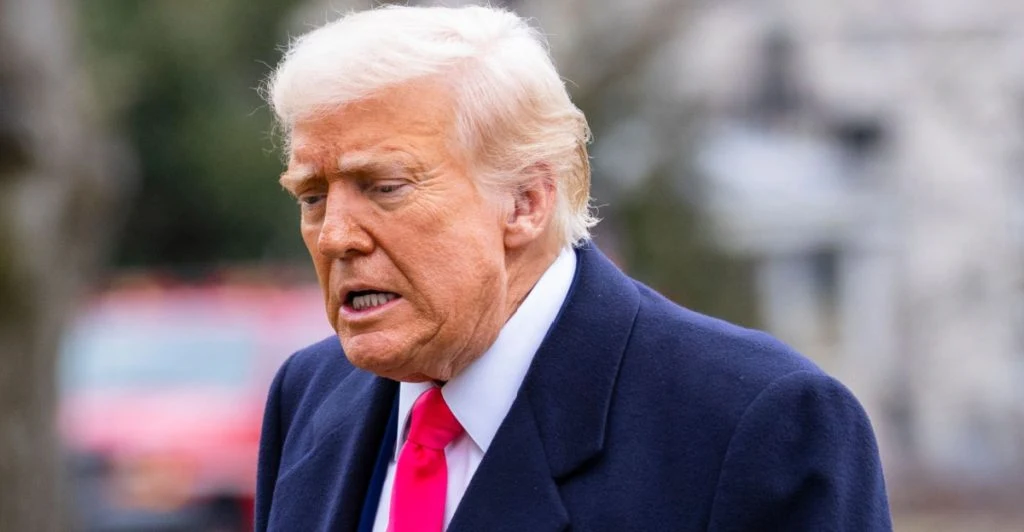
Trump’s election nightmare leaves him politically weakened but still capable of fighting back.

American voters have delivered a major setback to the Republican Party, raising fresh questions about the direction of Donald Trump’s presidency and the political consequences of his administration’s economic and foreign policies.
Two years after returning to the White House on promises of cheaper living costs and avoiding new military conflicts, Trump is confronting a very different political reality.
His party has lost its grip on Congress, while rising energy prices, trade disputes and the conflict with Iran have complicated the president’s attempts to convince Americans that his policies are delivering results.
And according to a sharply critical opinion piece published by Reuters, the election outcome has left Trump politically vulnerable, even if his ability to exercise presidential power remains substantial.


The analysis describes a president who has suffered a serious electoral rejection but still possesses enough authority to make life difficult for his opponents.
Reuters describes a politically wounded president
The Reuters commentary draws attention to the contrast between Trump’s political ambitions and the circumstances surrounding the midterm elections.
During his successful 2024 campaign, Trump promised to reduce household expenses and keep the United States out of new wars.
However, the opinion piece argues that his administration’s decisions have contributed to precisely the problems he pledged to avoid.
Inflation has accelerated, while the military confrontation with Iran has pushed energy costs higher.
The commentary also highlights Trump’s focus on White House construction projects during the final days of campaigning, including a new helipad.
According to the analysis, those projects offered a striking contrast to the economic concerns troubling American households.
Reuters characterizes the president as politically weakened following the Republican losses, although it cautions against assuming that an electoral defeat will significantly reduce his influence over trade and military policy.
Those powers remain largely concentrated in the executive branch.
Rising fuel prices became a major problem
The Reuters opinion piece identifies the conflict with Iran as a particularly damaging issue for Republicans.
According to the analysis, gasoline prices increased by approximately 40 percent following Trump’s decision to attack Iran, while diesel prices nearly doubled.
The resulting pressure on household budgets and business expenses became an important issue during the election campaign.
Reuters argues that the increases contributed to a shift toward Democratic candidates during the final months before the vote.
The consequences were especially visible in states where agriculture, transportation and manufacturing play major economic roles.
Higher diesel prices can affect everything from transporting goods to operating agricultural equipment, making energy costs particularly sensitive for rural communities.
The analysis suggests that Republican candidates struggled to separate themselves from the economic consequences of decisions made in Washington.
Trump’s trade policies created problems for Republicans
Tariffs also feature prominently in Reuters’ assessment of the election.
The commentary argues that Trump’s trade restrictions damaged relationships with important commercial partners and created additional challenges for American exporters.
Republican candidates in states bordering Canada were among those facing difficult campaigns.
Maine Senator Susan Collins, for example, secured the removal of certain tariffs on Canadian goods shortly before the election.
However, her Democratic opponent, Troy Jackson, dismissed the significance of the concession during their debates.
“We can’t eat road salt,” Jackson remarked, referring to the removal of tariffs on that particular product.
The comment captured a broader frustration described in the Reuters analysis.
While Republican politicians attempted to demonstrate that they were responding to voters’ concerns, the economic consequences of the administration’s trade policies had already become a central campaign issue.
Historic Democratic victories reshape the political landscape
The election also produced significant Democratic gains in states that have traditionally favored Republicans.
According to Reuters, Kansas, South Carolina and Texas elected Democratic senators for the first time in decades.
Those victories carry particular importance because senators serve six-year terms.
The newly elected lawmakers will therefore remain in office well beyond Trump’s current presidency, potentially influencing the political balance in Washington for years.
Reuters suggests that the results could also improve Democrats’ prospects of advancing major legislation if the party wins the White House in 2028.
The commentary connects the Republican losses in agricultural states to reduced export opportunities, particularly in China.
American producers of beef and soybeans have faced difficulties following trade disruptions, adding to frustrations over rising operating costs.
For Republicans, the results suggest that some traditionally reliable political territory has become more competitive.
Elon Musk’s expensive election gamble fails to deliver
The Reuters analysis also examines the political consequences of the administration’s enthusiasm for artificial intelligence.
Texas has attracted substantial investment in data centers supporting AI technology, making the state an important location for the industry’s expansion.
Yet Democrats captured the governor’s office for the first time in decades.
The result came despite considerable financial support for Republican candidates from billionaire Elon Musk.
According to Reuters, Musk spent nearly $500 million supporting Republicans in Texas.
The commentary interprets the Democratic victory as a rejection of the political agenda associated with that spending.
However, the election result alone cannot establish whether voters were specifically rejecting artificial intelligence investments or responding to other political and economic concerns.
Nevertheless, the scale of Musk’s spending makes the defeat a particularly striking element of the Republican setback.
Democrats gain power, but Trump still holds important cards
Despite the election losses, Reuters warns that Democrats should not expect Trump to surrender his political influence.
The president has indicated that he intends to use his veto authority against legislation passed by a Democratic-controlled Congress.
He has even embraced the nickname “Mr. Veto” to describe his anticipated approach.
That could make passing major legislation considerably more difficult.
Overriding a presidential veto requires a two-thirds majority in both chambers, a threshold that can be difficult to reach even when the opposition controls Congress.
Democrats will nevertheless gain significant investigative powers.
The Reuters commentary identifies government contracts, Trump family cryptocurrency ventures and alleged influence-peddling abroad as potential subjects of congressional scrutiny.
Those matters could lead to politically damaging hearings and demands for documents, although investigations would not automatically establish wrongdoing.
Reuters also notes that efforts to remove senior administration officials, including Defense Secretary Pete Hegseth, would face substantial constitutional and political obstacles.



