
 Lauge Risom Koch

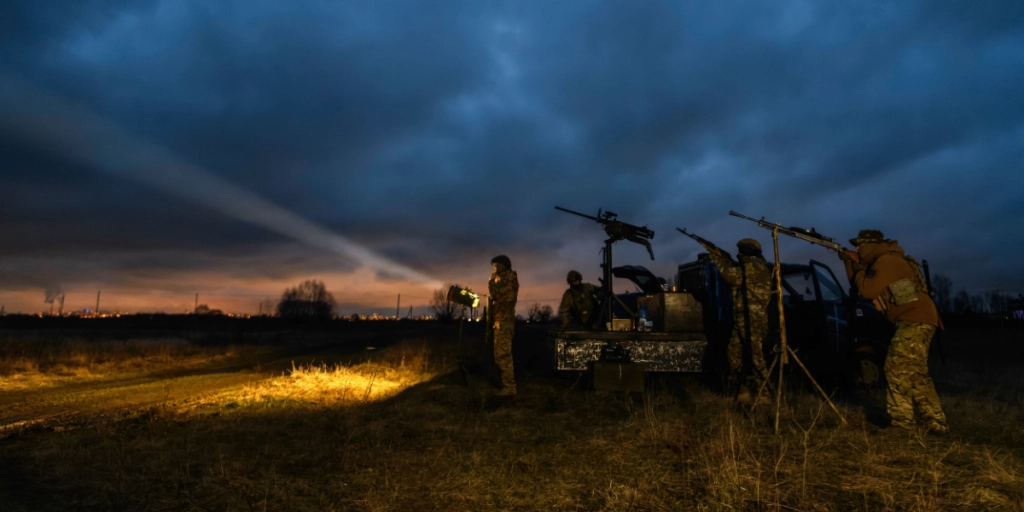
Ukraine intercepted more than 8,000 Russian missiles and strike drones in October, utilizing layered air defenses and specialized electronic countermeasures.
Ukrainian air defense forces intercepted more than 8,000 Russian missiles and long-range drones throughout October. According to United24 Media, Ukrainian ground troops also neutralized an additional 43,000 tactical unmanned aerial vehicles across active frontlines. The Ukrainian Ministry of Defense confirmed that these figures illustrate the unprecedented intensity of Moscow’s sustained aerial offensive.
The comprehensive interception figures provided by the air force encompass a diverse array of aerial munitions targeting military and civilian infrastructure. Among the downed cruise missiles were 14 Kh-101 missiles, 12 Kalibr missiles, and eight Iskander-K precision projectiles. Ukrainian interceptor crews also destroyed 11 Iskander-M and KN-23 ballistic missiles, seven Kh-59 and Kh-69 guided air-launched missiles, and one hypersonic Zircon anti-ship missile.
In addition to conventional cruise and ballistic threats, Ukrainian units neutralized 143 specialized S8000 Banderol weapons. Military commanders highlighted that the sheer volume of intercepted targets reflects the continuous pressure exerted on defense operators. The extensive missile strikes were frequently timed to overwhelm early-warning networks and exhaust interceptor stockpiles.
Drone interception statistics and layered defenses
Long-range unmanned aerial vehicles formed the vast majority of incoming threats intercepted by defensive batteries during the month. The single largest category comprised 4,455 Shahed-131 and Shahed-136 attack drones, Gerbera drones, and Parodiya decoy units. Air defense units intercepted an additional 2,688 advanced jet-powered Shahed-238 drones alongside 1,104 reconnaissance drones and 809 Lancet loitering munitions.


Click to display external content from twitter,
– You can always enable and disable third-party content.

You agree to display external third-party content. Personal data may be sent to the provider of the content and other third-party services.
Defeating this complex onslaught required the synchronized deployment of multiple layers within the integrated defense network. Interception missions actively involved fighter aircraft, army aviation helicopters, stationary surface-to-air missile batteries, and mobile fire groups. Specialized drone-hunting units and electronic warfare specialists operated in coordination to destroy threats before they reached urban targets.
The defense ministry reported that Russian operators repeatedly altered drone flight paths and altitudes throughout October to evade radar detection. Hostile mission planners deliberately combined lethal explosive drones with unarmed decoys to deceive tracking systems and draw defensive fire. These deceptive tactics were coupled with sudden missile strikes designed to complicate targeting decisions for Ukrainian interceptor crews.
Ballistic threats and electronic warfare countermeasures
Ballistic missiles continue to represent a severe challenge for Ukrainian defenders due to their extreme velocity and steep terminal trajectories. Russian units frequently employ ballistic weaponry against civilian population centers and critical energy infrastructure to maximize destruction. Ukrainian defense officials reiterated an urgent appeal to international allies for additional advanced air defense batteries capable of stopping ballistic strikes.
To counter the persistent drone swarm tactics, Ukrainian engineers developed and deployed an innovative electronic warfare shield over Kyiv. Presidential defense technology adviser Serhii Beskrestnov confirmed that this specialized protective system disrupts the radio frequencies utilized by Shahed drones. Beskrestnov explained on November 2 that deploying the defensive canopy required installing specialized electronic transmission equipment across hundreds of capital locations.
This dense radio-frequency jamming network degrades the navigational guidance systems of incoming unmanned aircraft before they reach critical infrastructure. Technicians continue refining electronic countermeasures to maintain operational superiority over evolving Russian communication protocols. Ukrainian defense authorities stress that integrating advanced jamming equipment with conventional kinetic interceptors remains critical to protecting national skies.



