
 Jens Asbjørn Bøgen

In Russian towns far from Moscow, a single paramedic can be the only medical worker for an entire community.

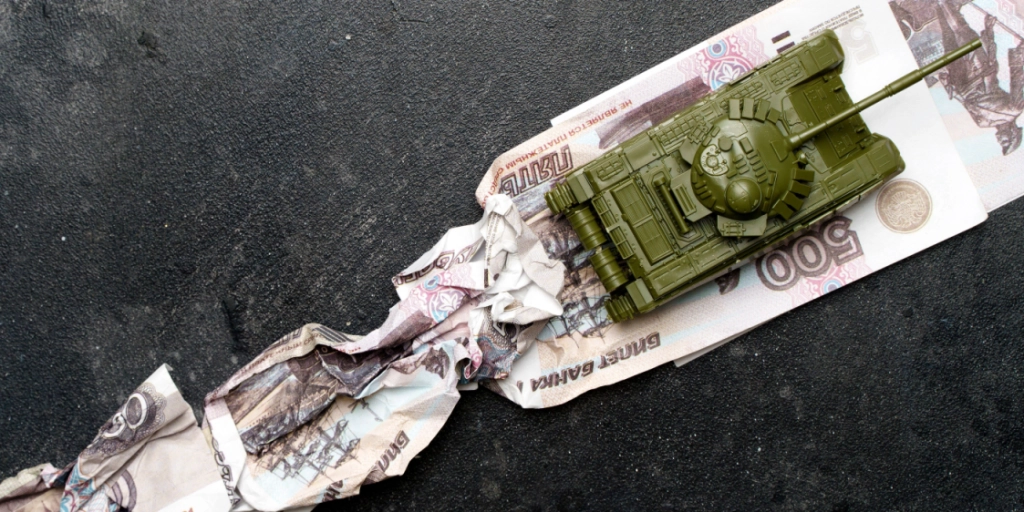
Russia’s draft federal budget for 2027, now moving through parliament, pushes army spending to a record level while stripping back programs that pay for cancer treatment, maternity wards, and rural clinics.
The federal cancer program would drop from 44.9 billion rubles this year to 3.87 billion rubles in 2027, about $48 million at current rates, Euronews reported from the draft. The same line was set at 148.5 billion rubles in 2025, meaning the allocation has shrunk by roughly 97 percent over two budget cycles.
Defense moves the other way. The government is raising military spending to 17.1 trillion rubles, the Moscow Times reported from the budget documents, a 27 percent increase on what had previously been earmarked for next year.
That works out to roughly $211 billion and marks the highest defense allocation since the Soviet era.


A two-to-one split
Alexandra Prokopenko, a senior fellow at the Carnegie Russia Eurasia Center, frames the balance in blunt terms in her analysis of the draft: “For every ruble allocated to social policy, health, and education in 2027, double that amount is earmarked for the army, the police, and the security services.”
Across the budget, healthcare is reduced by 6.8 percent, education by 6 percent, and social support by 7 percent against previous plans for 2027, Euromaidan Press reported. Civilian cuts total about 900 billion rubles, roughly $10.7 billion.
Named regions, named shortages
Inside Russia, the consequences are already visible, Radio Free Europe/Radio Liberty found in reporting from several regions. Some areas were running on only five to seven of the 35 to 40 cancer drugs recommended for standard treatment, the outlet reported.
In the Yaroslavl region, a single paramedic was reported serving multiple settlements, adults and children alike, including a school and a kindergarten, with no pediatrician available. In the Pskov region, a mother said earlier this year that her two-year-old son was turned away by several facilities after injuring his eye.
Vladimir regional authorities plan to halt routine deliveries at a hospital in the town of Kolchugino, pushing pregnant women to travel about 80 kilometers to the city of Vladimir, according to the RFE/RL report. In Krasnoyarsk, two maternity hospitals are scheduled to close by mid-January.
What the ministry says
Russia’s Health Ministry, led by Mikhail Murashko, has argued that the cancer line reflects a shift in how treatment is financed rather than a withdrawal of support, pointing to compulsory medical insurance as the main channel.
Cancer program allocations are projected to recover to 5.76 billion rubles in 2028 and 12.78 billion in 2029, Euronews reported, still well short of the 148.5 billion set aside as recently as 2025.
Out-of-pocket spending on cancer medicines has climbed as the public share has fallen. Russian patients bought 5.8 million packs of cancer drugs independently in 2025, spending 11.4 billion rubles, up from 8.8 billion the year before. About 94 percent of those medications sit on Russia’s essential medicines list and are meant to be provided free of charge.



