
 Nicolai Haugsted


Trump’s private reaction to the crushing midterm defeat was reportedly very different from his public response.
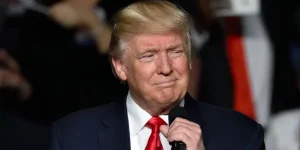
Donald Trump’s second presidency has entered a far more difficult political chapter following an election that dramatically changed the balance of power in Washington.
Republicans had hoped to retain control of Congress and preserve the president’s ability to pursue his agenda without significant Democratic interference. Instead, voters delivered a decisive rejection of the party, handing Democrats control of both the House of Representatives and the Senate.
The result has left the administration facing difficult questions about its political strategy, the increasingly unpopular war with Iran and the future of several prominent Cabinet members.
But while the public has witnessed Trump’s attempts to explain away the defeat, a very different picture is emerging of what happened inside the White House as the results came in. According to The Daily Mail, sources close to the administration have described an election night marked by stunned silence, departing officials and growing speculation about who might lose their jobs.


And at the center of it all was a president who reportedly had very little to say.
White House election party ends in an almost empty room
The evening had initially been planned as an opportunity for Republican officials, advisers and political allies to gather at the White House and follow the election results.
Guests assembled in the East Room, where refreshments from restaurant chain The Cheesecake Factory were reportedly served.
The choice of food was apparently intended as a subtle jab at former President Barack Obama following his recent public remarks.
However, the mood among those attending the gathering reportedly changed as election projections began indicating that Republicans were heading toward a major defeat.
According to the Daily Mail, one source described an atmosphere in which many attendees appeared unwilling to acknowledge how badly the night was going.
As the results continued to arrive, senior officials gradually began leaving the building.
Secretary of State Marco Rubio was reportedly among those who departed early, while other White House employees eventually headed to a nearby Washington bar.
By shortly before 10 p.m., projections suggested that Democrats were on course to take control of the House of Representatives.
The East Room, which had been prepared for a major political gathering, was reportedly almost deserted.
The celebration had effectively ended before the election results were fully settled.
Trump reportedly watched the disaster unfold in near silence
While political allies gathered downstairs, Trump himself remained away from the election-night event.
The president reportedly spent the evening upstairs in the White House private residence rather than joining the assembled officials and supporters.
First Lady Melania Trump was also absent from the gathering.
According to the Daily Mail, Trump was accompanied by White House Chief of Staff Susie Wiles and adviser Natalie Harp as he followed the results.
A senior administration source described an exceptionally gloomy atmosphere surrounding the president.
“He is watching Fox News, barely saying a word, and is paralyzed into silence,” the source told the newspaper.
The description suggests a striking contrast with Trump’s typically combative public persona.
Throughout his political career, the president has rarely hesitated to attack opponents, challenge unfavorable coverage or insist that his political fortunes remain strong.
But according to the account from inside the White House, the scale of the Republican defeat initially appeared to leave him unusually quiet.
The reported atmosphere also reflected the growing realization that the election would have serious consequences for the remainder of his presidency.
With Democrats preparing to control Congress, Trump’s legislative ambitions and the administration’s political maneuvering are likely to face considerably greater resistance.
Trump briefly praises the Democrats before changing his tune
Despite the reportedly gloomy atmosphere in his private residence, Trump presented a more conciliatory attitude during a Fox News interview on election night.
The president acknowledged that Democrats had performed well and suggested that cooperation between the parties could be possible.
“I think the Democrats did a good job, I really do. I think they did a good job. They fought hard,” Trump said.
His remarks represented a notable departure from the confrontational language that has characterized much of his relationship with Democratic lawmakers.
Trump also acknowledged that he had expected a better outcome for Republicans.
For a brief period, the president appeared prepared to recognize the opposition’s success rather than immediately dismiss the election results.
However, the more accommodating tone did not last.
As the political implications of the defeat became clearer, Trump returned to a familiar strategy of publicly assigning blame.
His subsequent activity on Truth Social suggested that the president was far less interested in accepting personal responsibility than his television interview might initially have indicated.
Trump begins searching for someone to blame
Before election day, Trump had encouraged Americans to view the midterms as a referendum on his presidency.
The message was intended to mobilize Republican voters and emphasize the importance of supporting candidates aligned with his administration.
However, following the party’s defeat, the president adopted a different interpretation of the results.
Trump pointed out that his own name had not appeared on the ballot, distancing himself from the outcome despite having previously encouraged voters to connect the election directly to his leadership.
His criticism soon extended to several political figures and institutions.
According to the report, Trump blamed Fox News for contributing to Republican losses.
The network has long occupied an important place in Trump’s political world, although the relationship has frequently been strained by disagreements over coverage.
The president also directed his anger toward Texas Governor Greg Abbott.
Only hours earlier, Trump had reportedly spoken favorably about Abbott.
Following the election results, however, he accused the governor of failing to behave like a genuine Republican and suggested that the party’s defeat in Texas was attributable to his conduct.
The sudden reversal illustrated how quickly the administration’s focus had shifted from electoral confidence to internal recriminations.
And according to sources, the criticism may not stop with governors and television networks.
Senior Cabinet members could pay the price
The Republican defeat has reportedly triggered discussions within the administration about possible changes to Trump’s senior leadership team.
According to the Daily Mail, officials have begun considering whether a significant reshuffle could help the president regain political momentum and protect his legacy during his remaining two years in office.
Two prominent figures have emerged in speculation surrounding potential departures.
Secretary of State Marco Rubio and Defense Secretary Pete Hegseth are reportedly among those whose positions could come under scrutiny.
The reason is closely connected to the administration’s military campaign against Iran.
The war has become a major political liability for Republicans, with its economic and political consequences reportedly contributing to voter dissatisfaction.
A senior official told the Daily Mail that the election might have produced a very different outcome without the conflict.
“Tonight would have looked very different without the Iran war,” the official said.
The assessment suggests that some figures inside the administration believe the military campaign played a decisive role in the party’s defeat.
Another official reportedly predicted that Trump would eventually direct much of the blame toward Hegseth.
However, discussions about potential dismissals remain speculative, and the report does not establish that the president has made a final decision to remove either Cabinet member.
Nevertheless, the prospect of a reshuffle illustrates the pressure now facing Trump’s administration.
The Iran war threatens to divide Trump’s own administration
The conflict with Iran has become more than a foreign policy challenge for the White House.
It is also creating political tensions among senior Republicans, particularly as the party begins considering its future beyond Trump’s presidency.
Vice President JD Vance has emerged as one of the most significant figures in that debate.
Following the midterm defeat, Vance published a lengthy message on X addressing the reasons behind the Republican losses.
His assessment was considerably more direct than the explanations offered by some of Trump’s allies.
“The reason we lost is the war,” Vance wrote, according to the account.
The statement placed responsibility for the electoral disaster squarely on the Iran conflict.
It also created an uncomfortable political distinction between the vice president and the administration he serves.
While Trump has defended his military policies, Vance’s remarks suggested that the war had become an obstacle to Republican electoral success.
The disagreement is particularly significant because the vice president is widely discussed as a potential Republican presidential candidate in 2028.
With Trump constitutionally barred from seeking another elected term, ambitious Republicans are already considering how to position themselves for the next presidential election.
Vance’s public criticism of the war may therefore carry implications beyond the immediate aftermath of the midterms.
JD Vance appears to be creating political distance from Trump
The vice president’s comments have prompted speculation about whether he is attempting to separate his political identity from some of Trump’s most controversial decisions.
Vance remains a central figure in the administration, but the Republican defeat has changed the political calculations surrounding his future.
A potential 2028 presidential campaign would require him to appeal to Republican voters while also addressing the policies that contributed to the party’s recent losses.
The Iran war presents a particularly difficult challenge. As vice president, Vance is closely associated with the administration’s decisions.
At the same time, his public remarks suggest that he recognizes the political damage caused by the conflict. Some observers have interpreted his comments as an early effort to establish distance from Trump before the next presidential campaign.
That interpretation remains speculative, however, and Vance has not announced a presidential bid.
Still, the timing of his criticism is difficult to ignore.
With Republicans facing an increasingly uncertain political future, senior party figures are likely to become more concerned about their own electoral prospects.
The vice president’s willingness to identify the war as the cause of the defeat suggests that the administration may struggle to maintain a united explanation of what went wrong.



