
 Kenneth Glad

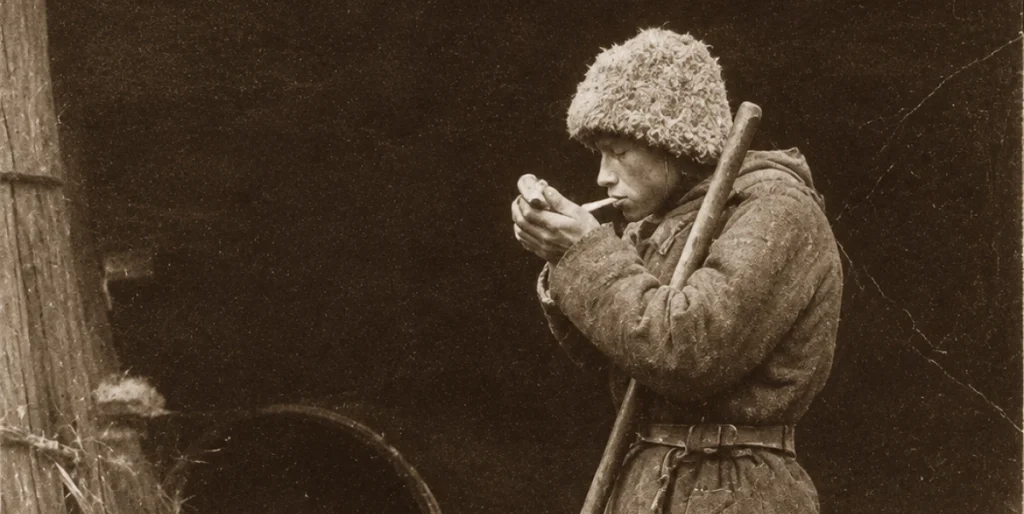
Kicking a deadly habit is rarely just a personal choice. Across history, modern states have spent billions trying to persuade their citizens to drop unhealthy routines, often with very little to show for the effort. Long before modern health warnings became normal, one unexpected government launched a nationwide crusade to wipe out cigarettes entirely.


In 1920, the Soviet Union emerged as the first nation on earth to roll out an official nationwide anti-tobacco campaign, History Today writes. Nikolai Semashko, who headed the early Soviet health administration, viewed cigarettes as an ideological enemy comparable to religion.
Vladimir Lenin initially supported the aggressive push. “Why not start a fight with that weed tobacco? I will support you,” Lenin told him.
Posters quickly filled major city streets featuring catchy rhymes from avant-garde poet Vladimir Maiakovskii, who warned citizens: “Quit your smoking: It’s paper-wrapped poison!”
Health brochures urged the public to stay away from the harmful leaves. Even communist youth organisations joined the fight, staging theatrical performances in community halls where worker-actors put smoking on trial before a live audience.


By 1924, specialized state clinics known as narkodispensaries began offering treatment to citizens seeking help to kick the habit. At first, only a few dozen patients arrived each month, but enrollment escalated quickly to 3,000 yearly by 1927.
By 1928, an overwhelming wave of 8,000 patients arrived annually, which placed immense strain on the state medical network.
Cash over cure
The ambitious health push faced quiet resistance inside the government. When agriculture planners and state cigarette factory heads pushed back against proposed production caps, Lenin withdrew his political backing so the state could use cigarette profits to finance industrial development.
Joseph Stalin quickly sidelined the anti-smoking posters altogether after taking total control of the nation. State administrators soon rebranded cigarettes as an economic asset and a morale booster for industrial workers.
Anastas Mikoyan, who served as commissar of the food industry, referred to tobacco as “a new type of weapon in the state’s economic policy.”
During World War II, combat troops scrambled to harvest raw fields, and desperate factory workers even scraped residue from smokestacks in besieged Leningrad just to get a smoke.
When Warnings Failed to Work
By the 1970s, the Ministry of Health tried to revive the battle by dusting off old slogans from the 1920s, but the messaging fell flat among citizens tired of state propaganda. When the popular Iava brand tested packet warnings reading “The Ministry of Health warns that smoking is hazardous to your health” in 1978, lengthy queues formed regardless.
Eager customers brushed off the label as “nonsense” and promptly snapped up their full one-carton limit.
Even as smoking rates declined across Britain and the United States amid mounting cancer research, Soviet demand stayed stubbornly high, with roughly 60 per cent of men and up to 20 per cent of women regularly lighting up.
By the summer of 1990, crippling domestic shortages sparked angry street riots that even diverted Mikhail Gorbachev’s motorcade, prompting American giants Philip Morris and R.J. Reynolds to step in and ship 34 billion cigarettes to calm public outrage.
That flood of foreign inventory created lasting habits across generations. According to History Today, tobacco still claimed 224,000 lives in Russia in 2024, leaving one in three citizens hooked on the habit.



