
 Kenneth Glad

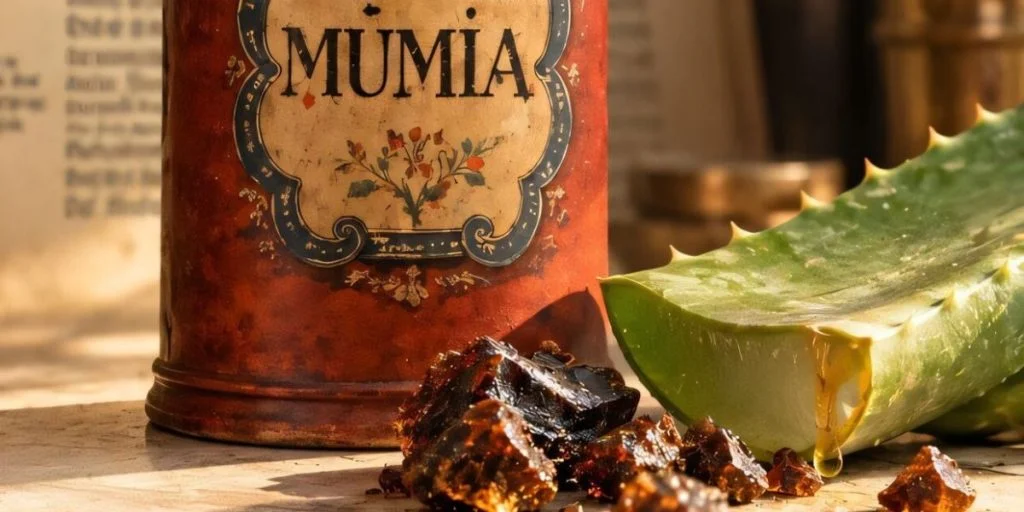
Medical history is filled with strange remedies that people swallowed for centuries. For decades, experts assumed the most bizarre recipes were just colorful myths. Now, advanced laboratory testing is proving that one incredibly strange treatment was entirely real.

Researchers at Marburg University have solved a very old mystery.
An interdisciplinary team studied ancient Egyptian embalming materials, using chemical analysis to see exactly what went into the preservation process.
Theylooked at an eighth-century B.C. mummified skull, comparing it to a medicinal powder kept in an old German pharmacy. The chemical traces they uncovered offered a rare window into ancient practices.
Finding the evidence
The scientists detected molecular traces of aloe.


Published in the Proceedings of the National Academy of Sciences, this study marks the first time the plant has been chemically identified in Egyptian embalming mixtures.
“This finding is significant for research for two reasons: Until now, aloe had not been identified as a component of ancient Egyptian embalming materials through molecular analysis. At the same time, aloe was linked to mummy material used as medicine in later centuries, particularly in medieval texts,” said Dr. Tanja Pommerening to Phys.
“It was previously assumed that the authors of these texts were speculating and relying on biblical passages (e.g., John 19:39), as knowledge about ancient Egyptian embalming had been lost. The new findings suggest that this association may have deeper historical roots,” she added.
New tools for history
The team analyzed 24 museum objects in total, drawing from university and pharmacy collections across Germany. They relied on advanced computing and machine learning to match molecular patterns across the materials.
This high-tech approach revealed a hidden link between a mummified head and a separately cataloged powder sitting in the same museum.
The two items shared a chemical fingerprint, proving that modern science can help historians reconstruct lost origins when collection records fail.
Looking to the future
Researchers also tested historical mummy-based medicine on cells infected with influenza. The extract offered mild protection, but scientists could not pinpoint the active ingredient.
“In the long term, we aim to establish a research approach that combines historical written sources, archaeological objects and modern natural product analysis. Our goal is not only to analyze the chemical composition of ancient medicines and embalming materials, but also to gain a deeper understanding of their production, use, historical transmission and cultural context,” Dr. Raphael Reher told Phys.
His team hopes to uncover even more hidden ingredients, but for now, the latest results prove that ancient embalmers knew exactly what they were doing.



