
 Nicolai Haugsted


Trump’s political empire shows signs of cracking as longtime loyalists turn against his administration.
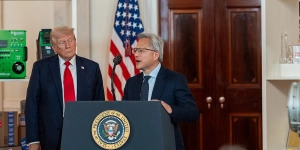

Donald Trump has spent the better part of a decade transforming American conservatism into a political movement built around his personality, his promises and an extraordinary ability to keep supporters loyal through almost any controversy.
Election defeats, criminal proceedings and years of bitter political confrontation have repeatedly failed to break the bond between Trump and his most devoted followers.
But the Republican Party’s disastrous performance in last week’s midterm elections has exposed a problem that even the president’s famously resilient political brand may struggle to overcome, according to Reuters.
The frustration is no longer coming exclusively from Democrats or longtime Republican critics. Increasingly, it is emerging from inside the Make America Great Again movement itself.


Supporters are questioning broken campaign promises, the continuing war in Iran, rising living costs and an administration they believe has become disconnected from the people who helped return Trump to the White House.
Some are even beginning to wonder whether the political movement that has dominated the Republican Party since 2016 can survive its own founder.
Trump’s biggest supporters are beginning to turn on him
The mood among Republican voters became painfully apparent on election night in Dallas, Texas.
Supporters of Senate candidate Ken Paxton had gathered at a hotel expecting to celebrate another Republican victory.
Instead, they watched Democrats deliver a sweeping defeat to a party that had considered states such as Texas safely within its political grasp.
Among those struggling to process the results was Michael Little, a 59-year-old businessman who had voted for Trump three times.
Sitting in the hotel bar, Little watched the president appear on a television screen and delivered a remarkably direct assessment.
“People are pissed off at Trump. Trump has cost us,” he told Reuters.
His frustration reflects a growing debate within MAGA over whether Trump remains the movement’s greatest political asset or has become an obstacle to its future.
Democrats won decisive congressional majorities in the elections, while also capturing every statewide race in Texas.
The party could ultimately secure as many as 56 Senate seats, according to the election projections cited by Reuters.
Democrats will also control the governorships of all seven battleground states Trump carried in the 2024 presidential election.
For a movement that has spent years presenting itself as the dominant force in American politics, the results represent an extraordinary reversal.
Trump responds by moving further toward MAGA’s hardline wing
The president’s response to the defeat has done little to suggest a major change in direction.
Rather than distancing himself from the policies that have generated controversy, Trump has promoted one of their most prominent architects.
On Friday, he appointed Stephen Miller as White House chief of staff, replacing Susie Wiles.
Miller has played a central role in the administration’s aggressive immigration policies, while Wiles had been regarded as a relatively stabilizing influence within the White House.
The decision was welcomed by some of Trump’s most committed supporters.
Conservative influencer Benny Johnson celebrated the appointment on X, writing to his millions of followers:
“Exactly the energy we need.”
He added:
“Solid move. It’s Miller Time.”
Former Trump adviser Steve Bannon also praised the decision, arguing that Republicans should respond to the election defeat by returning to the movement’s populist and nationalist foundations.
“We have to rebuild,” Bannon told Reuters.
He also emphasized Miller’s importance to the movement.
“Miller’s appointment as chief of staff underpins my point. There is no more hardcore MAGA proponent than Stephen.”
However, other Republicans have questioned whether promoting a central figure from the administration responsible for the election defeat is the right solution.
Republican Representative Marlin Stutzman of Indiana described the appointment as a “bad mistake.”
“You don’t promote those who were in charge,” he told CNN.
Stutzman also suggested that Miller’s political style had alienated voters in the Midwest.
“He’s not liked out here in the Midwest by people. They don’t like his tone,” he said.
The White House defended Miller, pointing to his role in implementing Trump’s agenda and statements of support from 19 Republican lawmakers.
A surprising number of MAGA supporters are questioning Trump
The growing discontent is not limited to a handful of prominent conservative commentators.
An analysis conducted for Reuters by data intelligence company PeakMetrics examined reactions among Trump supporters following the election.
Researchers sampled 12,850 posts from approximately 4.6 million Trump-related comments published on X and Reddit during the period immediately following election night.
The analysis found that more than 20% of self-identified MAGA loyalists in the sample expressed doubts about the movement’s leadership or direction.
Among those expressing such concerns, approximately half continued to support MAGA but no longer backed Trump as its leader.
The other half remained loyal to the president while criticizing his decisions.
The findings are based on social media activity rather than a representative survey of Republican voters, but they provide an indication of the divisions emerging within the movement’s online communities.
Among posts assigning blame for the defeat, nearly one-third pointed to the Iran war and concerns about Israel’s influence on American foreign policy.
Approximately one-quarter blamed Republicans who were perceived as insufficiently committed to the MAGA agenda.
The disagreements suggest that supporters have very different explanations for why their party lost.
And those differences could make rebuilding the movement considerably more complicated.
The Iran war has become a major source of anger
Trump’s decision to launch military operations against Iran alongside Israel has emerged as one of the most divisive issues within his political coalition.
Many MAGA supporters originally embraced Trump’s promises to prioritize American interests and avoid prolonged foreign military commitments.
The continuing conflict has therefore created frustration among voters who believed his administration would pursue a more restrained foreign policy.
Vice President JD Vance has acknowledged the war’s political consequences, arguing that it played a central role in the Republican defeat.
Trump himself has conceded that the conflict contributed to rising gasoline prices.
Speaking after the election, the president said it was “largely true” that the war had hurt Republicans because “it drove the gasoline up.”
However, he maintained that he would make the same decision again.
That position has frustrated some supporters who believe the administration has failed to recognize the scale of public dissatisfaction.
Retired Lieutenant General Michael Flynn, a prominent figure within the movement’s Christian nationalist wing, described the election results as “a massacre.”
Responding to Vance’s assessment of the war, Flynn argued that the defeat had broader causes.
“The sheer number of broken promises is why the blue tsunami happened,” he wrote.
Flynn criticized the administration over living costs, the Iran conflict and its handling of government records relating to the late sex offender Jeffrey Epstein.
His comments illustrate how discontent over individual policies has expanded into a wider debate about Trump’s leadership.
Republicans are accusing their own administration of corruption
Another source of frustration concerns the promise to challenge Washington’s political establishment.
Trump built much of his original appeal around the idea that he would confront corruption and special interests.
But some Republicans now believe his administration has failed to deliver.
Senator Ron Johnson of Wisconsin raised concerns on Saturday about corruption throughout the federal government.
He said the problem existed in “all branches of government,” including “I’m sad to say, within the Trump administration.”
Johnson referred to allegations made by former White House adviser Calley Means, who claimed during an appearance on Joe Rogan’s podcast that senior administration officials had catered to special interests and obstructed policies supported by the Make America Healthy Again movement.
Those allegations have not been established as fact.
Nevertheless, Johnson suggested that the administration had disappointed voters who expected meaningful reform.
Voters “were expecting us to drain the swamp, but it seems like the swamp won,” he told Fox News.
The White House did not directly address the corruption allegations when contacted by Reuters.
Instead, spokesperson Allison Schuster emphasized what the administration described as progress on health policy.
Conservative commentator Ben Shapiro also argued that the election defeat could not be explained by economic concerns alone.
“If you’re talking about an electoral catastrophe – a wipeout like we saw last night – you need more ingredients. Here are the other ingredients: chaos and corruption,” he said.
MAGA’s enthusiasm appears to be fading
Perhaps one of the most troubling developments for Republicans is the apparent decline in enthusiasm among some of Trump’s most dedicated supporters.
Jennifer Golbeck, a professor at the University of Maryland who has studied MAGA-related online activity since 2016, said engagement within the movement’s core communities has been falling.
According to her analysis, posts and comments on the pro-Trump forum Patriots.Win have declined by 27% since January.
“The enthusiasm and the passion even among this hardest core group of supporters hasn’t really been there,” Golbeck explained.
She added that users were increasingly describing the movement in unusually dismissive terms.
“They are saying that ‘MAGA is stale.’ It’s not new and exciting like it once was.”
Conservative influencer Isabella DeLuca offered a similar assessment.
DeLuca, who participated in the January 6, 2021, Capitol attack and later received a presidential pardon following the dismissal of her criminal case, criticized Republican leaders for failing to connect with younger voters.
“Republicans were just lazy. They felt like that they were entitled to people’s votes and that people would vote for them no matter what,” she told Reuters.
She argued that even traditionally Republican states could no longer be considered politically untouchable.
“It goes to show you that you do have to earn people’s votes, and that even in a super red state like Texas, you’re not untouchable.”
DeLuca described the movement as appearing “tired” during the election campaign.
The signs of declining engagement have also appeared in conservative media.
According to Nielsen figures cited by Reuters, Fox News experienced a 27% decline in its total daytime audience in October compared with the same month a year earlier.
The network emphasized that it continued to outperform its cable-news competitors on election night.
“FOX News has been the number one network in cable news for a quarter century,” the company said.
Election fraud claims have suddenly gone quiet
Another striking consequence of the defeat has been the relative disappearance of a familiar MAGA talking point.
Following Trump’s loss to Joe Biden in 2020, false claims of widespread election fraud became a defining feature of the movement.
This time, however, many prominent supporters have largely accepted the results.
Conservative influencer Rogan O’Handley, known online as DC_Draino, acknowledged that Republicans had lost because of their own failures rather than a supposedly stolen election.
“I have been banging the drum of rigged and stolen elections since 2020, but that is not why we lost the midterms,” he wrote on X.
“We lost because we failed to fix the things voters sent us to do.”
The shift is particularly significant because candidates who promoted Trump’s false claims about the 2020 election suffered substantial losses.
According to States United Action, a nonprofit that tracks election-denying candidates, such figures will hold at least 41 fewer congressional and statewide offices next year.
Candidates associated with election denial also lost 70% of the decided races for statewide positions overseeing elections.
Some activists continue to make unsupported allegations about the results.
MyPillow founder Mike Lindell, a longtime promoter of false election fraud claims, insisted that he disagreed with Trump’s apparent willingness to accept the outcome.
“That’s his opinion. I’ve got a different opinion,” Lindell told Reuters.
“I think it’s all been stolen.”
However, such claims have remained relatively marginal compared with the movement’s response to previous defeats.
Some loyalists believe MAGA can survive without Trump
Despite the growing criticism, many influential conservatives reject the idea that MAGA is finished.
Laura Loomer, a prominent Trump ally, acknowledged the depth of the election disappointment with a dramatic social media post.
“America is over and the American Dream is dead,” she wrote.
Yet Loomer argued that the movement remains too influential within the Republican Party to disappear.
“The Republican Party belongs to President Trump,” she told Reuters.
“The MAGA movement is still the majority of the GOP base, and whoever wants to run for president in 2028 on the GOP ticket, they would be unwise to be dismissive of President Trump.”
Others believe the movement needs to become less dependent on the president personally.
Douglas Wilson, a Christian nationalist pastor who previously delivered a sermon at the Pentagon at Hegseth’s invitation, argued that MAGA “is not going anywhere.”
However, he suggested that the movement should place greater emphasis on issues such as border security, tax cuts and avoiding foreign wars rather than remaining focused on one political personality.
The debate is particularly relevant as Republicans begin considering who might lead the party in the 2028 presidential election.
Trump’s influence over the Republican base remains considerable, but the latest election results have raised questions about whether that influence is enough to win over the broader electorate.
Other conservatives believe the movement is already finished
Not everyone is interested in rebuilding.
Joel Webbon, a far-right Christian nationalist pastor from Texas, offered one of the harshest assessments of Trump’s political future.
In a video posted on X, Webbon accused the president of abandoning important parts of his political base.
His complaints included the Iran war, the administration’s relationship with Israel, immigration enforcement and the failure to release all the Epstein-related records demanded by supporters.
“Trump lost this all by himself,” Webbon said.
He followed the video with an even more definitive statement.
“MAGA is dead,” he wrote.
“Forever.”



