
 Nicolai Haugsted

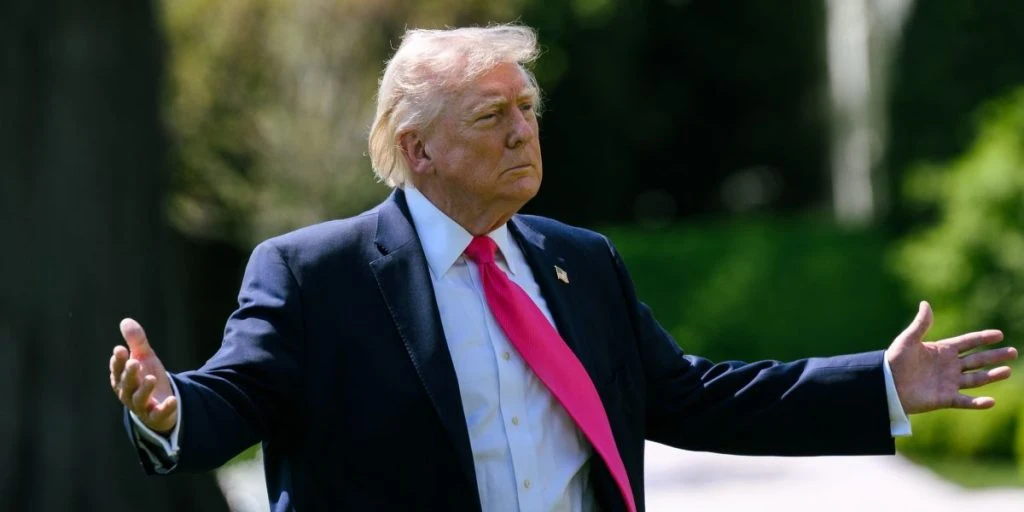
Trump’s approval rating remains dangerously low as Republicans struggle to recover from their election defeat.


Donald Trump’s return to the White House was supposed to mark a new chapter for the Republican Party, with the president promising to restore economic confidence, strengthen America’s borders and deliver relief to households struggling with everyday expenses.
Nearly two years into his second presidency, however, the political picture looks considerably less encouraging. Rising prices have become a persistent source of frustration, the war in Iran has added further pressure to household budgets, and voters have just handed Republicans one of their most damaging electoral defeats in decades.
With Democrats preparing to take control of both chambers of Congress, Trump now faces the challenge of rebuilding public confidence while defending policies that have become increasingly unpopular.
And according to a new Reuters/Ipsos poll, Americans are showing little indication that their opinion of the president is improving.


In fact, his approval rating remains alarmingly close to the lowest point of his entire political career.
Trump’s approval rating remains stuck at just 32%
The latest Reuters/Ipsos survey, completed on Monday, November 9, found that only 32% of Americans approve of Trump’s performance as president.
That leaves approximately two-thirds of the country outside the group expressing approval of his leadership.
The figure is unchanged from two previous Reuters/Ipsos polls conducted between late October and early November, suggesting that the president has been unable to reverse the decline in his popularity.
His current rating is also just one percentage point above the 31% recorded in mid-October.
That earlier result marked the lowest approval rating of Trump’s political career in the Reuters/Ipsos polling series.
Although the latest survey shows no further deterioration, the lack of improvement is hardly encouraging for a president whose party has just suffered a major electoral setback.
The results suggest that Trump’s political difficulties extend well beyond a single disappointing election night.
Americans are particularly unhappy with the cost of living
The most damaging findings for the White House concern the economy.
Trump has repeatedly presented himself as a leader capable of delivering financial stability and improving Americans’ purchasing power.
However, the latest polling indicates that voters remain deeply dissatisfied with his handling of everyday expenses.
Just 21% of respondents approve of his approach to the cost of living.
That is significantly lower than his already weak overall approval rating.
The result suggests that economic concerns have become one of the administration’s greatest political vulnerabilities.
Households have faced rising fuel prices, with the ongoing conflict involving Iran contributing to increased energy costs.
Trump launched the American military campaign against Iran alongside Israel in February, and the conflict has continued to affect international energy markets.
Higher fuel costs can also influence the prices of other goods and services, increasing the financial pressure on consumers.
For voters who expected Trump to make everyday life more affordable, the economic situation has become a major source of disappointment.
And the consequences have extended beyond the president himself.
Republican candidates across the country struggled to overcome dissatisfaction with the administration’s economic record during last week’s midterm elections.
Republicans suffered a devastating election defeat
The November 3 midterm elections delivered a sweeping victory for Democrats, who secured control of both the House of Representatives and the Senate.
The outcome represents a major political setback for Trump, whose party had hoped to preserve its congressional majorities.
Democrats recorded their strongest House performance since at least 2008, according to the election results reported by Reuters.
They also captured Senate seats in states traditionally regarded as Republican strongholds, including Kansas, South Carolina and Texas.
The scale of the defeat was particularly striking because several of those states had long been considered difficult territory for Democratic candidates.
Although some races remained undecided when the poll was completed, the overall outcome had already established a decisive shift in the balance of power in Washington.
For Trump, the consequences could be substantial.
A Democratic-controlled Congress will have greater opportunities to challenge his legislative priorities, scrutinize his administration and investigate controversial government decisions.
The president will also face a more difficult political environment as he attempts to advance his agenda during the remainder of his term.
The latest approval figures suggest that rebuilding support among dissatisfied voters will be no simple task.
Even Republican voters are divided over Trump’s economic performance
Perhaps one of the most revealing findings concerns the difference between Trump’s support on immigration and his support on economic issues.
The president continues to enjoy considerable backing among Republicans for his approach to border security and deportations.
According to the Reuters/Ipsos survey, 81% of Republican respondents approve of his immigration policies.
However, support drops dramatically when the subject turns to the cost of living.
Only 50% of Republicans approve of his handling of that issue.
The 31-percentage-point gap highlights a significant weakness within Trump’s own political coalition.
His supporters may remain enthusiastic about some of his most controversial policies, but that loyalty does not necessarily extend to their assessment of the economy.
The distinction matters because economic concerns affect voters across party lines.
While immigration remains a central issue for many Republicans, rising household expenses can create dissatisfaction even among those who otherwise support the president.
The survey therefore suggests that Trump’s difficulties cannot be explained solely by opposition from Democrats and independent voters.
Economic frustration has also reached a substantial portion of his own party.
Immigration remains Trump’s strongest political issue
Despite his overall unpopularity, immigration continues to be one area where Trump performs comparatively better.
The survey found that 38% of Americans approve of his immigration policies.
Although that figure still falls short of majority support, it is considerably higher than the 25% who approve of his overall economic management.
Since returning to the White House in January 2025, Trump has significantly intensified efforts to deport immigrants.
His administration has made stricter immigration enforcement a defining feature of its political agenda.
The president reinforced that approach last week by appointing Stephen Miller as White House chief of staff.
Miller, one of the principal architects of Trump’s hardline immigration policies, replaced Susie Wiles following the Republican Party’s midterm defeat.
The appointment indicates that Trump intends to maintain, and potentially intensify, his administration’s focus on immigration despite the election results.
For the president’s most committed supporters, that approach may be welcome.
However, the polling also suggests that immigration policy alone has not been enough to compensate for dissatisfaction with the administration’s economic performance.
Trump’s economic approval falls to just 25%
The survey’s broader assessment of Trump’s economic leadership offers another indication of the administration’s difficulties.
Only one-quarter of Americans approve of his handling of the economy.
That 25% figure is notably weaker than his approval rating on immigration and seven percentage points below his overall job approval.
The difference suggests that voters distinguish between the president’s political priorities and his ability to deliver improvements in their financial circumstances.
Trump’s economic message has traditionally been one of his strongest political assets.
During his campaigns, he frequently emphasized his business background and promised to improve economic conditions for ordinary Americans.
But the continuing rise in living costs has complicated that message.
The Iran war has added another layer of difficulty, particularly through its effect on fuel prices.
The combination of international instability and domestic economic frustration has left the White House facing criticism from voters who expected a different outcome.
The midterm election results demonstrated how damaging those concerns can become when Americans head to the polls.
The numbers offer little comfort for the White House
The Reuters/Ipsos survey was conducted online across the United States between November 6 and November 9.
A total of 1,705 American adults participated.
The poll has a margin of error of approximately two percentage points.
That means small changes between individual surveys should be interpreted cautiously, particularly when they fall within the margin of error.
Nevertheless, the consistency of Trump’s approval rating across several recent polls suggests that his political standing has remained persistently weak.
His 32% approval rating has now appeared in three consecutive Reuters/Ipsos surveys.
The earlier October reading of 31% was only marginally lower.
Rather than showing signs of a meaningful recovery, the president’s popularity appears to have settled near its lowest recorded level.
For an administration preparing to face a Democratic-controlled Congress, that presents a difficult political challenge.
Trump can continue pursuing his existing agenda, particularly on issues such as immigration, where Republican support remains strong.
But the latest figures suggest that the economy remains the issue most urgently in need of attention.
With just 21% of Americans approving of his handling of living costs, the president faces a substantial gap between his promises of financial relief and the public’s assessment of his performance.
The midterm elections have already demonstrated the political consequences of that dissatisfaction.
Unless Americans begin to feel meaningful improvements in their everyday finances, Trump’s efforts to rebuild his popularity may remain an uphill battle throughout the remainder of his presidency.



