
 Nicolai Haugsted

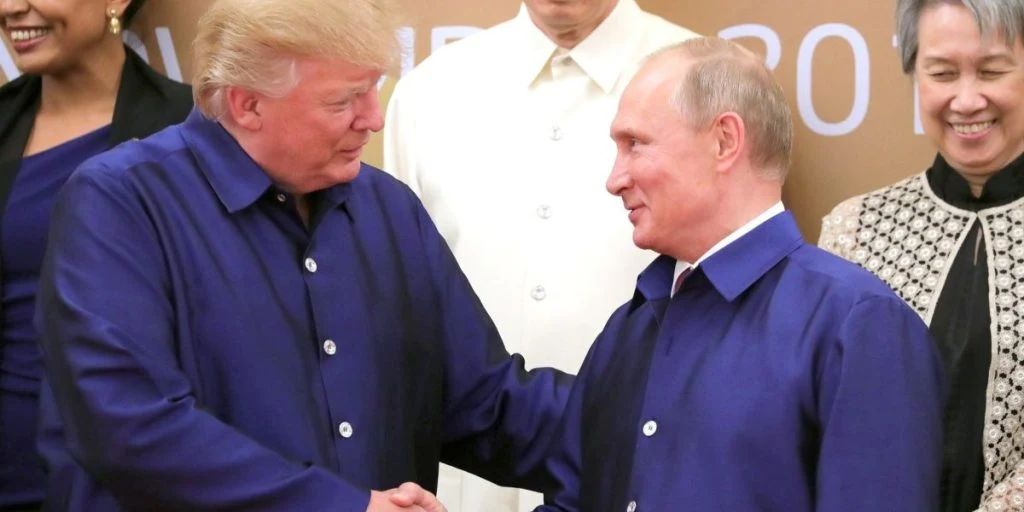
Trump’s controversial decisions on Russia spark fresh accusations from a former senior military commander


Donald Trump’s approach to Russia has repeatedly raised questions among American military veterans, European allies and lawmakers who believe Washington should take a tougher stance against Vladimir Putin.
The president’s recent decisions have only intensified those concerns, particularly as Ukraine continues fighting Russia’s invasion and European governments worry about the future of American support.
Washington’s willingness to ease economic pressure on Moscow, combined with Trump’s criticism of Ukrainian military operations, has prompted renewed debate over whose interests the administration’s policies ultimately serve.
Now, a former senior American military commander has taken that criticism considerably further.


According to Daily Express, retired Lieutenant General Ben Hodges, who previously commanded US Army forces in Europe, has publicly accused Trump of being compromised by Putin.
His allegation is extraordinary, even by the standards of Washington’s increasingly bitter political disputes.
There is, however, an important distinction: Hodges has offered no evidence to substantiate his claim.
Former US general accuses Trump of being bought off
During an appearance on German broadcaster ZDF’s political talk show Maybrit Illner on November 5, Hodges delivered a remarkably direct assessment of Trump’s relationship with the Russian president.
“It is quite clear that President Trump has somehow been put under pressure by Putin. I believe he has been bought off,” Hodges said.
The former commander did not explain how such an arrangement might have occurred or identify any financial transactions, communications or other evidence supporting his suspicion.
He also acknowledged that he could not produce documentary proof.
His comments should therefore be understood as a personal allegation rather than an established finding about Trump’s conduct.
Nevertheless, the accusation carries political significance because of Hodges’ military background.
As a former commander of US Army Europe, he has extensive experience with European security, NATO and the military challenges posed by Russia.
His remarks reflect growing frustration among some former American military officials over the administration’s handling of Moscow.
But experience and military credentials do not, by themselves, establish the truth of an allegation as serious as presidential corruption.
Hodges warns that Trump could face serious consequences
The former general also suggested that Trump’s political position could become increasingly uncomfortable once Democrats assume control of Congress in January.
Republicans suffered a sweeping defeat in last week’s midterm elections, giving Democrats greater power to investigate the administration’s decisions.
According to Hodges, Trump could eventually face a difficult choice over how to respond to potential scrutiny.
He suggested that the president might either acknowledge wrongdoing or “drag this out for as long as possible and hope that the next one to follow him will protect him from criminal prosecution.”
The remarks were speculative. No evidence was presented that Trump had committed the wrongdoing Hodges alleged, and the prospect of criminal prosecution remains hypothetical.
Hodges also delivered a broader criticism of the administration’s ethical standards.
“As an American, I can only say we have never had a perfect president, but it is so embarrassing to have a president who is not only corrupt himself but also allows others to be corrupt,” he said.
His comments come as Democrats prepare to use their new congressional majorities to examine several controversial decisions made during Trump’s second term.
The former commander emphasized that Congress possesses substantial authority over the administration, particularly when it comes to funding military operations.
He said lawmakers have “a great deal of influence” over Trump’s policies, including “the ability to end the funding for the war.”
Hodges was referring to the American military campaign against Iran, which is approaching its ninth month.
Trump’s latest decisions have raised eyebrows in Europe
The allegations come against the backdrop of several controversial policy decisions involving Russia and Ukraine.
Last month, Trump reached an agreement allowing the United States to import Russian diesel fuel.
The decision marked a significant departure from Washington’s previous efforts to isolate Moscow economically following its invasion of Ukraine.
Ukrainian officials and several European governments criticized the arrangement, arguing that renewed energy trade could weaken the economic pressure intended to constrain Russia’s military campaign.
Trump also urged Ukraine to stop attacking Russian oil refineries.
The president argued that Ukrainian strikes against Russian energy infrastructure had contributed to higher diesel prices in the United States.
However, the broader rise in global energy costs has been driven largely by the ongoing conflict involving Iran.
For Ukraine, attacks on Russian refineries have been part of an effort to disrupt the infrastructure supporting Moscow’s war effort.
Trump’s intervention therefore raised concerns among critics who believe Washington is placing greater pressure on Kyiv than on the country that launched the invasion.
The administration has defended its broader approach as part of an effort to encourage negotiations and reduce international tensions.
Sanctions against Russia are also being delayed
Another controversial decision concerns American sanctions targeting the Russian economy.
Trump recently signed an executive order postponing a major new package of restrictions intended to increase pressure on Moscow.
He informed Congress that delaying the measures was in the national interest.
The decision attracted criticism from both Democrats and Republicans, with lawmakers warning that postponing sanctions could benefit Putin at a crucial moment in the conflict.
The disagreement highlights a fundamental divide over how Washington should approach negotiations.
Supporters of sustained pressure argue that Russia is unlikely to make meaningful concessions without significant economic and military consequences.
Trump’s administration, meanwhile, has emphasized the importance of maintaining diplomatic channels and pursuing a negotiated settlement.
Critics fear that easing pressure prematurely could encourage Moscow to continue fighting rather than compromise.
None of those policy disagreements, however, proves Hodges’ allegation that Trump has been financially compromised or otherwise bought off by Putin.
Ukraine also experienced problems with a crucial military system
Concerns about American support intensified further after Ukraine reported a temporary slowdown affecting Starshield.
The system is the military-focused version of SpaceX’s Starlink satellite communications technology.
Satellite connectivity plays an important role in Ukraine’s battlefield communications and drone operations, making reliable access particularly important for its armed forces.
Trump denied responsibility for the brief disruption.
Nevertheless, the incident prompted speculation that restrictions on the service could form part of a broader American strategy to pressure Kyiv into accepting a negotiated settlement.
The information available does not establish that the president ordered the disruption or that it was deliberately connected to diplomatic negotiations.
Even so, the episode added to an already strained relationship between Washington and Kyiv.
For Ukrainian officials, uncertainty surrounding American military assistance remains a serious concern as the country approaches the fifth anniversary of Russia’s full-scale invasion.
Moscow appears remarkably relaxed about Trump’s election defeat
The Republican Party’s poor performance in the midterm elections has also attracted considerable attention in Russia.
Democrats are preparing to take control of Congress in January, potentially giving supporters of Ukraine greater influence over American foreign policy.
The election results could complicate Trump’s efforts to maintain his current approach toward Moscow.
Yet the Kremlin has shown little public concern about the political changes in Washington.
Asked whether the election outcome could interfere with American attempts to negotiate an agreement between Russia and Ukraine, Kremlin spokesperson Dmitry Peskov expressed hope that Trump would continue pursuing a settlement.
“There is groundwork already in place, and another round of trilateral negotiations is set to take place very soon,” Peskov said.
The talks are scheduled for Tuesday and Wednesday in Abu Dhabi, United Arab Emirates.
Representatives from Russia, Ukraine and the United States are expected to participate.
The diplomatic process comes as both sides remain deeply divided over the conditions necessary to end the war.
Moscow has continued its military campaign despite international sanctions and repeated attempts to secure a negotiated agreement.
Ukraine, meanwhile, remains determined to defend its sovereignty and resist terms that could leave it vulnerable to future Russian aggression.



