
 Nicolai Haugsted

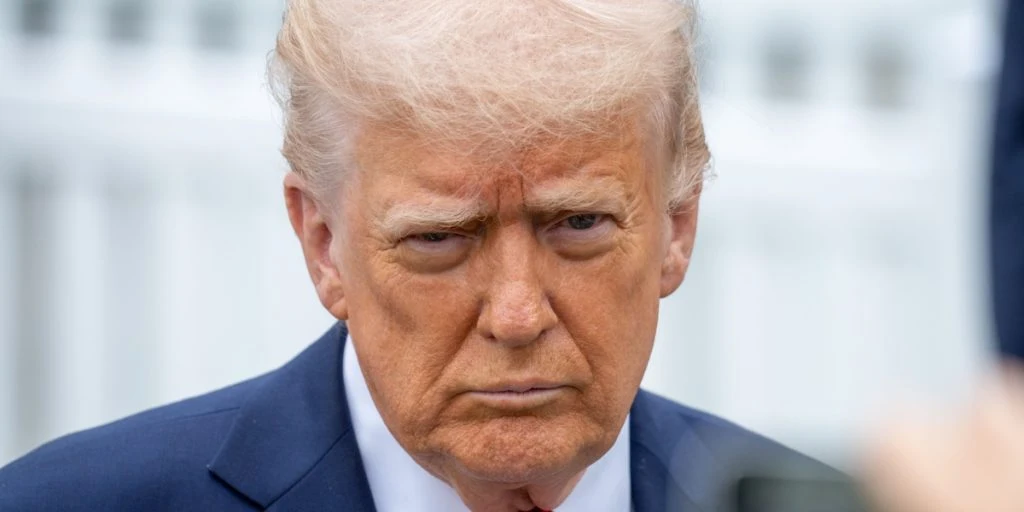
Donald Trump launches angry attack on New York Times at 1:47 a.m. over damaging report.
Donald Trump’s relationship with the American press has rarely been peaceful, but his latest confrontation with one of the country’s most prominent newspapers suggests that the president has little interest in calling a truce.
Following a bruising midterm election for Republicans, Trump has repeatedly challenged media coverage of his administration and his political conduct.
The president has long used Truth Social to respond to unfavorable reporting, often directing his criticism at journalists and news organizations he believes have treated him unfairly.
But while most Americans were sleeping early Wednesday morning, Trump was busy settling scores with The New York Times.


Shortly before 2 a.m., the president published two angry messages attacking the newspaper over separate articles, including a report involving a sexual harassment settlement at his New Jersey golf resort.
The dispute also involves his former personal attorney, Alina Habba Mildon, who is facing potential professional discipline over her alleged involvement in the case.
Trump launches an angry attack at 1:47 a.m.
The president’s most forceful response came at 1:47 a.m., when he criticized The New York Times for reporting on a sexual harassment dispute involving Trump National Golf Club in Bedminster, New Jersey.
The newspaper had examined allegations concerning Habba Mildon’s handling of a complaint brought by a former waitress at the property.
Trump objected to the coverage, insisting that the underlying harassment case did not personally involve him.
“The failing New York Times wrote about the ‘settling of a sexual harassment suit brought years ago by a waitress at President Trump’s golf club in Bedminster, N.J,’” he wrote.
“What they fail to say is that it did not involve President Trump, a rather important omission. FAKE NEWS!!!”
The president’s complaint focused on the distinction between his ownership of the golf club and his personal involvement in the dispute.
The allegations described in the report concern the conduct of his former attorney rather than an accusation that Trump personally harassed the employee.
Nevertheless, the case has attracted attention because of Habba Mildon’s close relationship with the president and the circumstances surrounding the settlement.
Former Trump attorney faces serious allegations
According to a complaint filed by New Jersey’s Office of Attorney Ethics, Habba Mildon became involved in the situation after a 21-year-old waitress accused a manager at Trump’s Bedminster golf club of sexual harassment.
The young woman had already obtained legal representation when Habba Mildon allegedly developed a personal relationship with her.
Investigators claim that Habba Mildon subsequently persuaded the employee to dismiss her attorney and accept a $15,000 settlement.
The complaint alleges that the arrangement favored the golf club, where Habba Mildon was a member.
The allegations raise questions about whether the former Trump attorney acted appropriately while dealing with someone whose interests potentially conflicted with those of the club.
Professional conduct rules require attorneys to avoid certain conflicts of interest and protect clients from improper influence.
The ethics complaint suggests that Habba Mildon’s actions may have fallen short of those obligations.
However, the accusations remain allegations within a disciplinary process, rather than established findings of professional misconduct.
A confidentiality agreement creates another problem
The $15,000 settlement is only part of the controversy.
According to the ethics complaint, Habba Mildon’s office also prepared a nondisclosure agreement connected to the harassment dispute.
Such agreements are generally designed to prevent parties from publicly discussing specified information.
But New Jersey law restricts the use of confidentiality provisions in settlements involving workplace harassment and discrimination.
The state’s protections are intended to prevent employers from using private agreements to silence workers who report misconduct.
The alleged preparation of the agreement has therefore become another significant issue in the disciplinary proceedings.
Habba Mildon could face sanctions that potentially include the loss of her license to practice law.
The outcome will depend on the findings of the relevant disciplinary authorities.
The case has particular political significance because Habba Mildon previously served as Trump’s personal attorney and became a prominent legal defender of the president.
Her association with Trump has made the allegations more newsworthy, even though the complaint concerns her own professional responsibilities.
The president had another complaint just minutes earlier
Trump’s criticism of The New York Times did not begin with the golf club controversy.
Approximately 20 minutes before his 1:47 a.m. post, the president had already attacked the newspaper over a separate article examining his behavior following the midterm elections.
The report had described a series of incidents involving Trump, including his participation in a C-SPAN television program.
According to the newspaper’s characterization, the president had called into the program apparently without advance notice.
Trump disputed that account.
“It was a fully scheduled call, as a favor to C-Span, set up through White House Communications,” he wrote.
“The Times knew this, but lied, in order to demean – But this is the least of their lies!”
His response presented the call as a planned appearance coordinated through the White House rather than a spontaneous intervention.
The president also accused the newspaper of deliberately misrepresenting the circumstances.
The supplied reporting does not independently establish whether the call was scheduled or whether the newspaper had information contradicting its description.
What is clear is that Trump considered the distinction important enough to address publicly in the middle of the night.
Trump’s frustration follows a difficult election
The timing of the messages is politically significant.
Republicans suffered major setbacks in last week’s midterm elections, with Democrats securing control of both chambers of Congress.
The results have increased pressure on Trump and raised questions about the direction of his administration during the remainder of his presidency.
Democratic control of Congress will also give the opposition greater opportunities to investigate administration officials and challenge White House policies.
Against that political background, Trump’s increasingly public disagreements with news organizations have attracted additional attention.
The New York Times article about his post-election conduct examined the president’s response to the Republican defeats.
Trump’s objections to the C-SPAN reporting suggest that he is particularly sensitive to how his recent public appearances are being portrayed.
His subsequent criticism of the Bedminster report introduced a separate controversy involving a longtime political ally.
Although the two stories concern different matters, the president addressed both through the same familiar approach: forceful accusations against the newspaper.
Trump insists the golf club case has nothing to do with him
The president’s central defense regarding the Bedminster controversy is that he was not personally involved in the alleged harassment or the settlement negotiations.
The distinction is relevant.
The ethics complaint focuses on Habba Mildon’s alleged conduct toward the former employee and the circumstances surrounding the agreement.
Trump’s ownership of the golf club does not, by itself, establish that he participated in those actions.
At the same time, the allegations involve a business carrying his name and an attorney who previously represented him.
Those connections explain why the matter has attracted national political attention.
The New York Times report, as described in the supplied material, does not accuse Trump of personally committing the alleged harassment.
Instead, it examines the professional conduct of someone closely associated with him.
Whether Habba Mildon violated attorney ethics rules remains a question for the disciplinary process.



