
 Kathrine Frich

He wants to copy the rulebook used by Washington and Moscow between 1946 and 1991.

Old maps have a funny way of coming back into fashion when world leaders sit down behind closed doors.
For decades, millions of Europeans assumed the borders and alliances around them were settled for good.
Now, a quiet push at the negotiating table is trying to turn back the clock by thirty years.
A 1990s throwback
Moscow wants to carve Europe up into zones of control once again, according to a November 13 report in The New York Times. As covered by United24 Media, the Kremlin has pitched a sweeping security deal to Washington that would revive Cold War habits and shrink NATO’s footprint in the east.


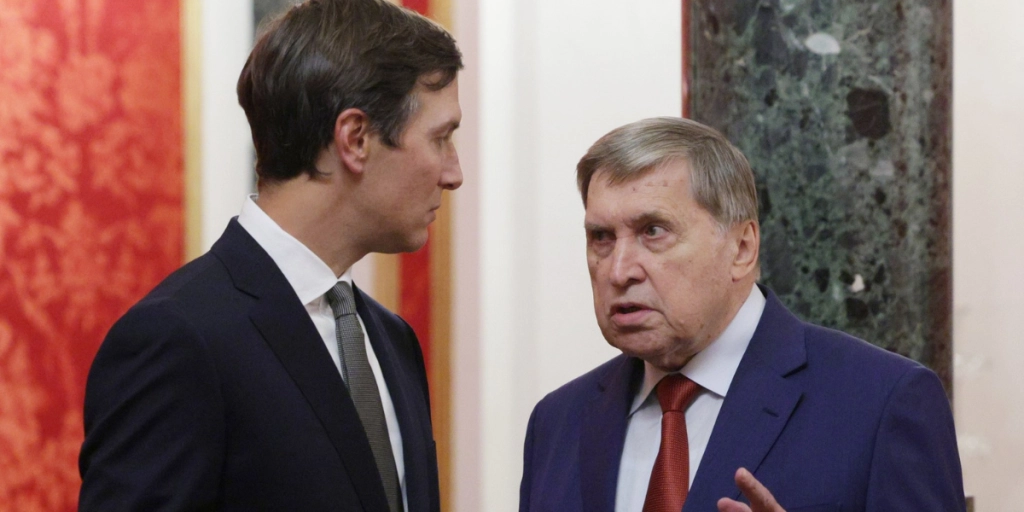
The idea first surfaced during multi-country talks in Abu Dhabi. Soon after, Russian leader Vladimir Putin discussed the plan directly in Moscow with American presidential envoys Steve Witkoff and Jared Kushner.
American diplomats told The New York Times that Russian negotiators want to copy the rulebook used by Washington and Moscow between 1946 and 1991.
That vision even includes building a brand-new military bloc led by Moscow, much like the old Warsaw Pact that bound Eastern Europe to the Soviet Union.
Russian officials claimed those vintage agreements and hotlines kept the two nucPutin proposes carving up Europe directly to Trump’s son-in-lawlear superpowers from stumbling into a direct war.
Witkoff and Kushner pushed back against the pitch, noting that global security looks completely different today. Still, Putin’s foreign policy aide Yuri Ushakov defended the blueprint as the basis for a shared security system.
Sweeping territorial demands
The specific requests on the table are huge. According to The New York Times, the Kremlin is insisting that NATO pull its troops and bases back to where they stood in 1997.
That single move would strip allied military hardware out of 16 of NATO’s 32 member countries, including Poland and the Baltic states. Moscow also wants the alliance out of former Soviet territories in Central Asia and the South Caucasus, while placing new security limits on Finland and Moldova.
For Ukraine, the Kremlin’s price tag remains just as steep.
As United24 Media reported, Russian officials still insist that Kyiv drop its bid to join NATO, hand over all of the Donetsk and Luhansk regions, and cap the size of its own armed forces.
All of these demands arrive alongside blunt warnings from the Kremlin. Back on October 29, Putin claimed his country was ready for a potential war with Europe even while insisting he did not want one, warning that further escalation would leave “no winners at all,” according to The Moscow Times.



