
 Kenneth Glad

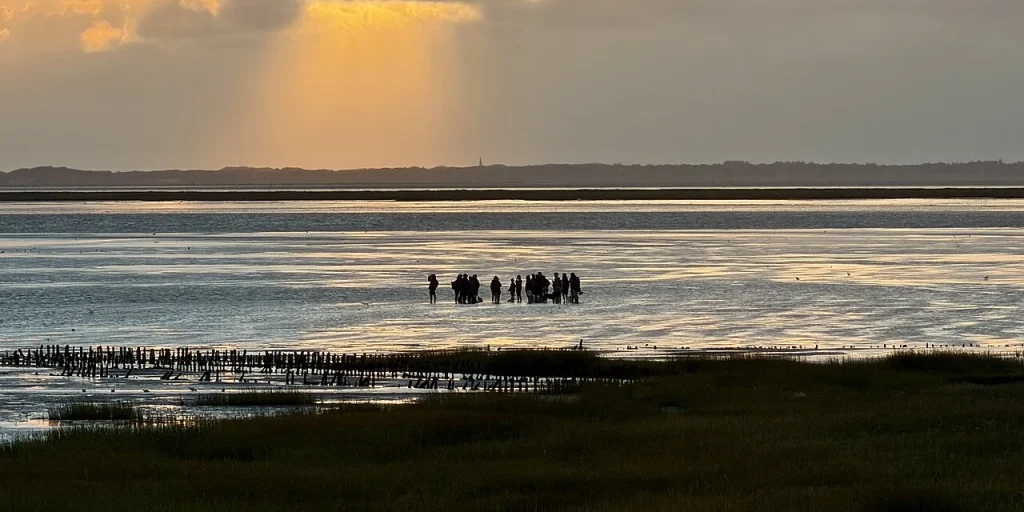
Twice a day, the sea retreats along Europe’s northern coast. What remains is a vast world of sandbanks and mudflats that sustains millions of migrating birds alongside busy island towns. Now, growing industrial pressure threatens that delicate balance.

Spanning Denmark, Germany, and the Netherlands, the Wadden Sea is the world’s largest unbroken tidal flat system. Unesco named it a world heritage site in 2009. Now, The Guardian reports, a 2027 UN inspection could put it on the danger list.
Many human demands crowd these waters. Gas and salt drilling, fishing, offshore wind cables, and even a Nato bombing range on the Dutch island of Vlieland strain the habitat.
Wildlife already shows the toll. Marine biologist Wouter van der Heij of Dutch group Waddenvereniging told The Guardian that the sea faces “a very vulnerable situation”. “The numbers of birds are going down, the amount of fish is going down, the biodiversity on the mudflats, it’s going down,” he said.
Locals fight back
Island residents fear paying the price for industrial damage. Months ago, maps began circulating that suggested wide stretches of the Dutch Wadden Sea might shut to visitors and residents to hit nature targets, The Guardian writes. Making Unesco’s danger list would also hurt communities reliant on holidaymakers.


Vlieland holds barely 1,000 people. Lifelong resident and tour operator Aant van der Veen sparked the “We are the Wadden” campaign with a Facebook post. Soon, flags and banners filled island villages during peak holiday season.
His push drew nearly 52,000 petition signatures and took island representatives to The Hague to meet lawmakers. “If we lose the tourism on the islands, then it doesn’t matter what you’re doing, everybody’s going bankrupt,” Van der Veen told the newspaper.
Dutch officials admitted they communicated poorly and promised to include locals in future choices. A spokesperson said people have lived alongside the sea for centuries and insisted “this balance will not be fundamentally altered”. Officials also plan to remind Unesco that 2009 heritage rules covered existing activities.
Tangled rules across borders
Three countries share control of the sea. That overlap tangles local, national, and European rules, prompting the Environmental Justice Foundation to sue in German waters over EU impact checks, The Guardian reports.
German campaigner Mona Friedrich said that despite national park and Unesco protection labels, “bottom trawling continues to be authorised”.
Beneath the sea, extracting salt and gas makes the seabed sink. Van der Heij warns that sinking flats and rising seas could stay flooded at low tide, starving birds along the East Atlantic Flyway.
Dutch ministers blocked gas drilling at Ternaard despite energy pressures. Still, they backed draft plans to expand salt mining near Harlingen.
Waddenvereniging sent Unesco an urgent plea against the project. Officials point to a “hand-on-tap” rule that stops work if sinking exceeds limits. Now everyone waits for Unesco’s 2027 verdict.



