
 Kenneth Glad
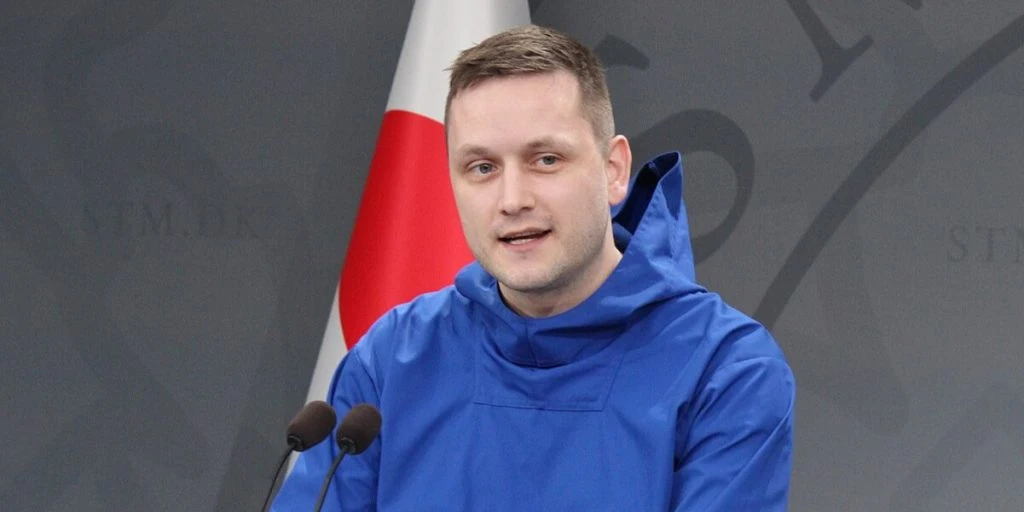
With Arctic security moving higher on global agendas, Greenland’s government is seeking to reassert control over how its future is discussed abroad.


Greenland and several European partners are seeking to contain renewed diplomatic friction with the United States after senior figures linked to President Donald Trump again raised the prospect of expanded American control in the Arctic, reopening a dispute with implications far beyond the world’s largest island.
The episode unfolds amid intensifying strategic competition in the Arctic, where melting sea ice is opening shipping lanes and access to critical minerals. Nordic and EU governments, including Denmark and Germany, have in recent weeks reiterated their support for Greenland’s territorial integrity through diplomatic channels, according to officials in Nuuk and Copenhagen.
Against that backdrop, Greenland’s Prime Minister Jens-Frederik Nielsen this week moved to define the limits of engagement with Washington, warning that a moderation in U.S. rhetoric should not be mistaken for a change in strategic intent.
A change in tone, not direction
Addressing lawmakers during an extraordinary parliamentary session on Monday, Nielsen said U.S. policy toward Greenland appears to have shifted away from explicit threats and toward sustained political and diplomatic pressure.


“The ambition hasn’t disappeared,” the prime minister told parliament, according to Polish media outlet Wiadomości.
He cautioned that Greenlandic authorities view the softer language as a tactical adjustment rather than a substantive retreat, and said cooperation could only proceed if it respected international law and Greenland’s right to self-determination.
Trump first proposed acquiring Greenland in 2019, a suggestion that was swiftly rejected by both Nuuk and Copenhagen but has resurfaced periodically since his return to office.
While U.S. officials now emphasize partnership and security cooperation, Greenlandic leaders say they remain wary of arrangements that could gradually weaken political autonomy.
Parliament takes the lead
Those concerns prompted the rare convening of an extraordinary session of Inatsisartut, Greenland’s parliament, in Nuuk. Lawmakers debated U.S.–Greenland relations for nearly nine hours — an exceptional move in a political system where emergency sittings are uncommon and full sessions are typically scheduled months in advance.
Following the debate, parliamentary leaders agreed to suspend the remainder of the sitting until April. Such postponements are unusual in Greenland, where legislative calendars are rarely altered once a session has begun, reflecting the seriousness with which the government views the current diplomatic situation.
Nielsen said the pause would allow the government to concentrate fully on international negotiations and coordination with allies.
The debate intensified after the New York Times suggested Washington might be exploring special sovereignty arrangements around U.S. military facilities on Greenlandic soil.
A clear stance
Nielsen rejected the idea that any transfer of land, jurisdiction or sovereign authority could be part of negotiations, describing territorial integrity as a non-negotiable principle.
“We have been very clear from the beginning that there is a boundary we will not cross, such as giving up territory, giving up self-determination, or giving up the right to a piece of our own land, even if it is no bigger than a postage stamp,” he told TV2 Denmark.
The government’s stance drew support across party lines. Even Naleraq, the sole opposition party and historically the most open to closer ties with the United States, aligned itself with the government’s position during the debate.
Analysts in Nuuk say the alignment is politically significant, underscoring how the question of territorial control has moved beyond conventional coalition–opposition dynamics and become a rare point of national consensus.
Cooperation within limits
Despite the tensions, Greenland remains engaged in a trilateral working group with Denmark and the United States focused on Arctic security, infrastructure and logistics. Nielsen said Nuuk is prepared to expand cooperation, provided it is based on mutual respect and legal clarity.
Relations with Denmark have meanwhile tightened. Greenlandic officials acknowledge that, under current conditions, remaining within the Danish realm offers greater institutional stability than deeper reliance on Washington. While most parties continue to support eventual independence, they agree it should follow economic self-sufficiency rather than geopolitical confrontation.
Analysts note that Greenland’s position mirrors other Arctic autonomy arrangements, such as Norway’s governance of Svalbard, where sovereignty is firmly maintained despite extensive foreign economic and strategic interests. In both cases, authorities have sought to balance openness to cooperation with strict limits on external control.
For now, Greenland’s message is deliberate and restrained: Cooperation is possible, but ownership and sovereignty are not.
Sources: Wiadomości, New York Times, TV2 Denmark



