
 Kathrine Frich
Canada is preparing a sweeping overhaul of its defence procurement policy aimed at strengthening domestic production.


The plan seeks to shift military spending toward Canadian firms and reduce dependence on US suppliers.
Under the strategy, 70% of army procurement contracts would go to Canadian companies within the next decade, according to Canadian media reports. Small and medium-sized enterprises specialising in defence are expected to receive $6.6 billion from a planned $81.8 billion defence budget.
The document also highlights investment in artificial intelligence and data processing, alongside traditional military equipment.
Jobs and exports
Officials estimate that prioritising local suppliers could generate 125,000 jobs over ten years. Canada’s defence sector currently supports more than 81,000 positions.


The strategy also calls for a 50% increase in defence export capacity.
“In this uncertain world, it is more important than ever that Canada has the capacity to maintain its own defence and secure its sovereignty (…) This is particularly important when it comes to protecting Canadian sovereignty in the Arctic,” The Canadian Press cited from the document.
Reducing dependence
Canada’s public broadcaster CBC reported that the strategy states “Canada cannot outsource its defence strategy.”
Prime Minister Mark Carney said last year that roughly 75 cents of every dollar Canada spends on arms currently goes to the United States. “That’s not smart,” he told CBC at the time, arguing for a shift toward domestic suppliers.
Planned priority areas include ammunition, aviation systems, air and underwater drones, and cloud services. The government also intends to secure strategic partnerships covering Canadian manufacturing and intellectual property.
European ties
Where domestic capacity is limited, Ottawa plans to cooperate with European and Indo-Pacific partners.
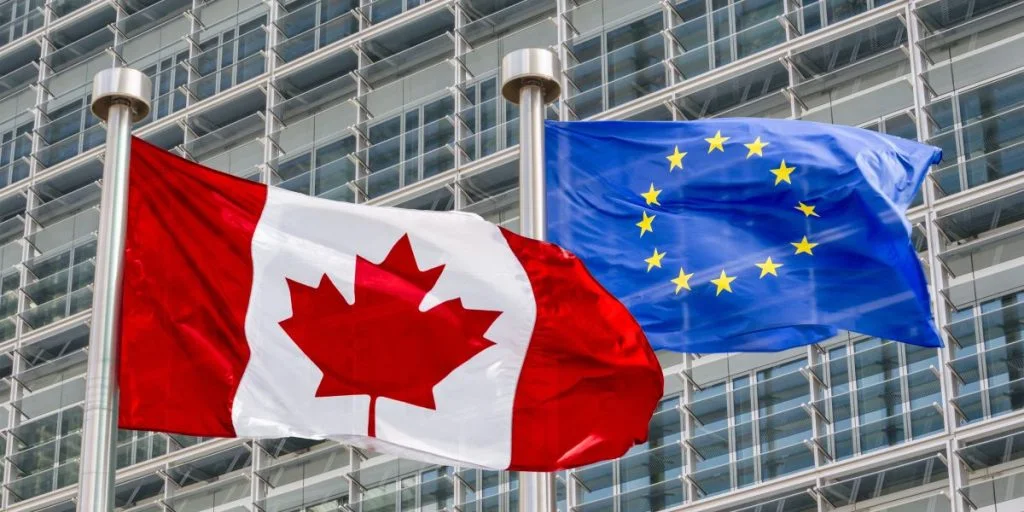
Canada signed a defence agreement with the European Union in June, allowing participation in the ReArm Europe initiative and the €150 billion SAFE loan programme supporting weapons production.
Defence Minister David McGuinty confirmed over the weekend that Canada has formally joined SAFE, enabling Canadian firms to compete for contracts funded through the programme.
Foreign Minister Anita Anand also held talks with Polish Foreign Minister Radosław Sikorski at the Munich Security Conference on expanding defence industry cooperation within the SAFE framework.
Sources: CBC, The Canadian Press, Money.pl.



