
 Noah Romsdal Hallundbæk Sørensen
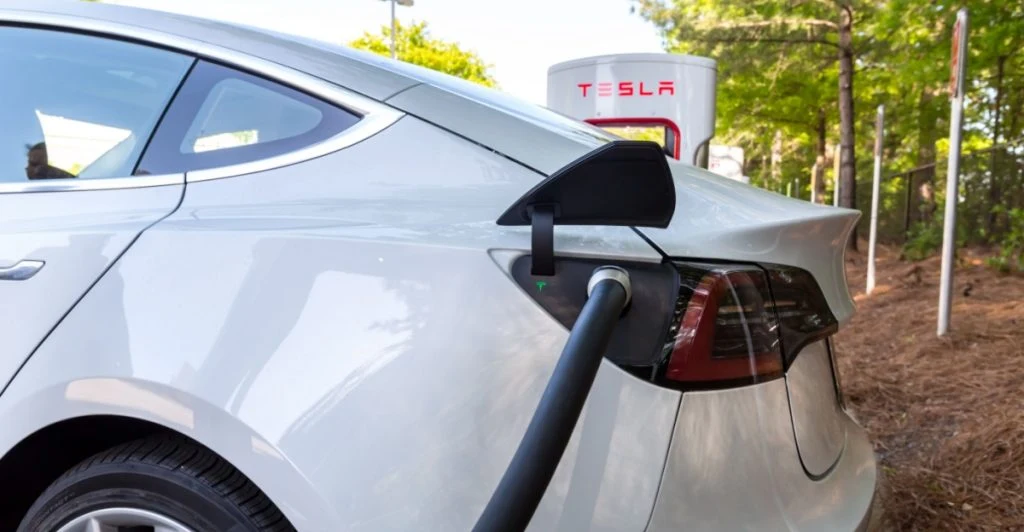
A used Tesla Model 3 with 113,000 miles on the clock has revealed a battery decline.


Concerns over battery health remain a key issue for buyers of second-hand electric vehicles.
Real-world data, however, often tells a more nuanced story.
A well-known long-term Tesla Model 3 Performance has now offered fresh insight into how capacity can change over time.
The 2019 Model 3 Performance once belonged to EV tester Bjørn Nyland, who sold it in 2021 after driving roughly 49,000 miles (80,000 km).


At the time, he assessed battery degradation at about 8%.
The battery on steep decline
Nyland had made heavy use of DC fast charging during his ownership, taking advantage of free Supercharging.
He linked the relatively high wear he recorded back then to those frequent fast-charging sessions.
Nearly seven years after its first registration, the same vehicle has now covered 113,090 miles (182,000 km). Revisiting the car, Nyland calculated total degradation at around 20.8%.
Higher than expected
Based on his measurements, the usable battery capacity stands at approximately 58 kilowatt-hours.
He also estimated a remaining buffer of about 4.4 kWh, meaning the car still holds some reserve energy even when the display shows 0% state of charge.
Nyland said he had anticipated overall degradation to be closer to 12%, making the near 21% figure seem high, despite the car spending its life in Norway’s cold climate.
He noted that after he sold the vehicle, the second owner mainly charged at home and limited charging to 80%, a practice generally considered beneficial for long-term battery health.
Measurement questions
Nyland acknowledged that his 2021 test used a different method, meaning the earlier 8% figure may not be directly comparable to the current result.
He also raised the possibility that the car’s battery management system, which provides the data used in his analysis, may not perfectly reflect the pack’s true condition.
According to Nyland’s experience, Teslas that are rarely charged to 100% or allowed to reach very low levels can display conservative capacity estimates.
Given the second owner’s 80% charging cap, that may have influenced the reading.
Still usable range
Despite the higher-than-expected loss, the remaining range remains practical.
Nyland estimates the car could still travel about 250 miles (400 km) in summer conditions, dropping to roughly half that in sub-zero winter temperatures.
For a nearly seven-year-old performance EV with over 113,000 miles, that level of usability remains notable.
On the European market, such a vehicle could sell for just over €20,000 ($23,600), offering relatively affordable access to long-range electric driving.
Sources: InsideEV, YouTube/Bjørn Nyland



