
 Kenneth Glad
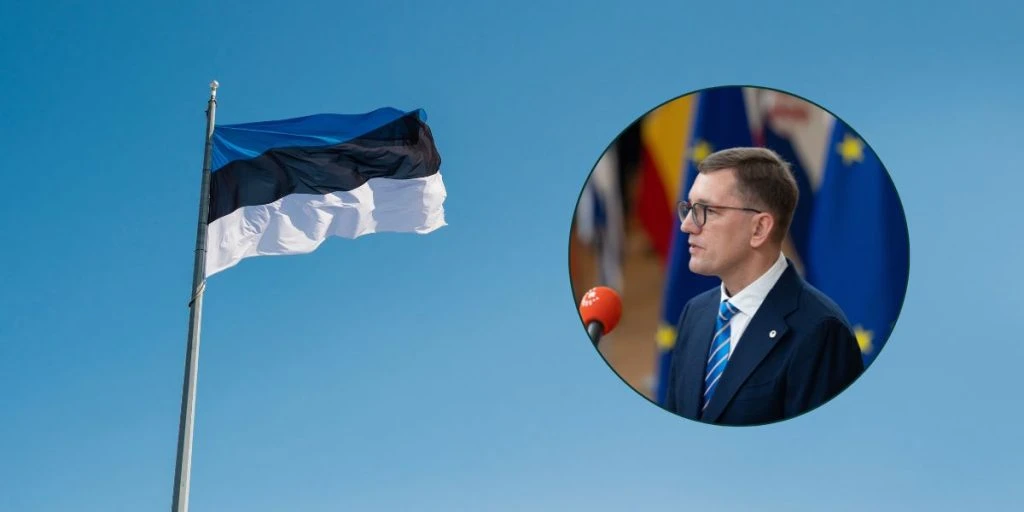
With divisions widening inside the European Union, pressure is building over how to confront Moscow’s ongoing offensive. Estonia’s prime minister is now pushing for faster action, arguing that hesitation only raises the stakes for Europe’s future.

As European leaders struggle to agree on the next phase of support for Kyiv, frustration is mounting in the countries closest to Russia. For Estonia, which regained independence after decades of Soviet rule and now borders the Russian Federation, the debate is more than procedural.
For Estonia, delay carries consequences.
Prime Minister Kristen Michal has urged fellow EU governments to unlock a 90 billion euro assistance package for Ukraine that remains blocked.
Aid plan stalled
The proposed package, which requires consensus among member states, has faced resistance from Hungary and Slovakia. As reported by Romanian outlet Digi24, the impasse has exposed fractures within the bloc over how far and how fast to go in backing Kyiv.


“We decided. Everybody was in that room,” Michal said, referring to previous discussions among EU leaders. “They decided to opt out, but we still decided.”
He said, according to Digi24, that European Commission President Ursula von der Leyen and European Council President António Costa are exploring alternative ways to release the funds despite objections. “They have different plans on how to deliver the money,” he said. “They will tell.”
If the EU cannot implement major commitments tied to its strategic credibility, Michal suggested, broader doubts could emerge about its decision-making capacity in times of crisis.
Kremlin calculations
Speaking to Euronews, Michal argued that domestic power dynamics in Moscow help explain why the war continues.
“At this moment, Putin has more people under arms than at the beginning of the war,” he said, pointing to Russia’s expanded mobilization.
He framed the issue as a political trap for the Kremlin. “If he stopped killing in Ukraine, what would he do with them?”
“In Russia they glorify the hero. If he stops, he collapses,” the Estonian PM added, suggesting that President Vladimir Putin’s authority is intertwined with the continuation of the campaign.
He also warned against a rushed settlement that lacks firm guarantees for Ukraine, saying instability could spread beyond its borders.
On frozen Russian state assets, he noted: “They are still frozen, which is a good thing.” The question of whether those funds can legally be redirected to Ukraine remains contested within the EU, with concerns over precedent and financial stability.
Calls for higher spending
Beyond the aid dispute, Michal addressed Europe’s broader defense posture. He aligned himself with longstanding U.S. calls for greater burden-sharing within NATO.
“Europe should invest more in security,” he said. “This is a message that we understand.”
Estonia plans to allocate 5.4 percent of its GDP to defense this year, one of the highest levels in the alliance. “Not easy,” he acknowledged. “But I know that my grandchildren will live in peace, because our neighbor knows that we take it seriously.”
Rejecting narratives of European decline, Michal said the continent would be “better in five, seven, 10 years” if commitments are honored, and described it as remaining among “the most free nations in the world.”
Sources: Digi24, Euronews



