
 Edith Hejberg
In a survey of nearly 1,500 parents and teens, 57% said they use AI to search for information.


A generation ago, schools rushed to place computers in front of students. Today, artificial intelligence is the next tool reshaping classrooms.
Since the launch of ChatGPT in 2022, AI has spread rapidly among teenagers.
Education experts now worry that easy access to AI could weaken key learning skills.
Instead of helping students think more deeply, the technology may encourage them to rely on quick answers.
More than half of teens already use AI

AI tools are now part of daily school life for many students.
A Pew Research Center report found that more than half of teenagers use AI for school-related tasks.
In a survey of nearly 1,500 parents and teens, 57% said they use AI to search for information.
Another 54% reported using it directly to help with schoolwork.
Homework becomes frictionless

AI chatbots make finding answers almost effortless.
Students can simply type a question into their phones and receive an instant response.
But educators say learning often requires effort and struggle.
When that friction disappears, students may miss the deeper thinking that helps knowledge stick.
Research raises red flags

A January study from the Brookings Institution examined the growing role of AI in education.
Researchers analyzed interviews and focus groups with more than 500 educators, parents, and students across 50 countries.
They also reviewed more than 400 previous studies on education and technology.
Their conclusion was blunt: for now, the risks of generative AI in children’s education appear to outweigh the benefits.


Concerns about critical thinking

Early research suggests AI could affect how students reason and judge information.
A February 2025 study from Microsoft linked AI use with weaker judgment and critical thinking.
Education consultant Mary Burns believes the concern is real.
“The cognitive offloading, and the cognitive decline that’s associated with that, the decline in critical thinking, and just even reading and writing and knowledge of basic facts, I absolutely believe that.”
Screen time and declining scores

Technology in schools has also drawn attention from policymakers.
In January, neuroscientist Jared Cooney Horvath testified before Congress about student learning trends.
Using international test data, he argued that Gen Z may be the first generation in modern history to show lower cognitive performance than their parents.
He linked the drop to the rapid expansion of digital tools in classrooms.
The classroom tech boom
The push for computers in schools began decades ago.
In 2002, Maine became the first U.S. state to provide laptops to schoolchildren across the state.
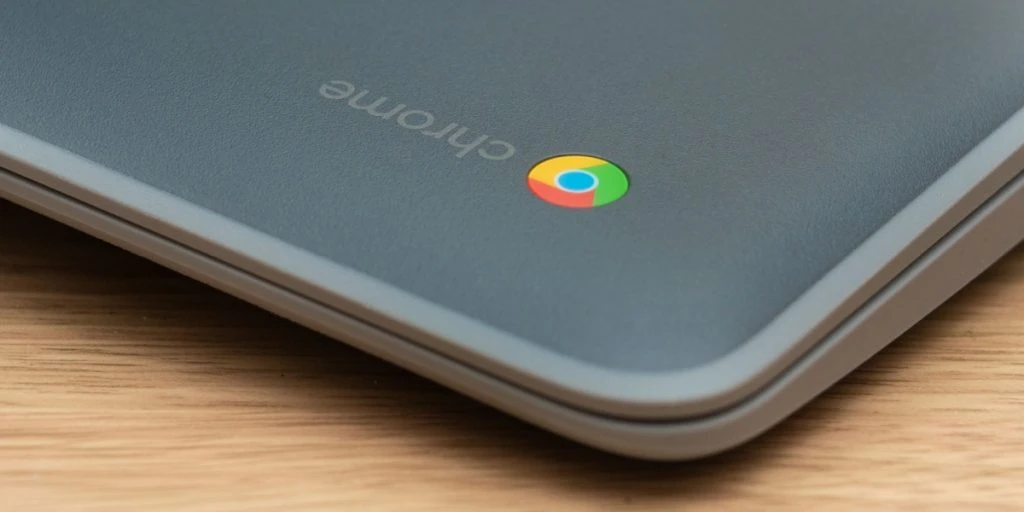
Later, Google entered classrooms with low-cost Chromebooks and free apps.
By 2017, Chromebooks accounted for more than half of digital devices shipped to schools.
Students distracted by screens

Critics say classroom devices often lead to distraction rather than learning.
A 2014 study of 3,000 university students found that two-thirds of screen time was spent on off-task activities.
Students frequently switched between assignments, social media, and entertainment.
For many researchers, this pattern raises doubts about heavy reliance on digital tools.
A century of “teaching machines”

Horvath argues that technology-driven learning is not a new idea.
He points to the “teaching machine” invented in 1924 by psychologist Sidney Pressey.
The machine delivered questions and evaluated answers automatically.
Students could master the system, but struggled to apply that knowledge outside the device.
Learning tied to the tool

That early experiment revealed an important problem.
Students became skilled at working within the machine’s structure.
But once the device was removed, their understanding did not transfer well.
Horvath believes modern AI risks repeating the same mistake.
Personalization or isolation?

Tech companies often say AI will personalize education.
Burns argues the reality is different.
Instead of tailoring learning to students’ needs, AI may simply isolate them from each other.
“[Tech] companies keep talking about, AI is personalizing learning,” she said. “I don’t think it’s personalizing learning. I think it’s individualizing learning.”
Dependency instead of expertise

Horvath warns that AI may teach dependence rather than skill.
Experts often use tools to speed up their work.
But students still learning the basics may lose the chance to develop those skills themselves.
“The tools experts use to make their lives easier are not the tools children should use to learn how to become experts.”
Technology is not going away

Despite concerns, few educators believe AI should disappear from schools.
Teachers themselves are already using AI to draft lesson plans and materials.
In some cases, the technology can help adapt reading levels for English language learners.
Burns sums up the debate simply: “To say technology is a mixed bag is true.”



