Asger Risom
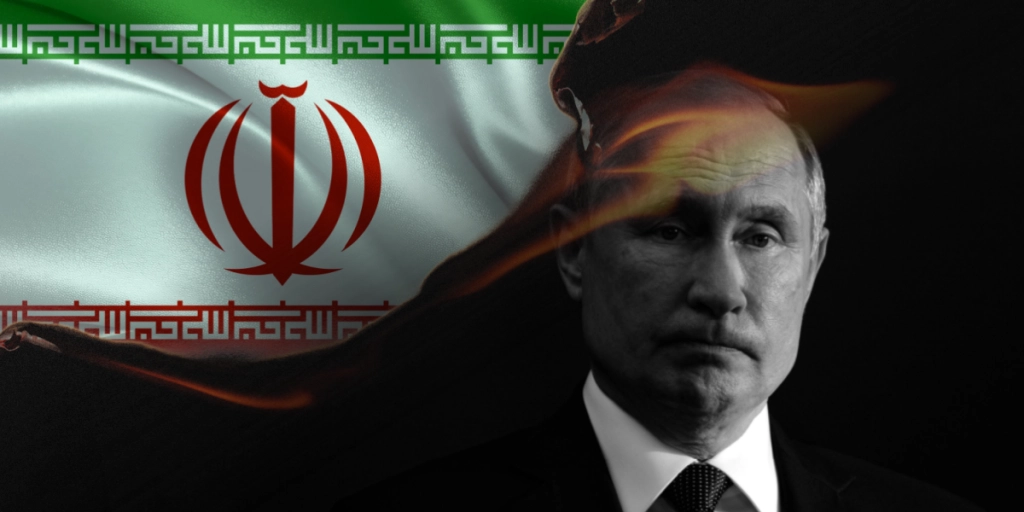
Despite its close ties with Iran, Russia has largely stayed on the sidelines as the country faces attacks backed by the U.S. and Israel. Analysts say Moscow’s limited military capacity and strategic calculations — including rising oil revenues and shifting U.S. focus — explain why Putin is choosing not to intervene.


As Iran faces sustained attacks backed by the United States and Israel, one of its closest allies is standing back.
Despite signing a strategic partnership with Tehran just last year, Russia has limited its response to statements and diplomatic positioning — raising questions about whether Moscow is unwilling, or simply unable, to act.
A partnership with clear limits
On paper, Russia and Iran have grown closer in recent years, strengthening economic and political ties and presenting a united front against Western influence.
But the agreement between them does not include a mutual defense clause — a gap that is now proving decisive.


While Moscow has condemned the attacks and voiced support for Tehran, it has offered no direct military assistance as Iranian infrastructure and leadership have been targeted.
The situation exposes the limits of the partnership: strong in rhetoric, but far less so in practice.
A war Russia can’t afford to fight
Russia’s absence is also tied to its own constraints.
With its military deeply engaged in Ukraine, opening another front — especially one involving the United States — would carry significant risks.
Recent conflicts have already revealed these limitations. Moscow has struggled to decisively support allies elsewhere, often defaulting to statements rather than intervention when faced with escalating crises.
Iran now appears to be the clearest example yet of how far Russia’s reach actually extends.
Quiet gains from a distant war
At the same time, the war is producing benefits for Moscow.
Rising oil prices, driven by instability and disruptions around key shipping routes, are boosting Russian revenues at a time when its economy is under pressure from the war in Ukraine.
At the same time, Washington’s focus on the Middle East is pulling attention and resources away from Ukraine — easing pressure on the Kremlin.
The result is a calculated approach: Russia avoids direct involvement while quietly benefiting from the consequences of the conflict.
A diminished global role
For observers, the moment highlights a broader shift.
Russia still seeks to present itself as a global power capable of shaping events beyond its borders. But its inability — or unwillingness — to act decisively in Iran suggests a more limited reality.
Moscow may still influence events from a distance. But when it comes to defending its partners, its reach appears far more constrained than it once claimed.
Sources: Foreign Affairs, Ziare.com