
 Kenneth Glad
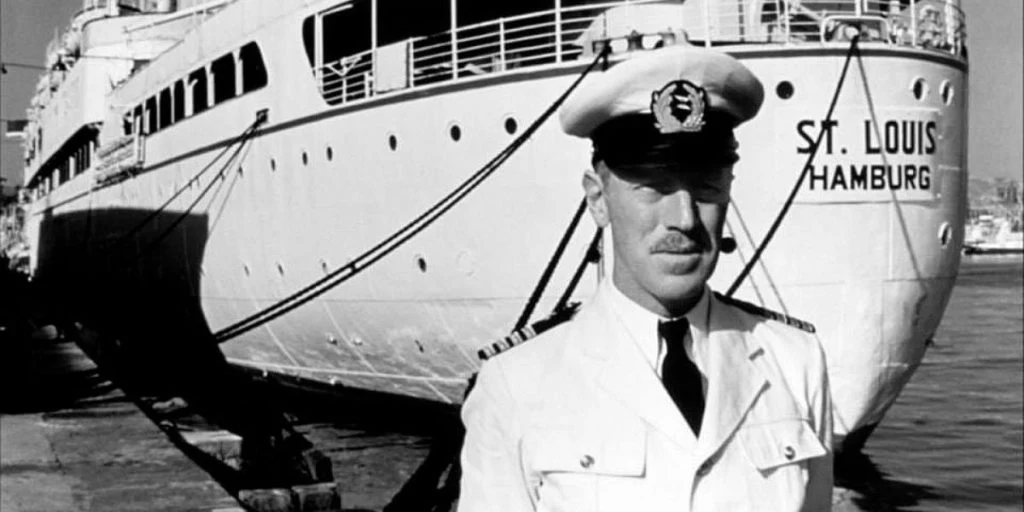
Around 250 of those who fled Nazi Germany aboard the MS St. Louis in 1939 would later be killed in the Holocaust.

Institutions including the United States Holocaust Memorial Museum (USHMM) and Yad Vashem have pointed to the episode as a revealing moment in how governments responded to people seeking refuge. It was more than a failed escape. It exposed how narrow that willingness to help had become.
When the German liner sailed from Hamburg on 13 May 1939, it carried hundreds of Jewish families trying to escape escalating persecution.
Many had already been pushed out of jobs, stripped of property and constrained by strict Nazi currency export rules, leaving them with almost nothing, as detailed by the Holocaust Memorial Day Trust (HDMT).
On board, Captain Gustav Schröder maintained conditions that stood apart from those in Germany. Survivors later described an atmosphere where religious services were permitted and those on board were treated with basic dignity.


A narrative takes shape
HMDT documentation indicates that Nazi officials attempted to influence how the refugees would be received abroad, including spreading misleading claims in Cuba about those on the ship .
Historian David Cesarani, writing on 1930s refugee policy in the book, Final Solution: The Fate of the Jews 1933–1949, argues that episodes like the St. Louis were later used to reinforce the idea that Jews had nowhere to go.
That interpretation, also reflected in Thomas and Morgan-Witts’ book, Voyage of the Damned, suggests the voyage fed into a broader narrative once countries refused entry.
The USHMM notes, however, that immigration limits and domestic political pressures in receiving countries were equally decisive.
Held offshore
The pivotal moment came in Havana harbour. After arriving in late May, the ship was denied permission to dock because new Cuban regulations had invalidated most landing permits.
For days, it remained at anchor in the heat, engines idling. Passengers lined the rails, watching the shoreline just out of reach, while small boats carrying relatives were turned back by authorities, according to HMDT accounts .
The vessel later edged north and paused off Florida. Appeals were made, but none succeeded. U.S. Coast Guard ships shadowed the liner as it waited, underlining how close the refugees came to safety.
A report in the Galveston News, cited in the book by Thomas and Morgan-Witts, described the situation at the time:
“Driven out of their homeland by senseless persecution, all they ask of any other land is a chance to live in peace and opportunity to earn a livelihood. That is something no country is willing to give them…”
Aftermath and meaning
With no country willing to accept all passengers, the St. Louis returned to Europe. In the end Britain admitted several hundred people, while others were divided between France, Belgium and the Netherlands.
Many would face danger again within a year. USHMM estimates indicate that about 250 of those sent back to continental Europe were later murdered during the Holocaust.
The voyage is often considered alongside other failures of the 1930s refugee system, including the Evian Conference, where nations expressed sympathy but offered limited concrete action.
The episode has since been revisited in historical research and in the 1976 film Voyage of the Damned.
It still resonates. The question it leaves is simple and uncomfortable: What happens when every door stays closed?
Sources: United States Holocaust Memorial Museum; Yad Vashem; Holocaust Memorial Day Trust; Holocaust Encyclopedia; David Cesarani – Final Solution: The Fate of the Jews 1933–1949 (2016); Thomas & Morgan-Witts – Voyage of the Damned (1974)



