
 Kenneth Glad
Fewer people are dying in terrorist attacks worldwide, yet the broader picture is far from reassuring. The latest data suggests terrorism is not disappearing but changing form, becoming more concentrated in fragile regions while resurfacing in new ways elsewhere.
Others are reading now


The Global Terrorism Index 2026, published by the Institute for Economics & Peace (IEP) and cited by El Economista, shows that 5,582 people were killed in terrorist attacks in 2025, a drop of 28% from the previous year. Incidents also declined by 22% to 2,944.
This continues a longer trend: Global deaths have fallen significantly since their peak of nearly 11,000 in 2015.
But the decline is highly concentrated. Around 70% of all fatalities occurred in just five countries, including Pakistan, Nigeria and Burkina Faso, underlining how terrorism is increasingly confined to a smaller number of conflict-affected areas.
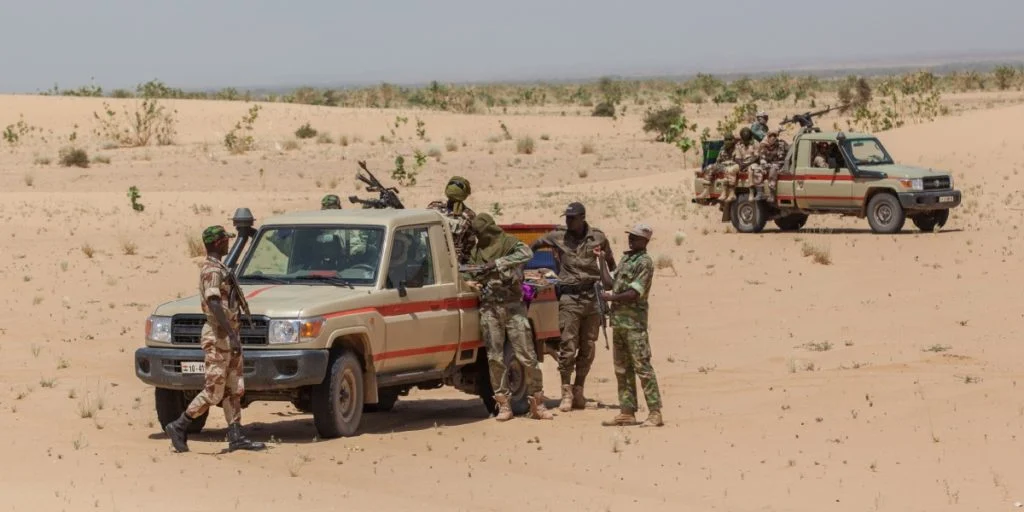
The Sahel region in sub-Saharan Africa remains at the heart of this pattern, now accounting for most terrorism-related deaths as instability, weak governance and cross-border militant activity persist.


Western shift
Against this broader decline, Western countries are moving in the opposite direction. Deaths rose to 57 in 2025, a 280% increase, according to the IEP.
Although the absolute numbers are still low, the nature of attacks is changing. The report links recent incidents to “anti-Semitism, Islamophobia, and political terrorism,” highlighting the growing role of ideological violence.
“Lone wolves carried out 93% of deadly terrorist attacks in the West over the past five years,” the report states, pointing to a decentralised threat that is harder for authorities to detect.
A generational shift is also underway. “The radicalization of young people has emerged as one of the most pressing security concerns in the West,” the report notes, with online content accelerating the process and shortening timelines for mobilisation.
Hotspots and outlook
This divergence between regions reflects a broader reshaping of global terrorism.
According to the Spanish newspaper, Pakistan now ranks as the most affected country, recording 1,139 deaths and over 1,000 incidents in 2025, driven in part by cross-border militancy linked to developments in Afghanistan.
Across sub-Saharan Africa, trends vary. Some countries have seen declines, but others, including Nigeria and the Democratic Republic of the Congo, experienced sharp increases tied to Islamic State-affiliated groups.
The report also highlights the role of conflict as a key driver. Nearly all terrorism deaths occur in countries already affected by war or instability, reinforcing how violence thrives in fragile environments.
Looking ahead, risks may rise again. The IEP warns that geopolitical tensions, including conflicts involving Iran and its regional allies, could fuel further attacks beyond traditional hotspots.
The trend is not one of disappearance, but redistribution. Terrorism is becoming more concentrated, more fragmented and, in many cases, less predictable.
Sources: El Economista; Institute for Economics & Peace – Global Terrorism Index 2026



