
 Jens Asbjørn Bøgen
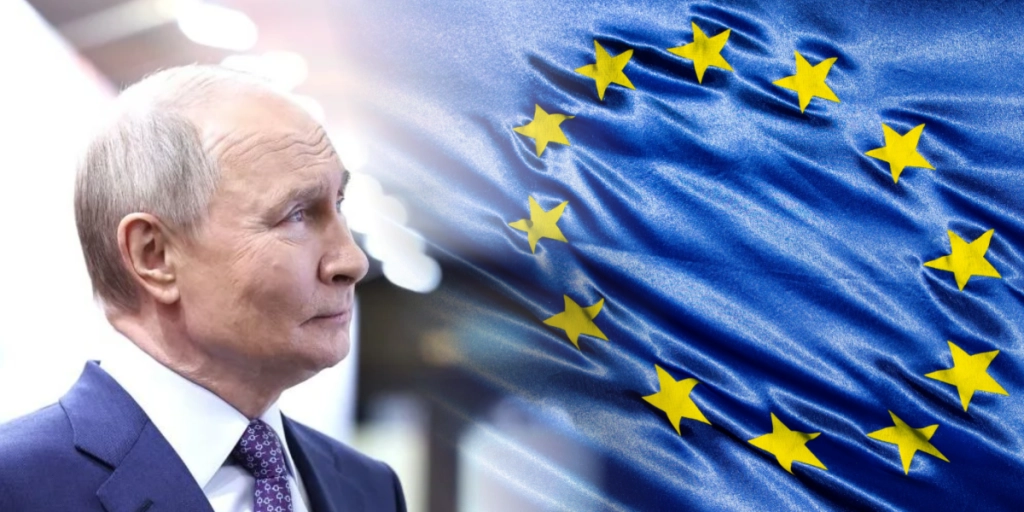
The former president, who is now in the lead in the exit polls, has been critical of EU policies on Ukraine and Russia, including opposing sanctions against Moscow.


Earlier in April, Putin lost his closest ally in the European Union, when Hungary’s Viktor Orbán was ousted from office after 16 years in power and replaced by the pro-EU Peter Magyar.
Analysts described the landslide election as a massive blow to the Kremlin, as Orban has repeatedly blocked sanctions packages aimed at Russia, vetoed a billion dollar loan for Ukraine, and his Foreign Minister, Péter Szijjártó, reportedly kept his Russian counterpart, Sergey Lavrov, up to date with details from meetings in the EU behind close doors.
But now, Putin might be getting a new ally in the EU, as the Bulgarian parliamentary election this weekend suggests that Bulgaria is looking towars Moscow instead of the European Union.
Early lead emerges
The BBC, The Kyiv Independent and other outlets reported last night, that preliminary election results indicate Progressive Bulgaria, led by former president Rumen Radev, has taken a strong lead in the April 19 vote.


With more than a third of ballots counted, the coalition held about 44%.
The final results are still pending, but earlier exit polls had projected a slightly lower share, placing the group at 37–38%. Speaking after polls closed, Radev declared an “uncontested victory”.
Despite the wide margin over rivals, the coalition is unlikely to secure an outright majority and will need partners to form a government.
Rivals trail behind
The reformist bloc We Continue the Change – Democratic Bulgaria trailed far behind in second place, while the GERB-SDS alliance led by Boyko Borisov appeared set for third.
Exit polls showed GERB-SDS at roughly 16%. Borisov signaled acceptance of the result, writing “Congratulations to the winner!” on Facebook.
Pre-election surveys had already suggested a significant advantage for Radev’s bloc.
Years of instability
The vote follows prolonged political instability, with multiple elections held over four years. Radev, who resigned as president in January to run, has pledged anti-corruption reforms.
Bulgaria joined the EU in 2007 and adopted the euro in 2026, a move he had questioned. His past remarks describing the war in Ukraine as a “doomed cause” have drawn criticism.
Analysts say his позиции may create openings for pro-Russian sentiment, though views on Moscow remain mixed across Bulgaria.
Policy tensions ahead
Radev has been critical of EU policies on Russia and Ukraine, opposing sanctions and Kyiv’s NATO ambitions. His win may amplify more skeptical voices within the EU.
“What Europe needs right now is critical thinking, pragmatic actions and good results, especially to build a new security architecture,” Radev said.
He added that this would shape Bulgaria’s contribution to Europe.
Sources: Reuters, AP, BBC, The Kyiv Independent



