
 Kathrine Frich

Russia’s economic troubles are nothing new, with sanctions and war costs continuing to weigh heavily on growth.

And while the recent surge in oil prices, driven by the conflict between the United States and Iran and disruptions in the Strait of Hormuz, might have offered the Kremlin some relief, that boost appears limited.
Even with energy revenues rising, deeper structural problems in Russia’s economy are becoming harder to ignore.
GDP decline
Russia’s gross domestic product fell by 0.3% year-on-year in the first quarter of 2026, according to figures cited by O2, referencing The Moscow Times.
While March recorded growth of 1.8%, it was not enough to offset declines of 1.8% in both January and February.


The downturn marks the first quarterly contraction since early 2023 and could erase a significant portion of last year’s economic gains.
Industry slowdown
Analysts say the slowdown is affecting a wide range of sectors, not just isolated areas of the economy.
German expert Janis Kluge noted that even non-resource industries are now facing serious difficulties.
Production in clothing dropped by 13.9%, while metallurgical output fell by 10.1%, highlighting broader industrial weakness.
Problems are also emerging in sectors previously supported by strong government spending.
Production of finished metal products, which includes military-related goods, declined by 0.8% in the first quarter.
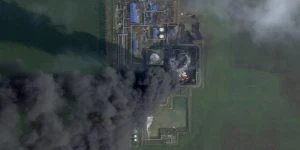
The fuel sector has also been affected, with petroleum products down 0.5%, partly due to attacks on refineries.
Oil boost
At the same time, Russia has benefited from a surge in oil prices.
Urals crude has risen from around $40 per barrel at the start of the year to over $100, potentially generating an additional $58 billion in revenue, according to the Russian central bank.
However, economists warn that this boost is not enough to offset structural issues in the wider economy.
Sberbank has lowered its growth forecast to between 0.5% and 1%, while raising its inflation outlook to 5–6%.
Experts say multiple pressures are weighing on the economy, including declining production, rising costs and weaker demand.
Some industries, such as forestry, are even facing the risk of bankruptcies due to falling export prices and higher expenses.
Sources: O2, The Moscow Times



