
 Kenneth Glad

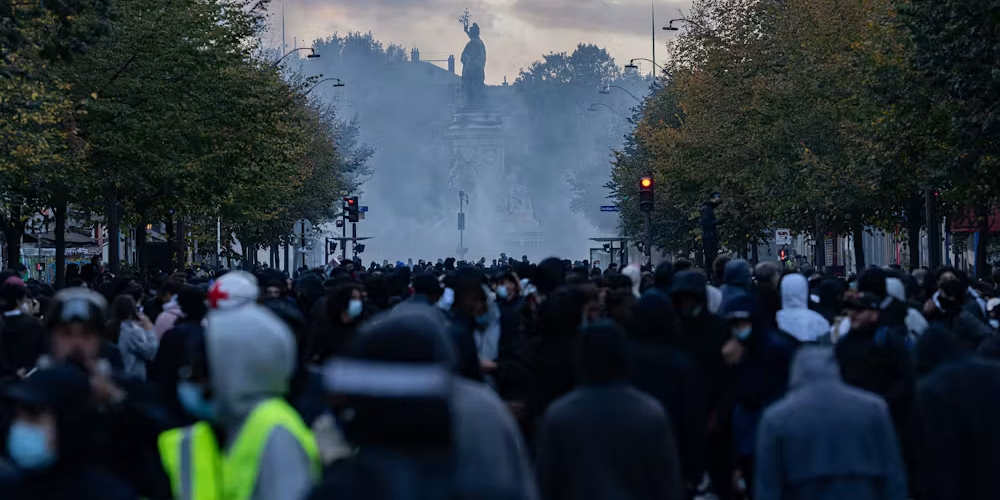
When frustration boils over across an entire continent, streets fill with noise, banners, and crowds of restless citizens. We often think we know why people march. Yet viral clips tell very different stories. Out in the open air, a fierce fight for attention is underway.

In Paris, the Orchestre du Nouveau Monde brought together hundreds of players in Place de la République to perform Bella Ciao, The Hunger Games, and Hollywood superhero themes. The open-air concert ended abruptly when police fired tear gas into the crowd. Just down the road, cars and rental bikes burned along Boulevard Voltaire.
Around the same time in Limoges, flames engulfed the city’s historic town hall, sending thick black smoke into the afternoon sky. The contrast was stark.
Both dramatic moments unfolded on October 17, when more than half a million people marched across France, The Conversation reports. Demonstrations first erupted when teenagers walked out over dilapidated classrooms and severe teacher shortages. Within days, those classroom grievances merged with widespread public fury over soaring grocery bills, expensive energy, and impossible rents.
Across the continent, similar crowds flooded streets in Spain, Italy, Belgium, Portugal, and Albania. Each crowd brought its own local struggle, from stagnant wages to sky-high utility costs. While these gatherings were not part of a single coordinated campaign, they shared an unmistakable spark as young Europeans pushed back against crushing living expenses.


Words create sides
Behind the scenes, European leaders and lawmakers rushed to control the story. On October 19, according to Le Monde, the European Commission condemned street looting as “unacceptable” while insisting peaceful rallies must be protected. In Brussels, the centre-right European People’s Party joined conservative allies to push for a formal parliamentary debate titled “France, Italy and Belgium: Latest anti-democratic violence by radical far-left groups”.
National leaders quickly drew their own lines in the sand. French President Emmanuel Macron and Italian Premier Giorgia Meloni made a sharp distinction between ordinary demonstrators and violent troublemakers in a clear effort to separate legitimate social grievances from lawbreaking.
Other politicians took a much harsher stance. French far-right leader Marine Le Pen blamed migrants and the political left. In Spain, Madrid regional chief Isabel Díaz Ayuso pointed to the “anti-democratic left”, while Albanian Prime Minister Edi Rama claimed crowds were being radicalised by “antifa”.
How officials name these gatherings matters. When authorities swap the word protest for riot, it links an entire movement to fringe extremism. That kind of language shapes what level of police force the public will tolerate, allowing isolated scuffles to completely bury the original economic complaints.
Memes take over
To counter negative television coverage, young demonstrators leaned heavily into digital street culture. Crowds showed up wearing Batman capes, Chucky horror masks, and green Pepe the Frog gear. Others waved the skull flag from the anime series One Piece, deliberately linking European streets to youth demonstrations from Portland to Kathmandu.
Many students chose humor over confrontation. One demonstrator told Le Monde that “there’s no point in getting angry, so we might as well do it with a smile”. By putting playfulness first, they built a viral show tailored directly for phone cameras and social media feeds.
A burning landmark makes easy television news. Yet quiet struggles over housing costs, low wages, and crumbling public services are far harder to capture in a brief video clip. For this generation, waving a cartoon banner or staging an open-air concert offers a way to fight back, proving that controlling the digital lens has become just as critical as winning the street.



