
 Kenneth Glad

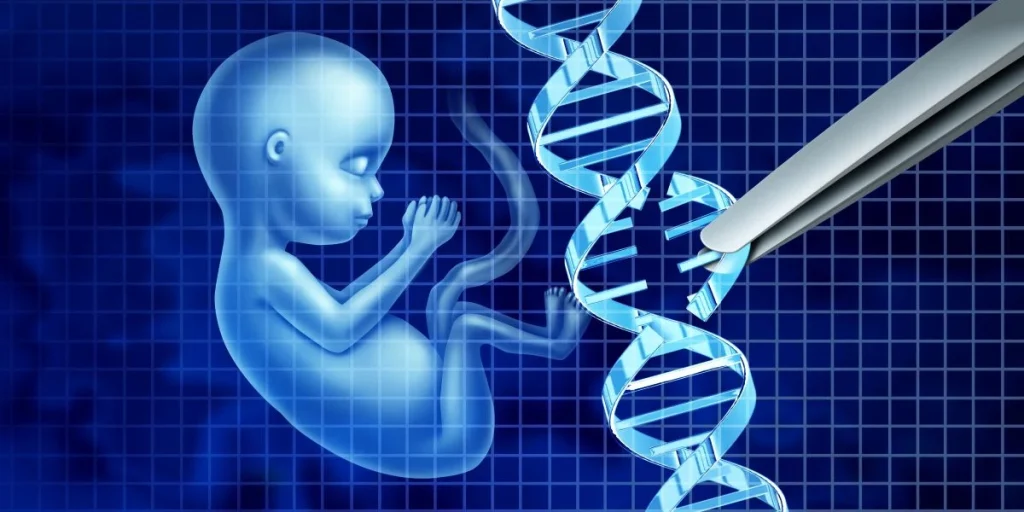
We track our steps, our sleep, and our calories to get an edge in daily life. Soon, the ultimate upgrade might mean picking out the exact traits of our unborn children. It sounds like a sci-fi dream. Yet the quest for a flawless family tree carries a very dark history.


Biotech companies are now selling prospective parents the chance to design an ideal child. New York subway ads for a startup called Nucleus Genomics recently promised commuters their “best baby”. The campaign taps into a booming industry.
This pitch targets a modern culture obsessed with self-optimization. People already track their sleep and diet with relentless precision. Now, wealthy customers undergo an expensive IVF screening process that sifts through embryos for specific genetic advantages.
In the lab, scientists look for statistical markers linked to height and intelligence. They also screen for physical features like eye color and early hair loss. These procedures promise lasting generational health, but this is exactly where the ethics become tangled.
A dark history
Writing in The Guardian, disability scholar Jan Grue warns that this trend is simply a rebranded version of eugenics. The word itself translates to a good birth. It was originally coined to describe the providential control of human evolution.


Back in the 20th century, state-run eugenics programs led to forced sterilizations and the mass murder of marginalized populations. Authoritarian governments wanted to manage their citizens to boost the national economy.
Modern advocates call their version liberal eugenics. They rely on individual choice rather than government mandates, arguing that parents simply want to give their kids a competitive advantage. This shifts the pressure of genetic optimization directly onto families.
Grue notes that framing human traits as commodities turns the ideal person into a hyper-productive worker. He points out that you cannot select for a positive trait without actively selecting against something else. Slowly but surely, the modern movement targets specific conditions for eradication.
Room for imperfection
Born with a rare muscular condition, Grue spent his childhood dreaming of a cure. He watched medical genetics advance rapidly during the mapping of the human genome. For years, he wondered if his faulty DNA might one day be fixed.
As he grew older, that desperate desire faded. He eventually learned his initial diagnosis of spinal muscular atrophy was actually incorrect. Losing the possibility of a targeted treatment brought a strange sense of relief and ownership over his own life.
He realized that a society built to accommodate physical differences is much better than one trying to breed them out. Wheelchairs and accessible buildings turn severe physical restrictions into manageable traits.
Real life is incredibly unpredictable. Every parent must eventually abandon their imagined ideal for the child they actually receive. Striving for a flawless baby sets families up for bitter disappointment, because disability is a normal part of human variation.
There is no single perfect human form. Vulnerability is naturally woven into the human condition from birth to old age. As Grue writes in The Guardian, the main goal must always be “making better societies rather than making better people.”



