
 Asger Risom
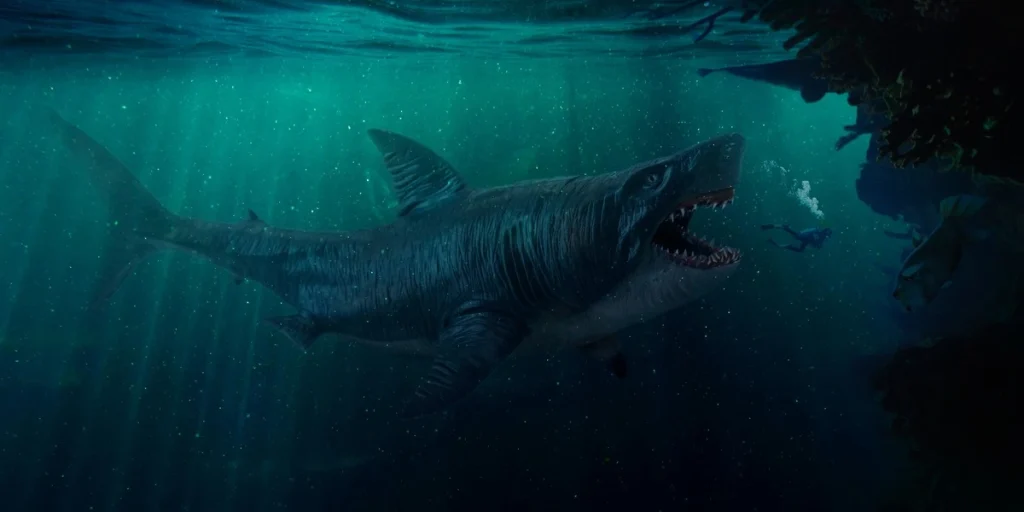
You don’t always have to dig in the dirt to rewrite prehistoric history. Scientists recently rediscovered lost Megalodon vertebrae sitting in a museum storage drawer, and the reassembled fossil proves the apex predator actually grew to an astonishing 80 feet in length. The forgotten specimen also contained the first physical evidence of the giant shark’s diet, perfectly preserving its last meal.


You don’t always have to dig in the dirt to rewrite the history of the planet; sometimes you just have to check the back of a museum shelf. For decades, paleontologists have debated the true size of the extinct Megalodon, the apex predator of the prehistoric oceans. But the physical evidence needed to settle the argument was actually sitting in a cardboard box, completely forgotten by the scientific community.
The lost fossil
The story of the lost fossil begins with a massive set of vertebrae found in a Danish clay pit almost fifty years ago. According to a recent report from ScienceDaily, the massive bones were badly damaged during a museum move in 1989. Because the fragments were deemed too difficult to reassemble, they were pushed to the back of a storage drawer and effectively disappeared.
It wasn’t until a modern curator decided to dig through the neglected archives that the surviving fragments were finally recognized. Researchers meticulously pieced the 185 smaller bone fragments back together to reconstruct the original vertebrae. What they found completely shattered the previous biological models for the prehistoric shark.
The reconstructed fossil represents the largest empirically documented shark vertebral specimen ever found. It fundamentally changes our mathematical models for the animal’s growth, proving that earlier estimates were far too conservative. We haven’t just found a new bone; we have fundamentally resized the ocean’s greatest monster.


Scaling up the predator
For a long time, pop culture and paleontology generally agreed that a full-grown Megalodon maxed out at around 50 feet in length. That estimate was largely based on comparing their massive, fossilized teeth to the modern great white shark. But teeth alone are a flawed metric, and having a physical spinal column completely changes the math.
As detailed in a recent breakdown by Discover Magazine, scanning the newly reconstructed vertebrae revealed unprecedented dimensions. By extrapolating the size of the spinal column, researchers confirmed that the shark could reach an astonishing 80 feet in length. To put that into perspective, that is more than double the size of the largest great white shark ever recorded.
The vertebrae also allowed researchers to scan for growth rings, functioning much like the rings of a tree. The scans indicated that this specific 80-foot individual was at least 64 years old when it died. It also suggested that a newborn Megalodon would have been over 12 feet long the moment it was born.
What a monster eats
Beyond just resizing the predator, the forgotten museum box also solved a mystery about how an animal that massive sustained itself. An 80-foot apex predator requires a staggering amount of daily calories to survive. Until now, scientists had to guess what the Megalodon actually hunted based on bite marks left on fossilized whale bones.
But the reassembled Danish fossil contained a fascinating, microscopic surprise locked inside the surrounding rock matrix. Researchers discovered tiny fossilized elements of a prehistoric basking shark embedded directly alongside the Megalodon vertebrae. They quickly realized these smaller bones weren’t just deposited next to the predator by random chance.
The researchers concluded that the basking shark fragments actually represented the fossilized stomach contents of the Megalodon. This marks the very first time scientists have found direct, physical evidence of what the giant shark actively digested. It proves that the Megalodon wasn’t just scavenging dead whales; it was actively hunting other massive sharks.
The value of dark data
This massive paleontology breakthrough highlights a fascinating, quirky reality about modern science known as “dark data.” Not every major discovery requires a multimillion-dollar expedition to a remote desert or an arctic glacier. Sometimes, the most important physical evidence on Earth is just sitting in a climate-controlled basement.
Natural history museums around the world are packed with millions of specimens that were hastily cataloged decades ago and never properly studied. As modern scanning technology and digital modeling improve, researchers are increasingly looking backward instead of digging forward. The next massive shift in our understanding of the prehistoric world is likely already sitting on a shelf.
The Megalodon has always captured our collective imagination as the ultimate ocean predator. But the fact that its true, 80-foot scale was hidden in a forgotten cardboard box for decades makes the story even better. It is a brilliant reminder that the archives still hold plenty of monsters.



